




Classic Victorian Settee
A classic victorian settee offers generous proportions and deep buttoning, bringing period comfort and substance to a traditional room.
Classic Victorian Settee
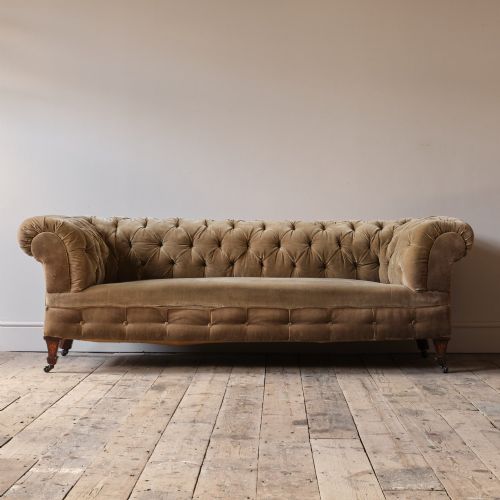
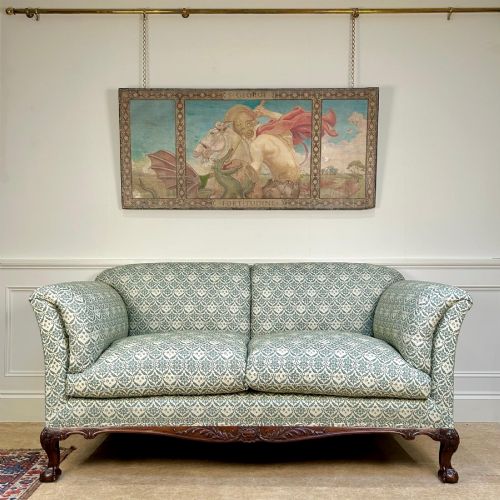
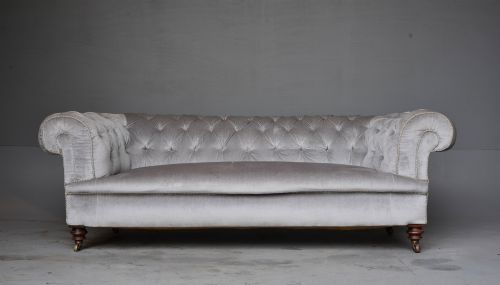
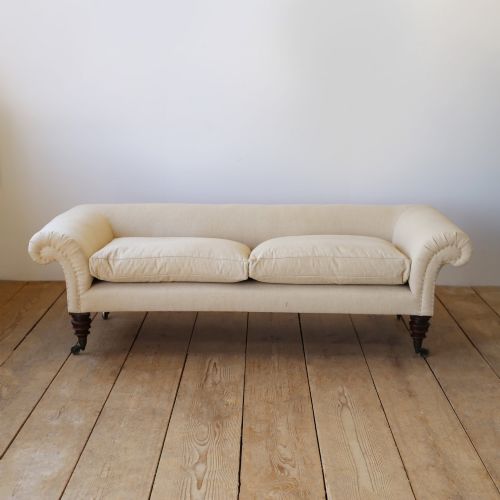
A classic victorian settee encompasses nineteenth-century seating designed for formal reception rooms and country houses, taking the form of substantial sofas and chesterfields. These pieces provide deep, sprung comfort paired with low backs and scrolled arms.
The versions most commonly met on this page belong to the Victorian and nineteenth-century periods, alongside occasional Edwardian examples. They span English country house styles, French provincial variants, and traditional two-seat couches.
Makers and workshops of the era, such as Howard & Sons and Robert Strahan & Co, produced enduring examples that appear alongside unattributed country house sofas. The forms range from compact walnut frames to pairs of large leather chesterfields.
How they were made
Frames rely on sturdy timbers including mahogany, walnut, and general hardwood, providing the structural skeleton beneath the upholstery. Joinery was built to withstand heavy daily use in busy households.
Upholstery utilised traditional materials such as leather, velvet, and cotton fabric, often finished with deep buttoning. Brass details frequently secured fabric edges or castors on the feet.
Classic Victorian Settee Retail Price Guide 2026
Typical asking prices for classic victorian settee among the pieces listed under this phrase on Sellingantiques today, from the lower quarter to the upper quarter. They describe what is for sale here now, not the wider market.
One listed settee previously lived a quiet life before being restored in bright British racing green leather.
What varies in quality
The distinction between standard output and finer work rests on the integrity of the timber frame and the depth of the original craftsmanship. Maker attribution, such as branded Howard & Sons framing, elevates a piece significantly.
Upholstery treatment also divides the range, distinguishing pieces retaining patinated original leathers from those requiring or receiving complete restoration in hand-dyed materials.
Howard & Sons·Robert Strahan & Co
The Classic Victorian Settee Glossary
- Chesterfield
- A deep-buttoned, upholstered sofa traditionally featuring arms and back of the same height. This form remains a staple of nineteenth-century seating.
- Deep buttoning
- An upholstery technique where buttons are pulled tight through the padding to create a diamond pattern. This method secures the internal filling and adds visual texture.
- Hardwood
- Dense timber derived from broad-leaved trees, utilised for durable furniture frames. It provides the necessary strength for heavy nineteenth-century seating.
- Castor
- A small wheel fitted to the foot of a piece of furniture for ease of movement. Brass versions are typical on nineteenth-century settees.
Classic Victorian Settee: Frequently Asked Questions
What defines a classic victorian settee?
These pieces are nineteenth-century upholstered seats, commonly taking the form of chesterfields or country house sofas with sprung bases and low profiles.
They rely on timber frames of mahogany, walnut, or hardwood, finished in materials like leather, velvet, or cotton fabric.
How were chesterfields used originally?
Originating as formal reception furniture, they provided deep, comfortable seating for drawing rooms and libraries in country houses.
Their robust construction and generous proportions allowed for relaxed lounging while maintaining a dignified appearance.
How do I live with one?
A nineteenth-century sofa acts as a central anchor in a living room or study, pairing well with both traditional and contemporary interiors.
Leather and velvet surfaces benefit from regular, gentle maintenance and careful positioning away from direct heat sources.
How do I distinguish periods?
Victorian and nineteenth-century examples typically display heavier timber frames, deep buttoning, and traditional horsehair or sprung stuffing.
Edwardian pieces appearing alongside them often present lighter proportions, such as smaller walnut frames reflecting evolving domestic tastes.