






Classic Regency Dining Table
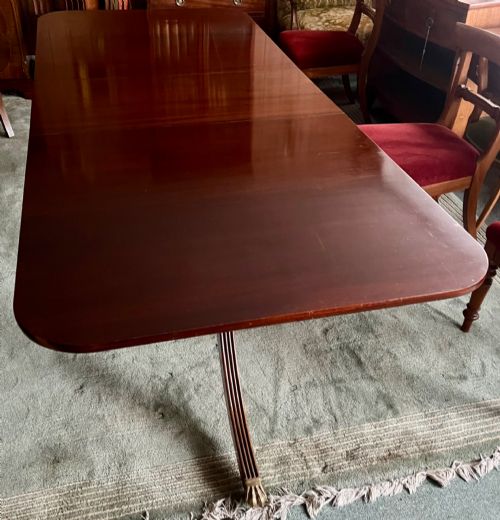
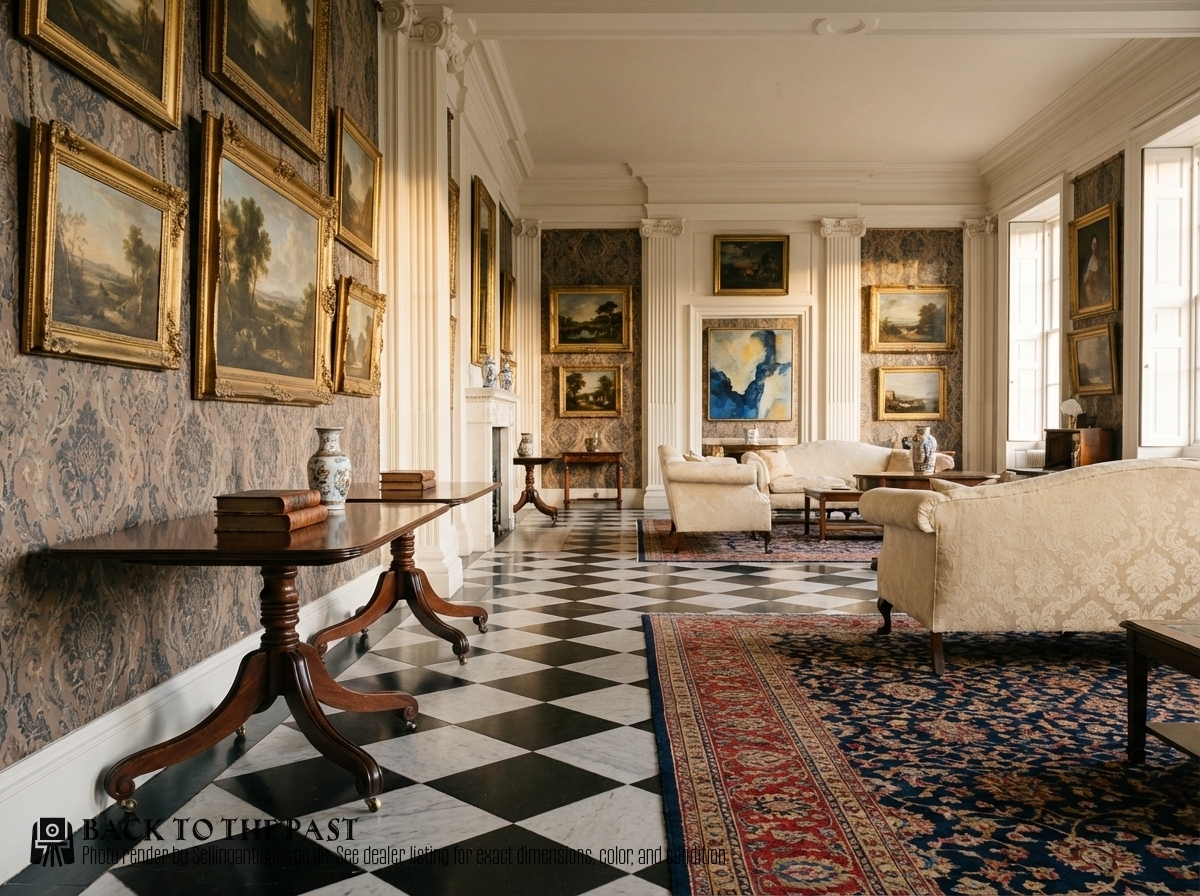
A classic regency dining table brings architectural balance and rich timber grain to a room, offering an extending surface designed for serious entertaining.
Classic Regency Dining Table
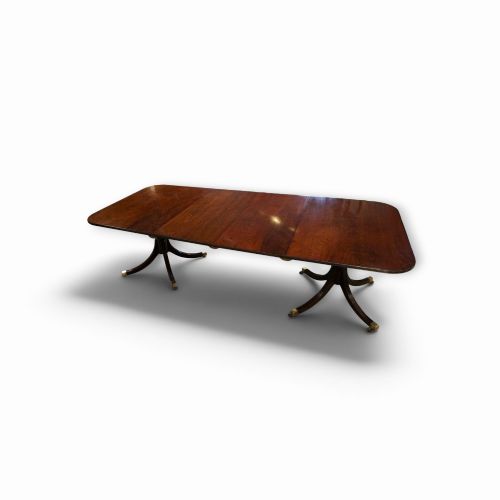
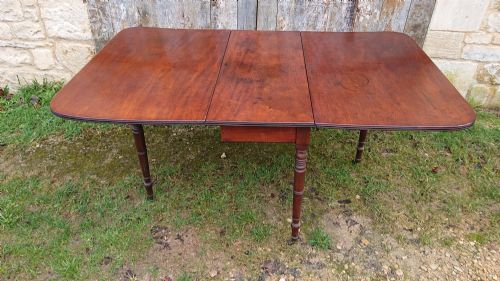
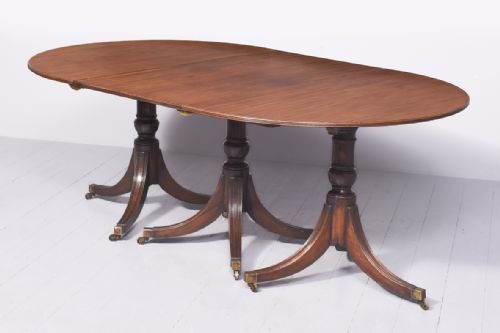
When you search for a classic regency dining table, you are looking at substantial timber furniture built to accommodate multiple diners through clever drop-leaf, folding, or multi-pedestal extending mechanisms. The examples gathered here span authentic pieces from the nineteenth century alongside later revivals from the Edwardian era and nineteen-twenty, maintaining the classic forms associated with the period.
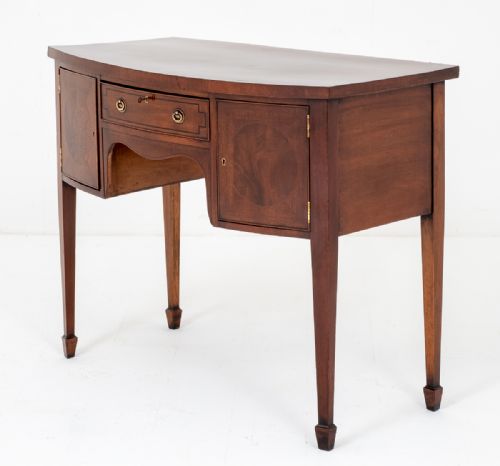
Most pieces you meet on this page are constructed as multi-pillar or pedestal dining tables, often featuring mahogany timber and brass details. Alongside grand multi-seater tables, the selection includes related dining tables, centre tables, and occasional sideboards that share the same aesthetic lineage.
The aesthetic draws heavily on Regency, George III, and Grand Regency styles, with certain pieces echoing the distinct workshop manner of Gillows of Lancaster. Buyers find both authentic early nineteenth-century specimens and later Regency revival interpretations that replicate the grand scale of the originals.
How they were made
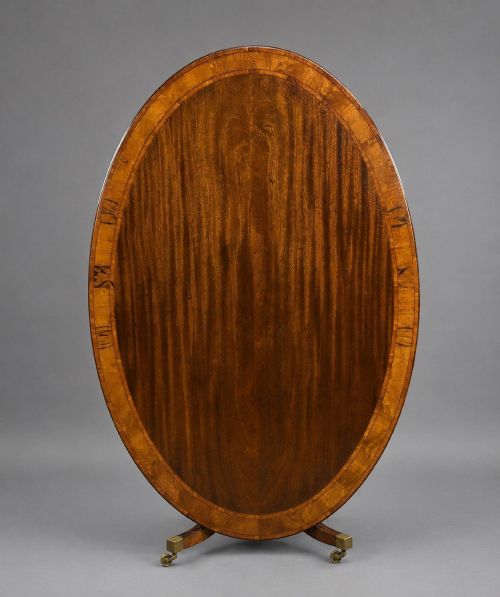
Makers of the period relied primarily on solid and figured mahogany, prized for its deep tone and ability to take a high polished finish. Selected pieces incorporate contrasting satinwood and intricate brass inlay to accent the timber surfaces.
Construction techniques focus on structural adaptability, utilising pedestal pillars, drop-leaves, and D-end extensions to allow the tables to expand or contract. These ingenious mechanisms enabled large dining surfaces to be reconfigured easily within domestic spaces.
Classic Regency Dining Table Retail Price Guide 2026
Typical asking prices for classic regency dining table among the pieces listed under this phrase on Sellingantiques today, from the lower quarter to the upper quarter. They describe what is for sale here now, not the wider market.
Table forms span multi-pedestal dining tables, folding variants, centre tables, and sideboards reflecting George III and Grand Regency aesthetics.
What varies in quality
The standard of a classic regency dining table rests fundamentally on the selection of timber, particularly the grain figuration visible across the table top. Finer examples display deeply figured mahogany veneers or carefully chosen solid boards that catch the light evenly.
Execution of secondary details, such as brass inlay work and the turning of pedestal pillars, distinguishes standard production from exceptional pieces. Superior craftsmanship ensures the extending mechanisms operate smoothly while maintaining absolute stability across every section.
Gillows of Lancaster
The Classic Regency Dining Table Glossary
- Pedestal
- A central support column, often single or multiple, that holds up the main surface of the table. These are typically mounted on splayed legs with brass terminals.
- D-End
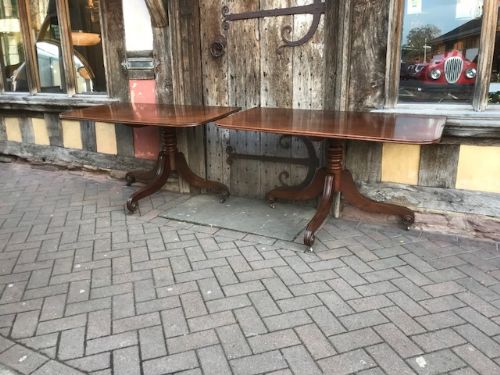
- A table end shaped in the semi-circular form of the letter D, commonly used in sets of dining tables that pull apart to insert leaves. When placed against a wall, a single D-end functions as a serving console.
- Drop-leaf
- A table configuration featuring hinged flaps that fold down when not in use to save space. This mechanism allows the footprint of the furniture to alter rapidly according to dining needs.
- Satinwood
- A luminous hardwood with a yellowish sheen utilised for contrasting stringing and inlay details. It provides a bright visual accent against darker mahogany fields.
Classic Regency Dining Table: Frequently Asked Questions
How do I seat more guests?
Many classic regency dining table designs utilise multiple pedestals and drop-leaf or D-end mechanisms to insert extra sections. This modular construction allows the furniture to expand outwards smoothly.
When hosting larger gatherings, you simply unlock the pillars and pull the ends apart to drop in additional leaves. The heavy timber frames remain stable and balanced even when fully extended.
Are these tables solid mahogany?
The listings show pieces built from mahogany, frequently featuring figured mahogany veneers across the top surfaces. Master cabinetmakers used solid timber for structural frames and turned pillars.
Figured veneers were deliberately chosen to display dramatic grain patterns across the broad expanse of the table top. This technique combined decorative beauty with structural resilience.
How do I date a table?
Dating relies on observing the combination of stylistic details, timber selection, and mechanical engineering present in the frame. Authentic nineteenth-century examples often display distinct patination and construction methods compared to later revival pieces.
Comparing the pillar turnings, brass fittings, and edge profiles helps distinguish a Georgian or Regency original from an Edwardian or nineteen-twenty revival. Each era brought subtle shifts in proportion and hardware.
Can I use these for daily dining?
These pieces were originally built to withstand the demands of formal dining rooms and substantial households. Their robust timber construction makes them well-suited for everyday family use.
Using protective mats and maintaining consistent room humidity helps preserve the polished mahogany surface. Regular care ensures the extending mechanisms and timber grain remain in fine condition.