

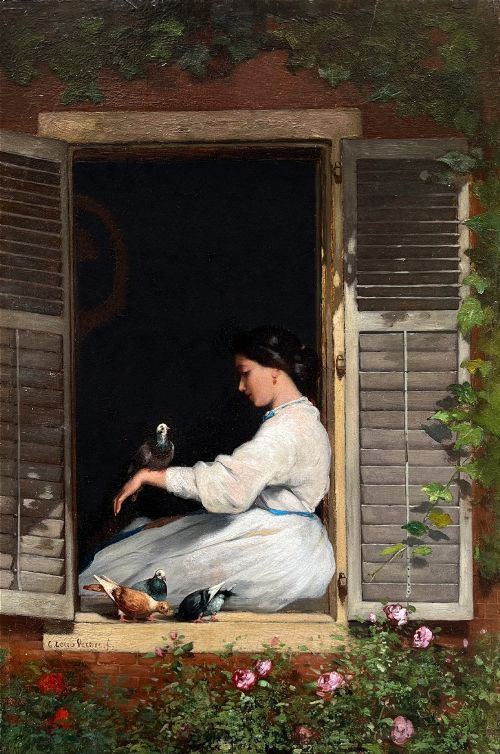
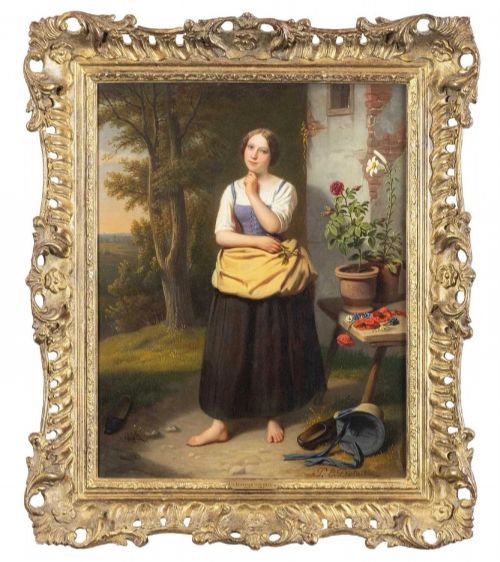


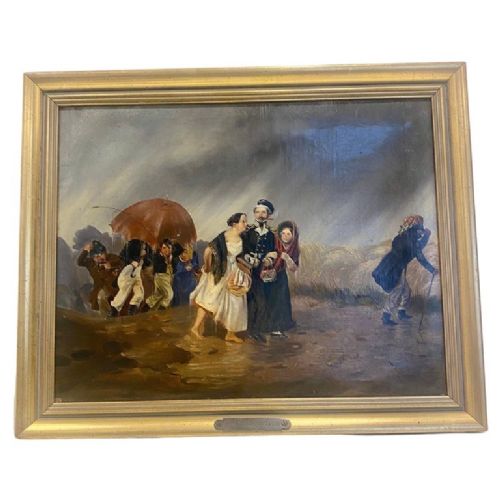

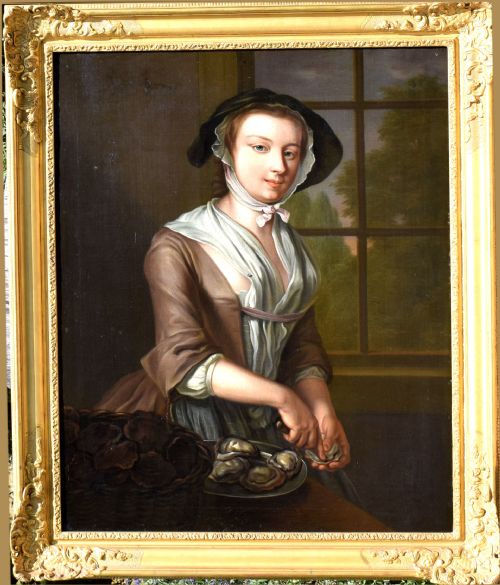

Classic Genre Portrait Painting
These classic genre portrait painting examples bring daily life and historical figures into a room through oil on canvas.
Classic Genre Portrait Painting
A classic genre portrait painting captures daily life, domestic scenes, and figures within historical or domestic settings. These works range from Georgian and Victorian compositions to Edwardian pieces.
Buyers will encounter oil on canvas works alongside framed oil paintings depicting interior scenes, figures holding trays, and courting romances. The subjects stretch from Dutch influences to French ballroom interiors.
Many examples date from the nineteenth century, utilising canvas and oil paint to portray characters such as flower girls, royalty, and children. Painters recorded everyday narratives with distinct realism.
Materials and Methods
Artists painted these works primarily in oil paint upon woven canvas stretched over wooden supports. This medium allowed for careful blending of tones and detailed rendering of clothing and expressions.
Frames often incorporate wood, gesso, plaster, and gold leaf or giltwood finishes. These surrounds enhance the visual weight of the paintings and reflect period tastes from Rococo Revival to Victorian aesthetics.
Classic Genre Portrait Painting Retail Price Guide 2026
Typical asking prices for classic genre portrait painting among the pieces listed under this phrase on Sellingantiques today, from the lower quarter to the upper quarter. They describe what is for sale here now, not the wider market.
Listings feature works spanning the eighteenth, nineteenth, and twentieth centuries, predominantly executed in oil on canvas.
Assessing Quality
Quality rests in the handling of brushwork and the psychological depth of the figures portrayed. Skilled artists achieved convincing textures in fabrics and lifelike expressions on the canvas.
The integration of the subject within its environment distinguishes superior compositions. Stronger works balance light across interior or exterior settings with careful attention to narrative detail.
Louis Charles Verwee·William Arthur Breakspeare·John Robert Dicksee·Sydney Kendrick·Christoffel Bisschop·Wilhelm Alexander Meyerheim·Philip Mercier
The Classic Genre Portrait Painting Glossary
- Genre painting
- A style depicting scenes from everyday life, often involving ordinary people engaged in common activities. These works focus on domestic or social narratives rather than formal portraiture.
- Oil paint
- A slow-drying paint made by combining pigments with oils such as linseed. It permits subtle blending and rich colour saturation on canvas supports.
- Giltwood
- Wood carved and covered with a thin layer of gold leaf or gold paint. This finish frequently adorns period frames surrounding nineteenth-century canvases.
- Gesso
- A paint mixture consisting of a neutral binder mixed with chalk, gypsum, or pigment. It served as a smooth preparation base for wooden frames before gilding.
Classic Genre Portrait Painting: Frequently Asked Questions
What is a genre portrait?
A genre portrait depicts everyday people in narrative scenes rather than formal poses. These works blend portraiture with observations of daily life.
Subjects might include market sellers, courting couples, or family members inside domestic spaces.
How old are these paintings?
The available works span several centuries, with a strong concentration in the nineteenth century. Pieces also reach back to the eighteenth century and forward into later periods.
Dates often relate to the active period of the artist or the prevailing Victorian style.
What materials were used?
Artists relied on oil paint applied to woven canvas supports. The resulting works are usually housed in wooden frames decorated with gesso and gold leaf.
Some pieces also employ watercolour on paper depending on the specific nineteenth-century medium chosen.
How do I choose a frame?
Period frames often feature giltwood or plaster ornamentation matching the era of the painting. Rococo Revival and Victorian frames display distinct decorative mouldings.
Matching the frame style to the painting period helps preserve the historical integrity of the piece.