





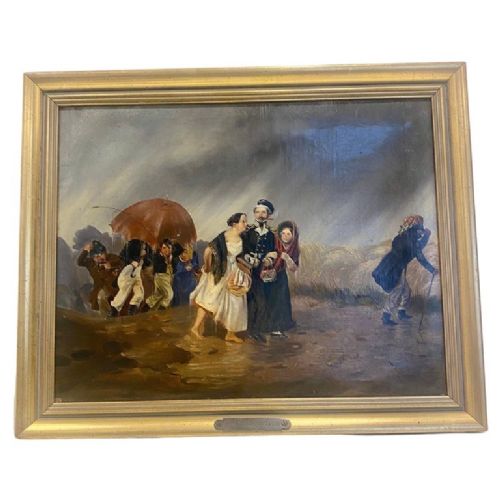
Classic Genre Painting
Classic genre painting captures everyday domestic and social life on canvas, offering a window into past centuries that collectors prize for its narrative charm.
Classic Genre Painting
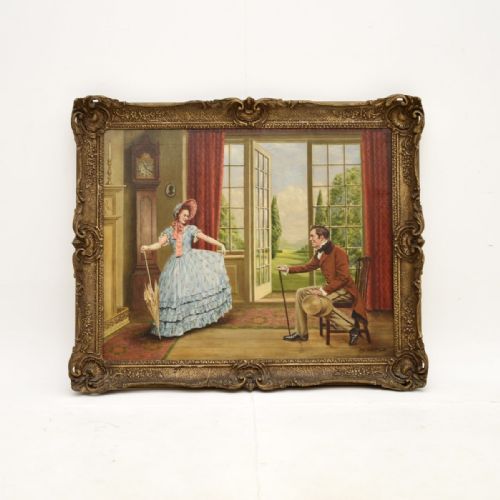
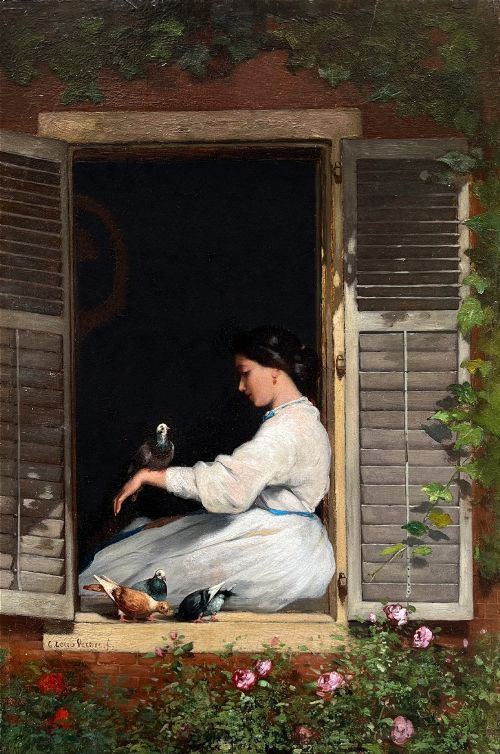
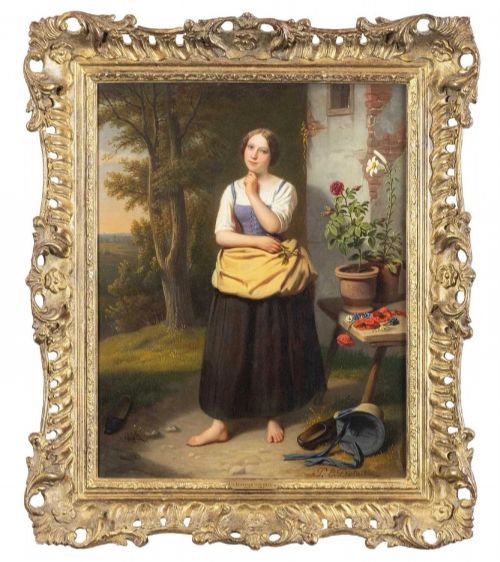
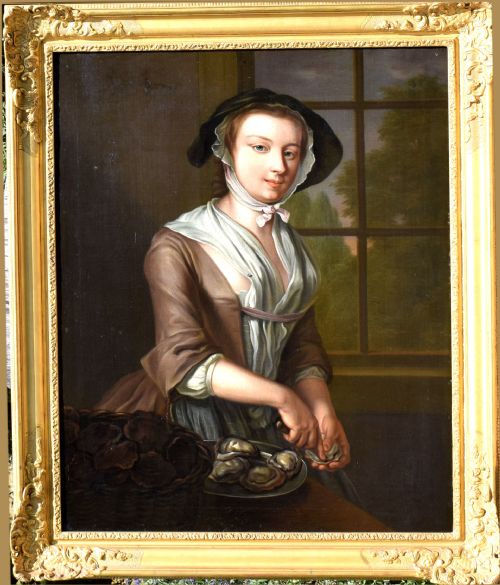
When you search for classic genre painting, you encounter works portraying everyday scenes, domestic interiors, and social narratives from the eighteenth, nineteenth, and early twentieth centuries. These oil paintings and watercolour paintings depict figures engaged in familiar activities, from quiet morning moments to country house scenes.
The nineteenth century provides the majority of examples on this page, spanning British, French, Belgian, and Danish realism alongside Victorian interpretations. Works range from intimate portraits of women and children to lively interior gatherings and outdoor village life.
Materials and Methods
Artists executed these works primarily using oil paint on canvas or panel, though select pieces utilise watercolour on paper. Canvases are frequently housed within ornate giltwood and gesso frames embellished with gold leaf over a wooden base.
Makers applied pigments to build depth in narrative scenes, capturing light within interiors and subtle textures in clothing and furnishings. The physical support typically consists of stretched canvas or wood panels suited to detailed figurative work.
Classic Genre Painting Retail Price Guide 2026
Typical asking prices for classic genre painting among the pieces listed under this phrase on Sellingantiques today, from the lower quarter to the upper quarter. They describe what is for sale here now, not the wider market.
Factors of Quality
Quality rests in the handling of narrative detail, facial expression, and the play of light across interiors or outdoor settings. Superior works demonstrate precise draughtsmanship and atmospheric depth that elevate a simple domestic subject into compelling social history.
The execution of the surrounding frame, particularly original giltwood and gesso mouldings, contributes to the overall integrity of the piece. Stronger examples display confident brushwork and well-balanced compositions that maintain focus on the central human interaction.
Stephen Samuel Lewin·Alfred Lyndon Grace·Louis Charles Verwee·Valdemar Magaard·John Robert Dicksee·William Henry Knight·Hendricus Joseph Dillens·Sydney Kendrick·Alfred Banner·Christoffel Bisschop·Edward H. Holder·William Stephen Coleman·Wilhelm Alexander Meyerheim·Francesco Bergamini·Philip Mercier
The Classic Genre Painting Glossary
- Genre painting
- Artwork depicting scenes from ordinary life, typically involving domestic interiors, family groups, or social gatherings rather than grand historical or mythological subjects.
- Oil on canvas
- Pigment mixed with drying oils applied to a stretched woven fabric support, which became the standard medium for fine art painting across the nineteenth century.
- Giltwood
- Wood carved and coated with gold leaf or gold paint, frequently used for traditional picture frames housing antique paintings.
- Panel painting
- A flat piece of wood used as a structural support for an oil painting instead of stretched canvas.
- Realism
- An artistic movement focused on the truthful, unidealised depiction of contemporary people, subjects, and everyday situations.
Classic Genre Painting: Frequently Asked Questions
What is a classic genre painting?
A classic genre painting is an artwork that portrays scenes from everyday life, such as domestic interiors, family gatherings, or outdoor village activities. These pieces focus on ordinary people engaged in routine or social moments.
Originating largely from the eighteenth to early twentieth centuries, these paintings serve as visual records of past social customs, dress, and domestic environments.
How do I identify the period of a painting?
Dating typically relies on stylistic indicators, artist signatures, biographical records, and the physical materials of both the canvas and the frame. Nineteenth-century works often reflect realist or Victorian artistic conventions.
Examining the stretcher bars, canvas weave, and framing techniques provides further physical evidence to help narrow down the date of creation.
Where should I hang a genre painting?
These works suit traditional living spaces, studies, or hallways where their narrative details can be viewed closely at eye level. Direct sunlight should be avoided to protect oil pigments and delicate watercolours.
Stable room humidity and temperature help preserve both the canvas support and any original giltwood and gesso framing.
What subjects are most common?
Common subjects include domestic interiors, family scenes, portraits of figures with everyday objects, and outdoor activities like boating or walking. Artists often captured quiet domestic moments alongside lively social interactions.
Narratives range from British country house scenes to continental European village life and French interior settings.