

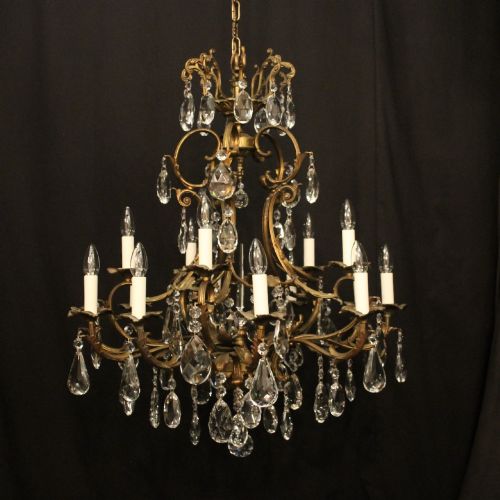

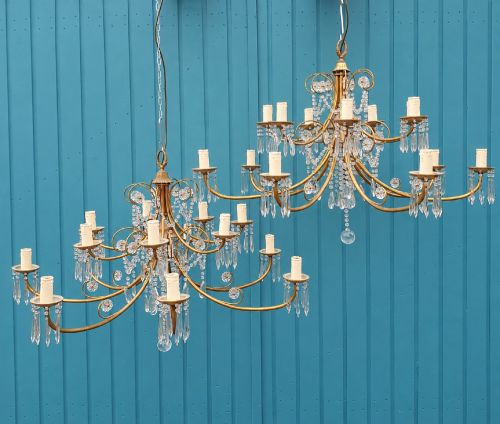
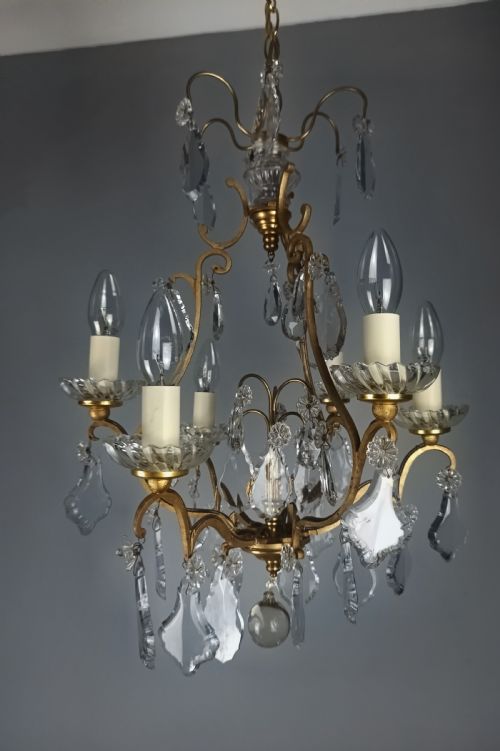
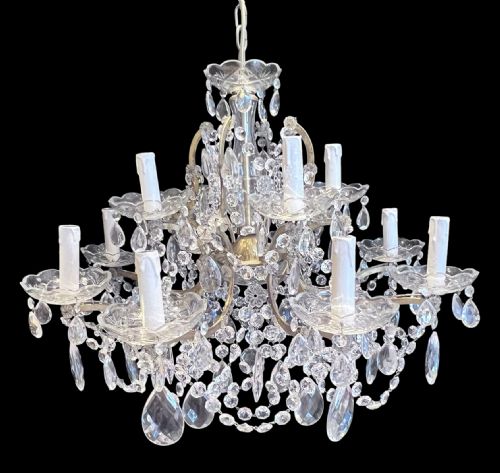


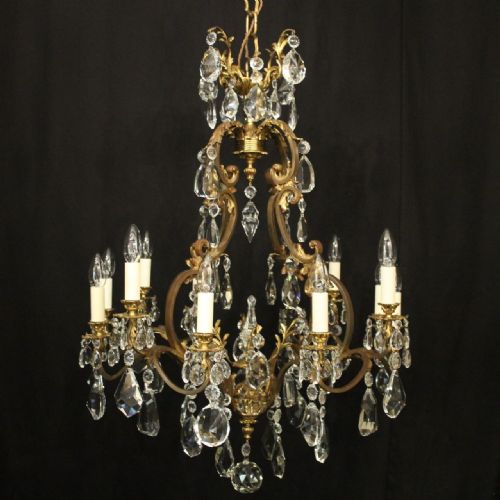
Classic Crystal Candle Chandelier
These classic crystal candle chandeliers bring glittering light and period presence to a room, catching the eye with cut glass and metalwork.
Classic Crystal Candle Chandelier
When you search for a classic crystal candle chandelier, you are looking at substantial overhead lighting designed to hold multiple candles or their electrified equivalents. The pieces appearing here span from the nineteenth century into the 1930s, offering grand forms and intricate hanging drops.
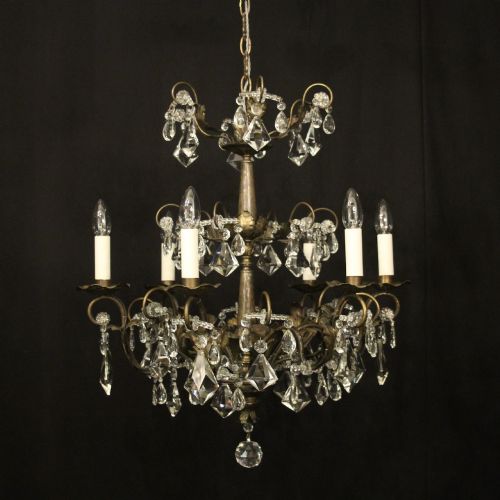
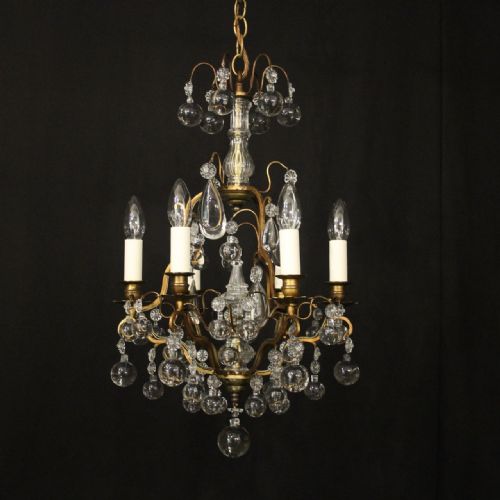
You are most likely to meet French and Italian examples from the early twentieth century, particularly birdcage frames in gilded brass, bronze, or silvered metal. These chandeliers often feature numerous light arms, ranging from six up to sixteen branches adorned with cut glass and crystal.
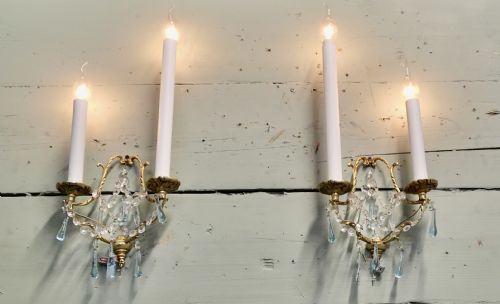
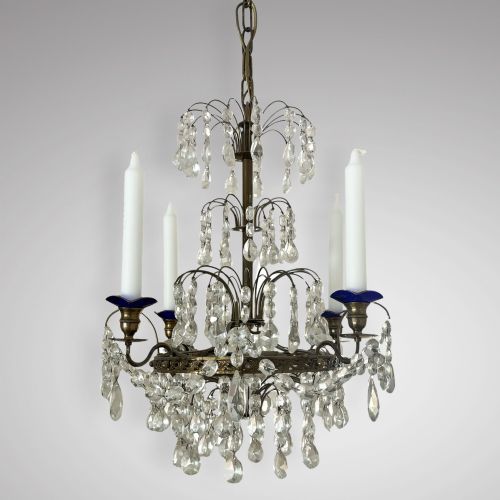
The styles lean heavily towards continental traditions, including French Rococo, Italian Neoclassical, and Gustavian designs. Alongside larger ceiling fixtures, you may also encounter paired wall sconces sharing the same crystal and metal vocabulary.
How they were made
Makers constructed these fixtures around robust metal armatures formed from brass, bronze, or gilt and silvered metals. These structural frames supported the weight of numerous glass elements while providing secure channels for light fittings or candle cups.
The ornamentation relies on crystal and cut glass drops, pendants, and beads wired directly to the metal framework. Gilded finishes applied to the bronze and brass components added a rich, reflective surface that enhanced the candlelight.
Classic Crystal Candle Chandelier Retail Price Guide 2026
Typical asking prices for classic crystal candle chandelier among the pieces listed under this phrase on Sellingantiques today, from the lower quarter to the upper quarter. They describe what is for sale here now, not the wider market.
Materials appearing across these listings include crystal, glass, brass, gilded brass, gilt metal, silvered metal, and gilded bronze.
What varies in quality
Quality rests in the weight and clarity of the crystal components, alongside the crispness of the metal casting. Finer examples display deeply cut glass that refracts light sharply, paired with heavily chased or well-gilded bronze and brass frames.
The complexity of the armature also distinguishes the pieces, from simple six-light configurations to multi-tiered birdcage designs carrying fourteen or more arms. Proportion and the integrity of the original hanging drops separate standard production from exceptional decorative work.
The Classic Crystal Candle Chandelier Glossary
- Birdcage chandelier
- A lighting fixture featuring a skeletal metal frame shaped like a birdcage, from which numerous crystal strands and drops are suspended. This form gained particular popularity in French designs during the early twentieth century.
- Cut glass
- Glass that has been shaped and faceted on a wheel to create sharp geometric patterns that enhance light refraction. It forms the sparkling pendants seen on nineteenth and twentieth-century chandeliers.
- Gilded bronze
- Bronze metal treated with a thin layer of gold or gold-coloured alloy to give a rich, metallic finish. This material provided a durable and decorative armature for grand chandeliers.
- Maria Theresa chandelier
- A flat-armed style of chandelier traditionally associated with Austrian and Italian design, featuring leaf-shaped glass elements covering the metal frame. The pieces often incorporate numerous small drops and candle branches.
- Gustavian
- A Swedish neoclassical style characterised by lighter colour palettes, restrained ornamentation, and symmetrical forms. Chandeliers from this tradition offer a more subdued elegance compared to ornate French Rococo pieces.
Classic Crystal Candle Chandelier: Frequently Asked Questions
Can I convert these for electricity?
Most surviving chandeliers of this age have already been adapted for electrical wiring to suit modern homes. The conversion process generally routes discreet internal wiring through the central metal shaft and along the arms without altering the exterior appearance of the fixture.
When working with antique lighting, a qualified electrician should inspect the internal components to ensure safe installation. The original candle tubes can often be fitted with small modern lamp holders to maintain the classic look while providing reliable illumination.
How do I clean the crystal drops?
Routine maintenance involves gentle dusting with a soft microfibre cloth while the crystals remain attached to the frame. For a deeper clean, individual drops can be unhooked and washed in warm water with a mild, non-abrasive detergent.
It is best to wash pieces in a lined basin to prevent chipping the glass edges against porcelain. Ensure every component is completely dry before rehanging them on the metal armature.
How do I determine the period?
Dating relies on examining the construction methods of the metal frame, the style of the casting, and the cut of the crystal elements. Early twentieth-century pieces often reflect earlier French and Italian revivals, showing specific casting techniques distinct from nineteenth-century work.
Stylistic cues such as the symmetry of Gustavian frames or the elaborate curves of Rococo revival work help narrow down the decade of production. Documentation or dealer records from the period of origin can also provide reliable context.
Are these suitable for low ceilings?
Grand multi-tiered and birdcage chandeliers require significant vertical clearance to hang properly and allow safe passage underneath. For rooms with lower ceilings, paired wall sconces or smaller single-tier fixtures offer the same crystal and gilt aesthetic without occupying overhead space.
Checking the overall drop measurement against your room dimensions is essential before committing to a ceiling-mounted fixture. Professional installation ensures the chandelier hangs at the correct height for both safety and visual balance.