

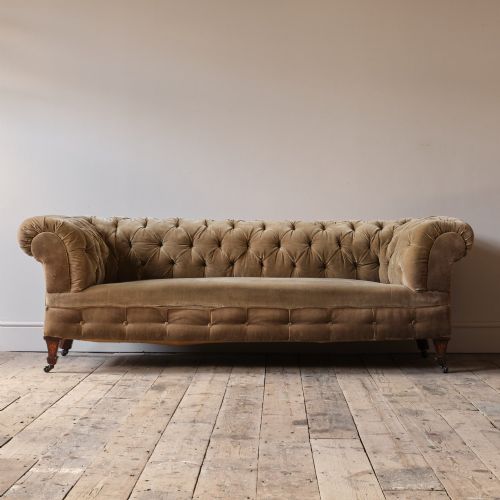
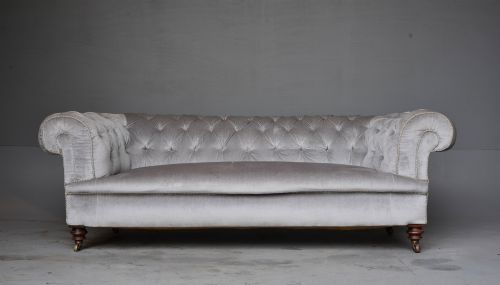


Classic Chesterfield Sofa
A classic chesterfield sofa offers deep buttoning and rolled arms, grounding a room with traditional English presence and enduring comfort.
Classic Chesterfield Sofa
A classic chesterfield sofa represents a distinct lineage of seating defined by uniform low backs, deep button tufting, and scroll arms set at the same height as the back. These foundational forms appear in Victorian and early twentieth-century iterations, spanning traditional English workshops and major cabinet makers.
Buyers encounter versions upholstered primarily in hand-dyed leather, with occasional appearances of velvet and specialised automotive hides. Frames employ solid timber, hardwood, and mahogany, supported by brass details and traditional coil springing.
The objects listed range from nineteenth-century examples retaining original leathers to fully restored pieces finished in rich whiskey brown, aubergine, and British racing green. Forms remain consistent as sofas and settees designed for substantial domestic reception rooms.
How they were made
Construction relies upon robust hardwood and mahogany timber frames designed to support heavy internal stuffing and deep springing. Makers utilised traditional coil springing paired with horsehair filling to create a firm, resilient seat foundation.
Upholstery involves careful hand-tufting through the leather or velvet, securing each button into the internal webbing to create the signature diamond pattern. Exposed woodwork often includes brass detailing along the base or castors.
Classic Chesterfield Sofa Retail Price Guide 2026
Typical asking prices for classic chesterfield sofa among the pieces listed under this phrase on Sellingantiques today, from the lower quarter to the upper quarter. They describe what is for sale here now, not the wider market.
Listings feature Victorian, 1920, and 1930 periods alongside materials including leather, velvet, brass, mahogany, and hardwood timber.
What varies in quality
The integrity of the internal stuffing and the original state of the hide distinguish superior examples from heavily altered pieces. Retaining original leathers with natural patination commands greater appreciation than modern re-upholstery.
Cabinet making execution in the underlying timber frame and the precision of the hand-tufted buttoning separate standard workshop production from pieces bearing maker attribution or fine Victorian joinery.
Robert Strahan And Co·Howard And Sons
The Classic Chesterfield Sofa Glossary
- Chesterfield
- A traditional style of upholstered sofa characterised by deep button tufting and low arms of the same height as the back. This form originated in nineteenth-century England.
- Tufting
- A method of upholstery where buttons are pulled deep into the padding and secured to create a diamond pattern. This technique provides structural tension and shape.
- Coil sprung
- An internal seating system using individual metal springs tied together for support. This method underpins traditional Victorian and early twentieth-century upholstery.
- Horsehair filling
- A traditional stuffing material used in antique upholstery for its resilience and breathability. It maintains the shape of rolled arms and backs over decades of use.
Classic Chesterfield Sofa: Frequently Asked Questions
How do I care for antique leather?
Maintain antique leather by applying suitable conservation waxes and avoiding direct sunlight. Regular dusting prevents surface abrasion.
Keep these sofas away from excessive heat sources to prevent the historic hide from drying and cracking.
Are these sofas comfortable for daily seating?
Traditional coil springing and horsehair stuffing provide a supportive, firm sit rather than a soft modern sink. The deep seats accommodate relaxed lounging while maintaining structural integrity.
Original webbing and springs adapt to daily use when properly maintained by restorers.
How do I identify a 1930s piece?
Nineteen-thirties examples often incorporate Art Deco influences alongside traditional forms, sometimes utilising alternative leathers. Frames from this decade reflect slightly streamlined interpretations of the nineteenth-century shape.
Construction methods transition toward mid-twentieth standards while retaining manual tufting.