





Classic Brown Tallboy
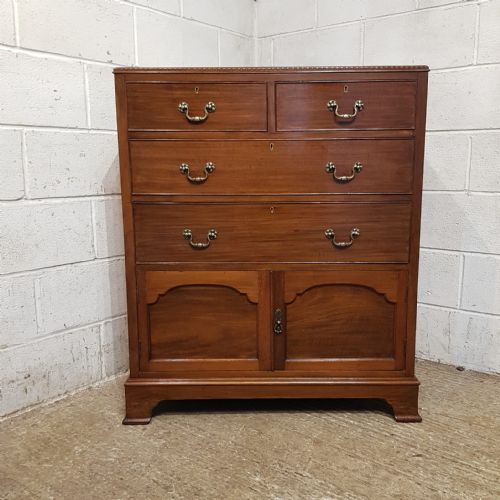
A classic brown tallboy brings architectural proportion and deep timber tones to a bedroom, offering serious vertical storage without sprawling across the floor.
Classic Brown Tallboy
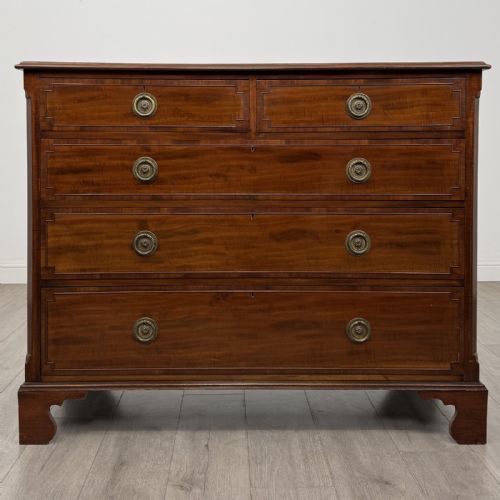
When you search for a classic brown tallboy, you find substantial case furniture built to hold linen and garments in upright proportions. The pieces on this page span the eighteenth, nineteenth and early twentieth centuries, capturing shifts from Georgian restraint to Victorian heft.
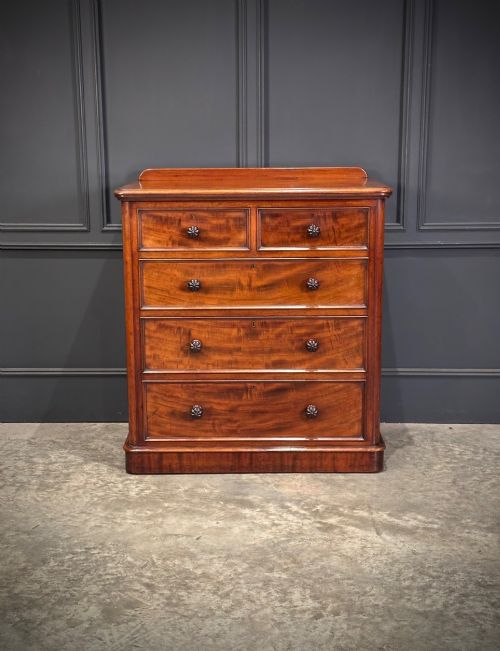
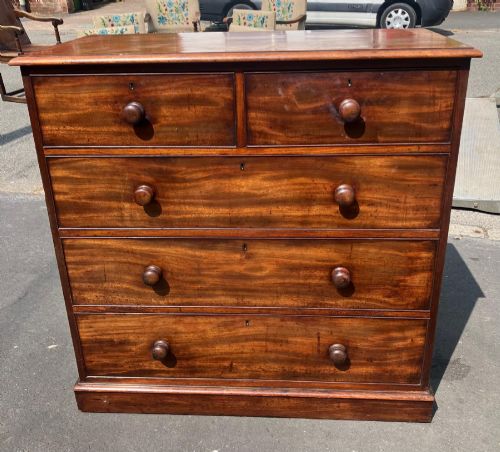
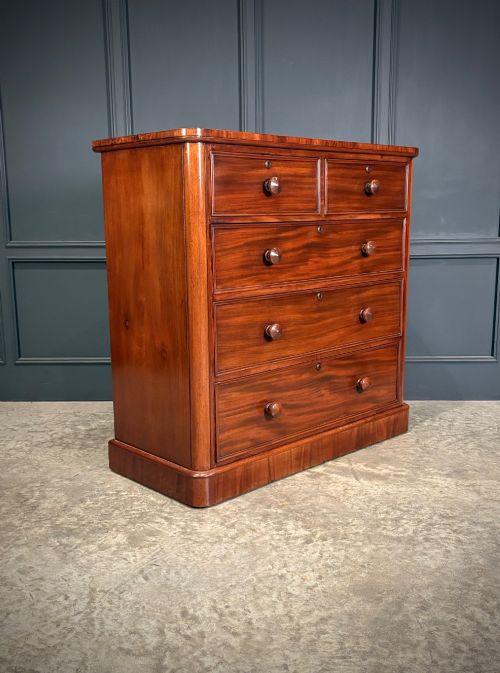
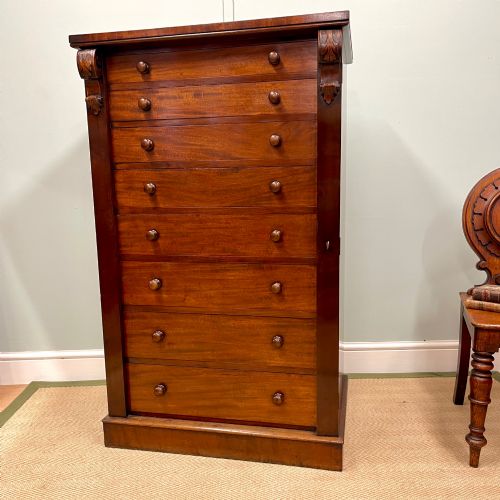
Most examples you meet here are chests of drawers rendered in rich mahogany or walnut, sometimes styled as tallboys or Wellington chests. Makers across the Georgian, Victorian and Edwardian eras favoured timber that could take a deep polish and anchor a room's palette.
Forms range from simple bow fronts to sophisticated chests on stands and secretaire cabinets fitted with writing drawers. You also encounter revival styles from the early twentieth century that mimic the proportions of earlier Georgian and George I pieces.
Materials and construction
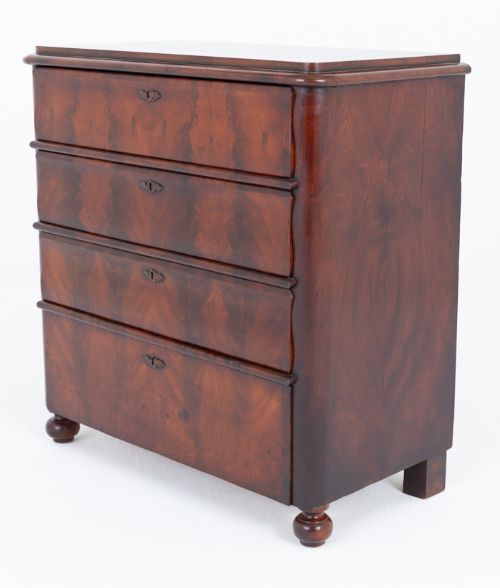
The primary timber across these listings is mahogany, often enhanced with flame mahogany veneer to create rippling grain patterns across the drawer fronts. Workshops also utilised walnut, oak for secondary framing, and pine, while boxwood served for fine stringing inlay.
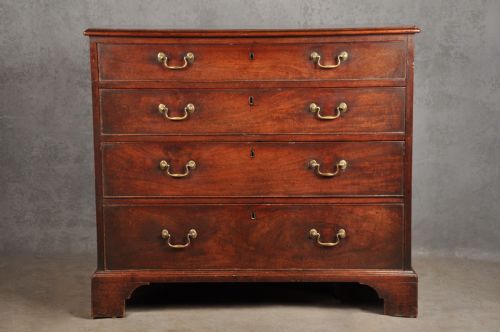
Hardware played a structural and decorative role, with brass handles and bracket feet securing the heavy timber carcases. Drawer construction relied on hand-cut joints, while specialised pieces integrated baize linings for writing surfaces or baize-lined compartments.
Classic Brown Tallboy Retail Price Guide 2026
Typical asking prices for classic brown tallboy among the pieces listed under this phrase on Sellingantiques today, from the lower quarter to the upper quarter. They describe what is for sale here now, not the wider market.
Listings feature mahogany as the dominant timber, accompanied by walnut, oak, and pine across eighteenth, nineteenth, and early twentieth-century periods.
Assessing quality in tallboys
Quality reveals itself in the selection of timber, particularly where cabinetmakers matched flame mahogany veneers symmetrically across multiple drawers. Finer pieces display crisp edge detailing, subtle boxwood inlay, and secondary woods like oak chosen for internal drawer linings rather than pine.
The integrity of the construction governs the hierarchy, separating standard utility furniture from sophisticated metropolitan cabinet work. Original brass handles, well-proportioned bracket feet, and smooth drawer action distinguish the upper tier of surviving examples.
The Classic Brown Tallboy Glossary
- Tallboy
- A tall chest of drawers, typically constructed in two sections with a smaller chest stacked atop a larger base. This vertical format maximises storage capacity while occupying a minimal floor footprint.
- Flame mahogany
- A prized veneer cut from the branch junction of the mahogany tree, displaying a distinctive undulating, flame-like grain pattern. Cabinetmakers reserved this timber for principal drawer fronts.
- Bow front
- A convex, curved front elevation popular on Georgian and Regency case furniture. This curved profile softens the boxy geometry of a chest.
- Bracket foot
- A corner foot shaped from a bracket, commonly found on eighteenth and nineteenth-century case pieces. It provides a stable, elevated base beneath the main body.
- Wellington chest
- A tall, narrow chest of drawers secured by a single hinged locking side pilaster that fastens over the drawer edges. Named after the Duke of Wellington, it was designed for secure storage.
- Secretaire
- A cabinet or chest incorporating a pull-down writing drawer fitted with small compartments and pigeonholes. It combines the utility of a desk with the storage of a chest of drawers.
Classic Brown Tallboy: Frequently Asked Questions
What is a tallboy used for?
A tallboy provides vertical storage for folded clothing, linens, and personal items within a compact footprint. The stacked drawer arrangement allows maximum storage capacity in rooms with limited wall space.
Historically, the upper and lower sections held different categories of garments, keeping dressing chambers ordered. Today, they serve the same practical purpose while adding architectural presence to a bedroom.
How do I date a brown wooden chest?
Dating relies on observing construction methods, timber choices, handle styles, and overall stylistic proportions. Georgian pieces often feature fine bracket feet and solid mahogany, while Victorian examples tend to be heavier with veneered surfaces.
Revival pieces from the early twentieth century mimic these older characteristics but use twentieth-century secondary woods and fixings. Comparing the drawer linings and backboards helps confirm the period of manufacture.
Where should I place a tallboy?
Place a tallboy against a sturdy wall where its vertical height can anchor the room's proportions without blocking light or doorways. Because these pieces are tall and heavy, ensuring they sit level on solid flooring is essential.
Keep them away from direct heat sources and strong sunlight to prevent the mahogany or walnut veneers from drying out or fading over time.
What distinguishes a tallboy from a chest of drawers?
A tallboy specifically refers to a tall, vertical chest that is traditionally constructed in two separate stacked sections. Standard chests of drawers are lower, wider, and built as a single unified carcase.
Tallboys offer more tiers of storage stacked upwards, whereas standard chests prioritize surface space on top for mirrors or decorative objects.