
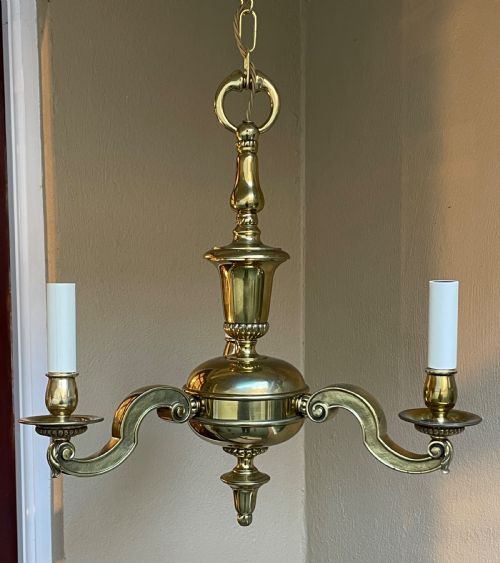
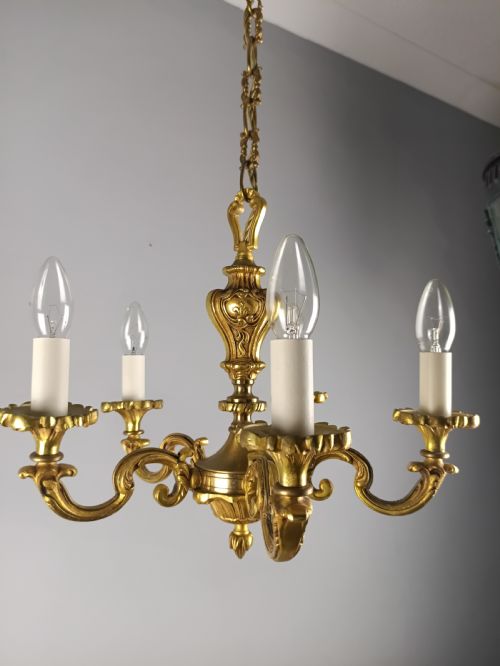

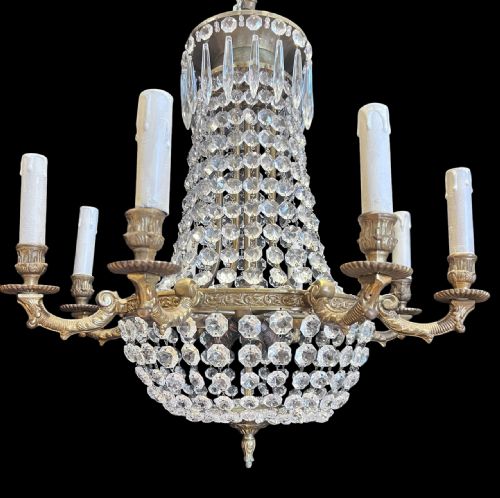
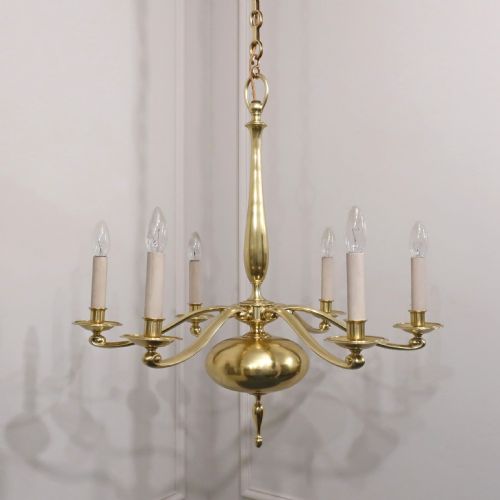
Classic Brass Ceiling Fitting
A classic brass ceiling fitting brings historic illumination and presence to a room, spanning Edwardian designs and nineteenth-century chandeliers.
Classic Brass Ceiling Fitting
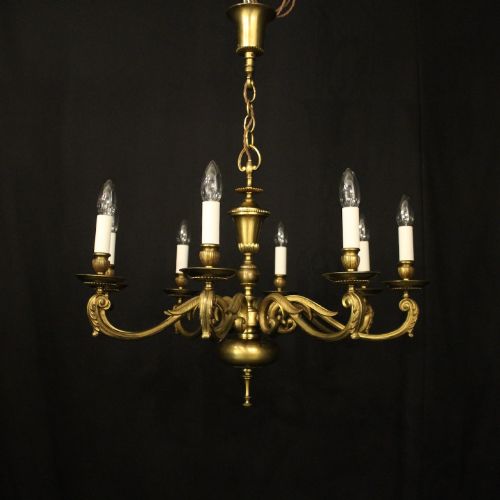
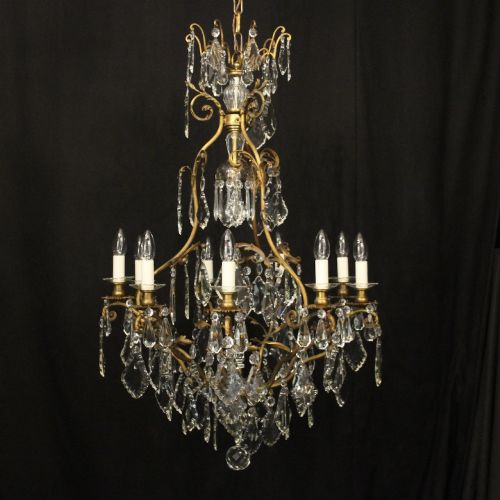
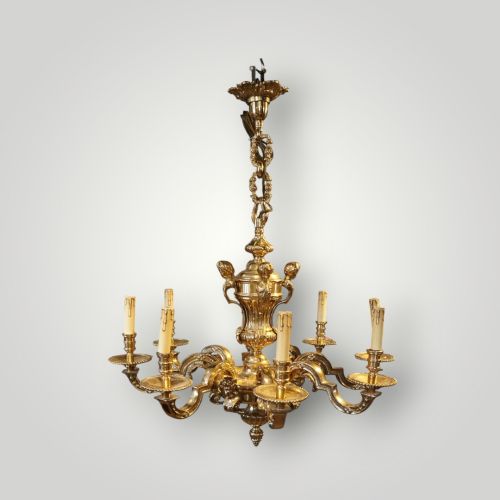
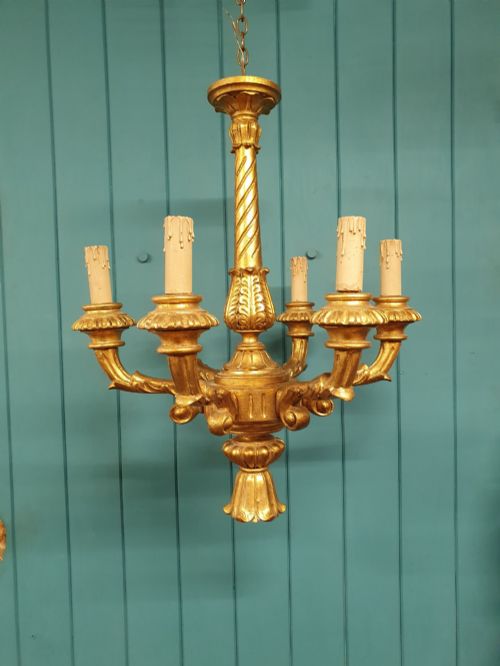
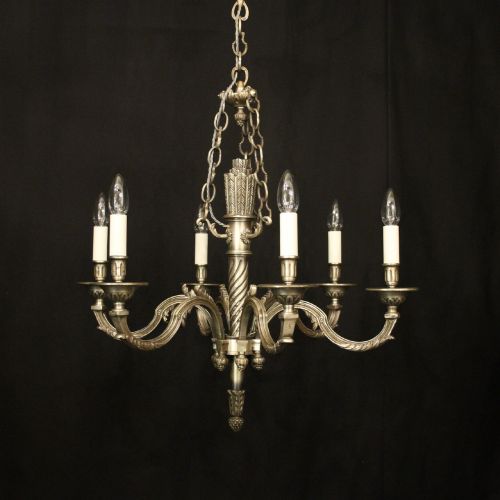
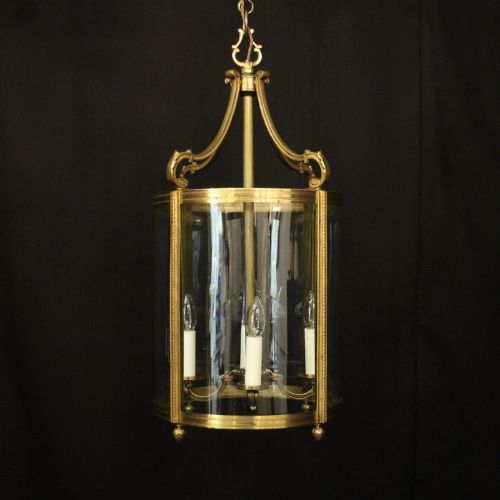
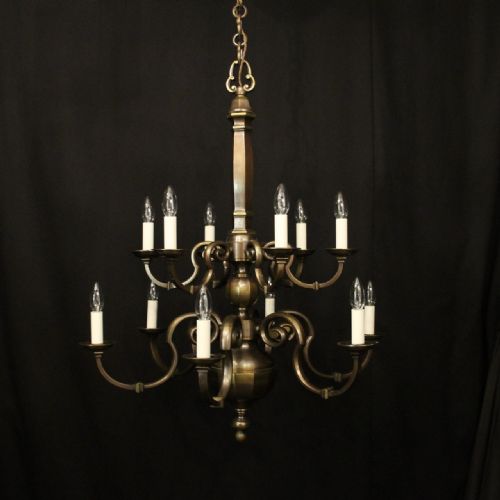
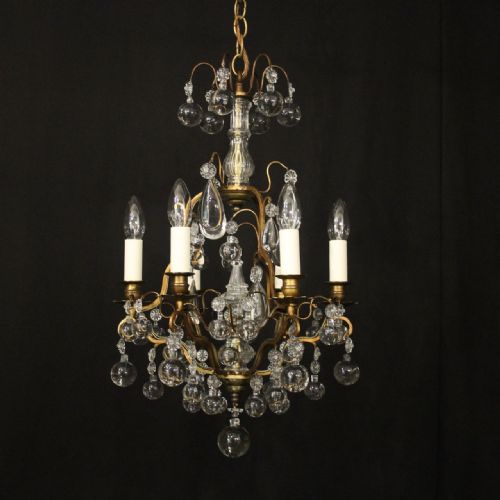
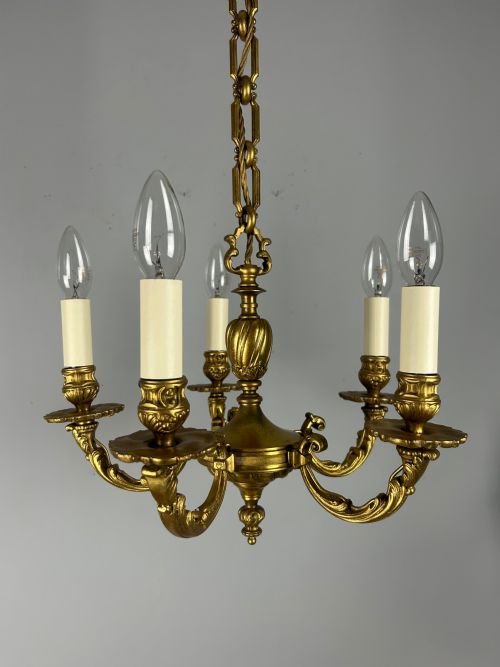
A classic brass ceiling fitting is a light fixture mounted directly to the ceiling or suspended by chains, designed to distribute illumination across a space. These pieces take the form of chandeliers, hall lanterns, and pendant ceiling lights sourced primarily from nineteenth-century and early twentieth-century periods.
The selections encountered here range from compact bag tent fixtures to multi-armed chandeliers spanning several tiers. Styles draw heavily upon French and English traditions, including Empire, Baroque, and Neoclassical designs.
Materials and construction methods
Construction relies upon cast and worked brass, bronze, and gilt bronze combined with glass and crystal elements. Metal frames are cast in multiple branches or arms, then assembled with threaded rods and pins.
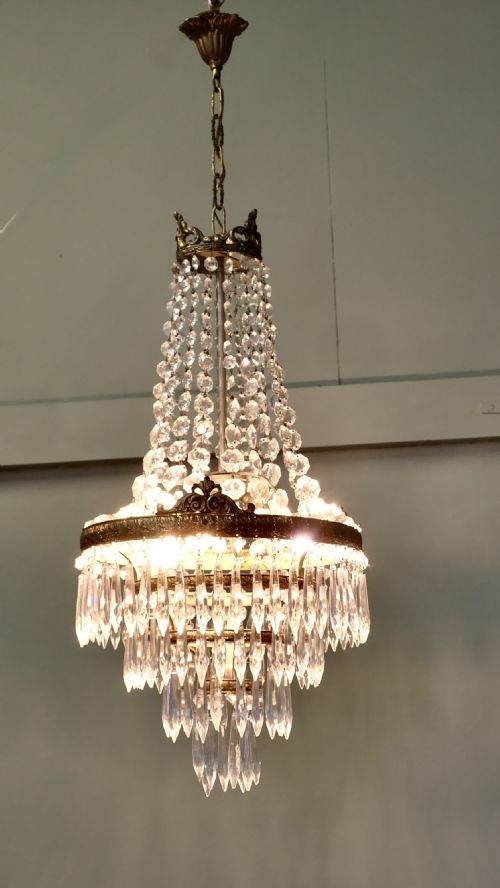
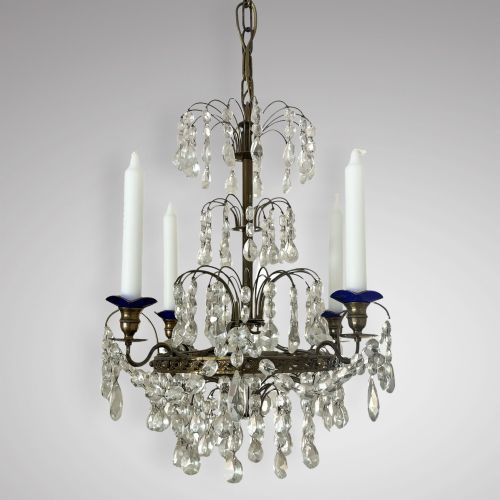
Drop crystals, beads, and glass panels are wired by hand to the metal armatures, particularly on tent and waterfall configurations.
The listings span materials including brass, gilt bronze, crystal, and fabric, originating from nineteenth-century workshops up to the 1930s.
Differentiating quality across pieces
Quality separates through the crispness of the casting work and the depth of the metal finishing, such as fire gilding or silver plating. Finer fixtures exhibit sharply defined ornamentation on the bronze and brass arms rather than soft, smoothed contours.
The integration of the glass and crystal components also marks distinction, where hand-cut pendeloques and heavy moulded glass plates elevate the optical weight of the fixture.
G.E.C
The Classic Brass Ceiling Fitting Glossary
- Tent and waterfall
- A lighting configuration where strings of crystal beads form an upper canopy resembling a tent, dropping over a lower tier of lights. This arrangement maximises the refraction of light from the central bulbs.
- Gilt bronze
- Base bronze metal treated with a gold amalgam or leaf finish to impart a bright metallic sheen. This technique protects the underlying bronze from tarnishing.
- Bag chandelier
- A lighting fixture featuring a flattened or rounded lower basket of glass beads resembling a small bag. The design originates from eighteenth-century forms persisting into later decades.
- Arm
- A lateral branch extending from the central body of a chandelier to hold a candle-holder or electric socket. Arms are typically cast separately and secured to the main stem.
Classic Brass Ceiling Fitting: Frequently Asked Questions
How do I hang a heavy chandelier?
Heavy chandeliers require direct anchoring to a ceiling joist or structural beam using an iron hook and rated junction box. The weight of these multi-arm bronze and brass fixtures exceeds standard drywall capacity.
Professional installation ensures the suspension chain and internal wiring safely support the collective mass of the metal frame and glass components.
How do I clean crystal drops?
Crystal elements and glass beads are best cleaned in situ using a mild solution of warm water and alcohol applied with a soft cloth. Removing individual drops requires unhooking delicate brass wire pins.
Permanent mounting points and metal frames should remain dry during the process to protect the historic finishes of the brass and gilt bronze.
Are these fittings wired for modern electricity?
Most surviving fixtures are adapted for contemporary electrical standards while retaining their original sockets or candle tubes. Rewiring involves running modern insulated cable through the hollow central stem and arms.
Qualified electricians should inspect older internal channels to ensure safe operation with modern voltage levels.
What distinguishes Edwardian from nineteenth-century fittings?
Nineteenth-century pieces frequently display heavier cast bronze ornament influenced by French Empire, Baroque, or Neoclassical revivals. Edwardian examples often feature lighter proportions and silver-plated or simpler brass components.
Stylistic markers and mounting construction help differentiate the manufacturing period of each specific lighting form.