




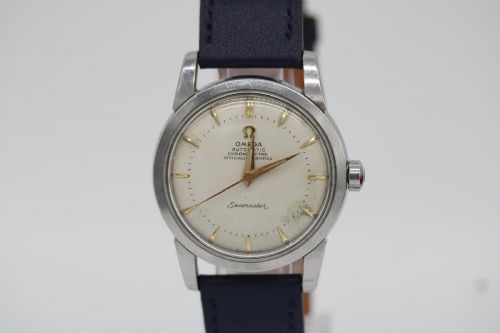
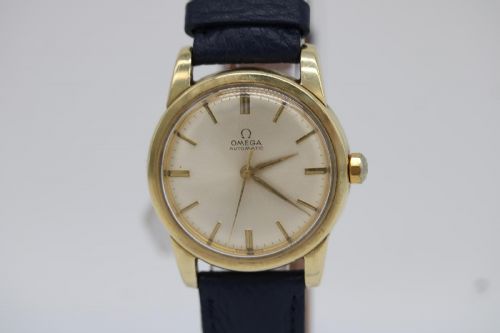
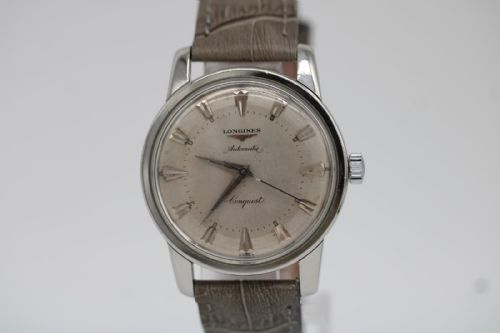
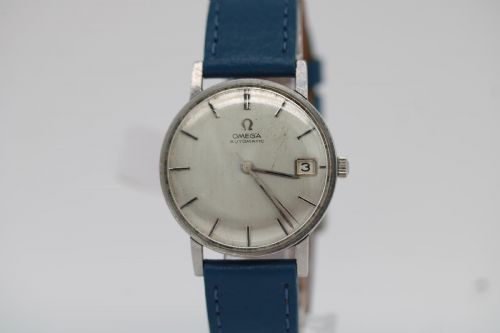

Classic Automatic Watch
A classic automatic watch offers the satisfying weight and perpetual motion of mid-century engineering on the wrist.
Classic Automatic Watch
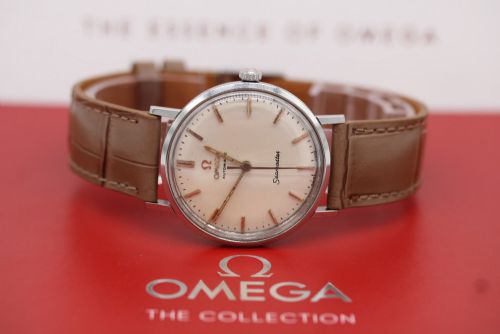
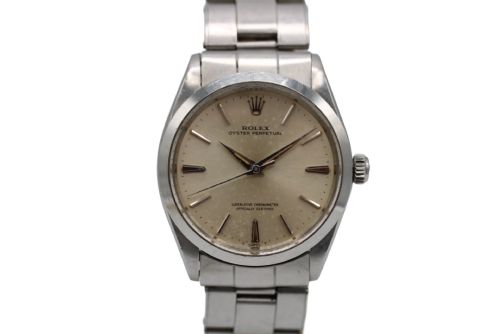
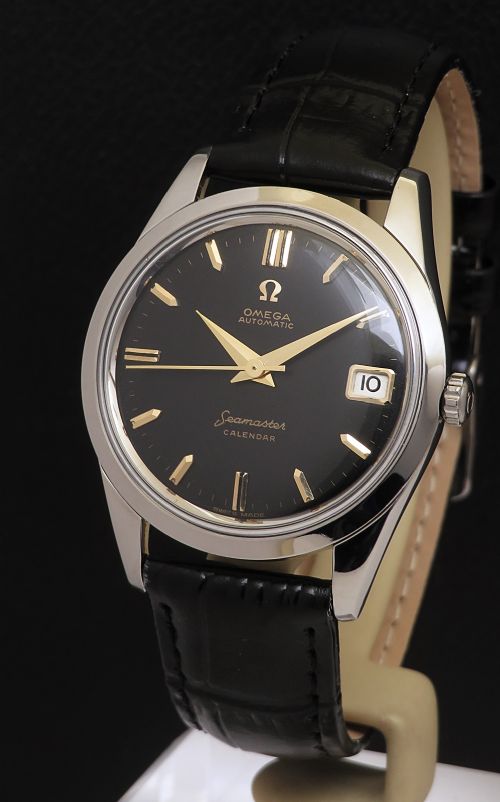
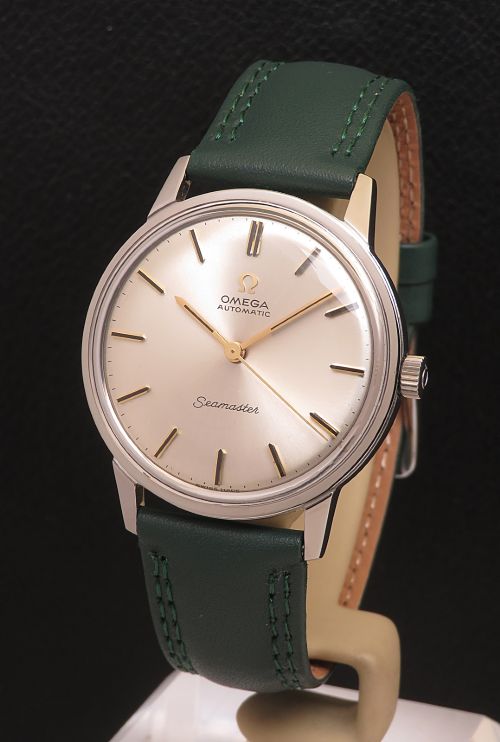
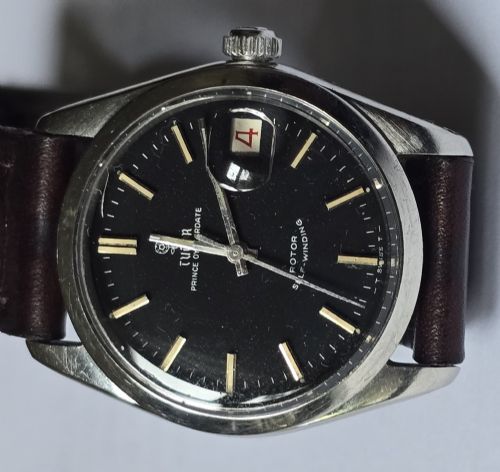
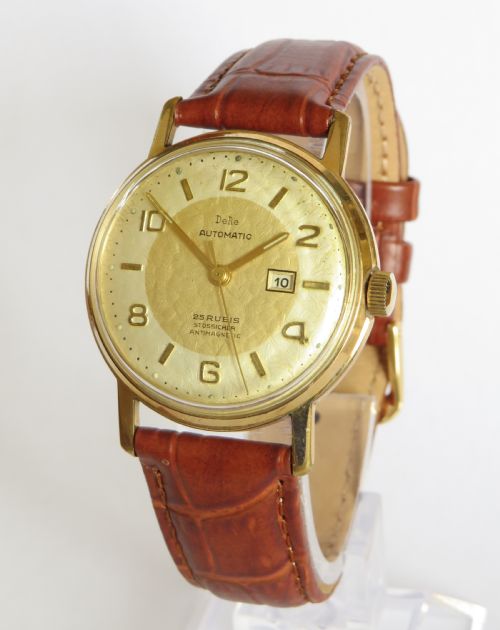
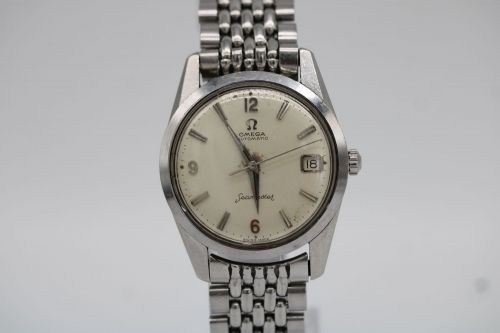
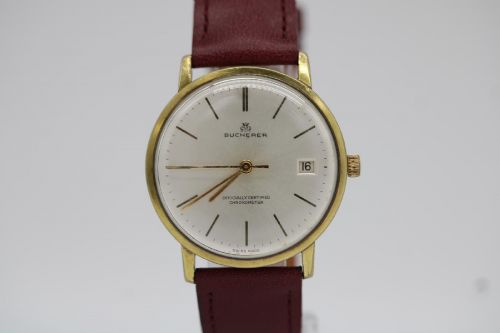
A classic automatic watch represents mid-century wristwatches powered by the natural movement of the wearer's arm rather than manual winding. The selection centres heavily upon iconic mid-century modern designs produced during the nineteen-fifties and nineteen-sixties.
Buyers encounter variations spanning simple silver dials to patinated faces and distinctive black smiley dials. Cases range from utilitarian stainless steel to gold plate and solid nine-carat gold.
Materials and construction
Construction relies heavily upon durable metals such as stainless steel and gold-plated metal, alongside solid nine-carat gold for higher-tier variants. Cases house intricate mechanical automatic movements designed to wind themselves through daily wear.
Dials are protected by glass, acrylic, or acrylic glass, paired with leather straps that complete the assembly. The integration of robust metals with precision internal mechanics defines the physical build of these timepieces.
Classic Automatic Watch Retail Price Guide 2026
Typical asking prices for classic automatic watch among the pieces listed under this phrase on Sellingantiques today, from the lower quarter to the upper quarter. They describe what is for sale here now, not the wider market.
Some early automatic movements use a bumper weight that swings back and forth rather than rotating a full circle.
Distinctions in quality
Quality varies between standard production models and top-tier pieces defined by solid precious metal cases, such as nine-carat gold, compared to gold plating. The presence of original, untouched dials versus fully restored or patinated examples also shifts the character of an individual piece.
The degree of historical preservation, including whether a watch retains its factory finish or has undergone extensive restoration, dictates its standing. Mechanical refinement, spanning standard movements to chronometer-grade calibres, marks the upper echelon of these timepieces.
Omega·Rolex·Tudor·Longines·Eterna
The Classic Automatic Watch Glossary
- Automatic
- A mechanical watch movement that winds itself using a weighted rotor driven by the natural motion of the wearer's wrist.
- Calibre
- The specific internal mechanical movement manufactured to power a particular watch model.
- Acrylic glass
- A lightweight, shatter-resistant transparent plastic material utilised for watch crystals during the mid-century period.
- Chronometer
- A precision watch movement that has been tested and certified to meet high standards of accuracy.
- Patina
- The natural ageing, toning, or colour shift that develops on a watch dial over decades.
Classic Automatic Watch: Frequently Asked Questions
How does an automatic watch wind itself?
An internal weighted rotor spins freely as the wearer moves their arm, transferring energy to the mainspring continuously throughout the day.
This self-winding mechanism removes the need for daily manual winding while the watch is worn regularly.
Are these watches suitable for daily wear?
Many buyers wear these pieces daily, though vintage models require care regarding moisture and heavy impact due to their age.
Matching the watch with a suitable leather strap ensures comfort and practicality for regular use.
What is the difference between steel and gold watches?
Stainless steel cases offer a utilitarian and durable finish suited to everyday utility, while gold-plated and solid nine-carat gold models present a more formal appearance.
Solid gold represents the peak of material luxury within mid-century watchmaking.
How do I identify the production era?
Dating relies on movement serial numbers, case reference numbers, and stylistic cues such as dial typography and handset design typical of the nineteen-fifties and sixties.
Mid-century modern design principles heavily influence the clean lines and legible markers of this period.