



Circular Wooden Mirror
A circular wooden mirror brings warmth and depth to a room, offering a functional focal point shaped by Victorian, Edwardian, and Regency craftsmanship.
Circular Wooden Mirror
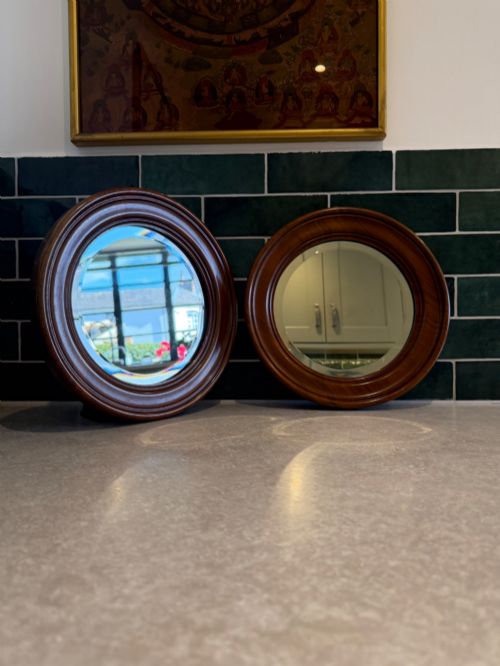
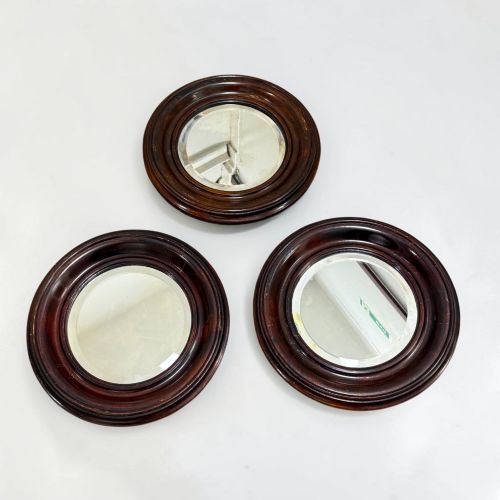
A circular wooden mirror brings a distinct geometric harmony to wall spaces, dressing tables, and washstands. These pieces appear across several eras, spanning Regency, Victorian, Edwardian, and early twentieth-century designs.
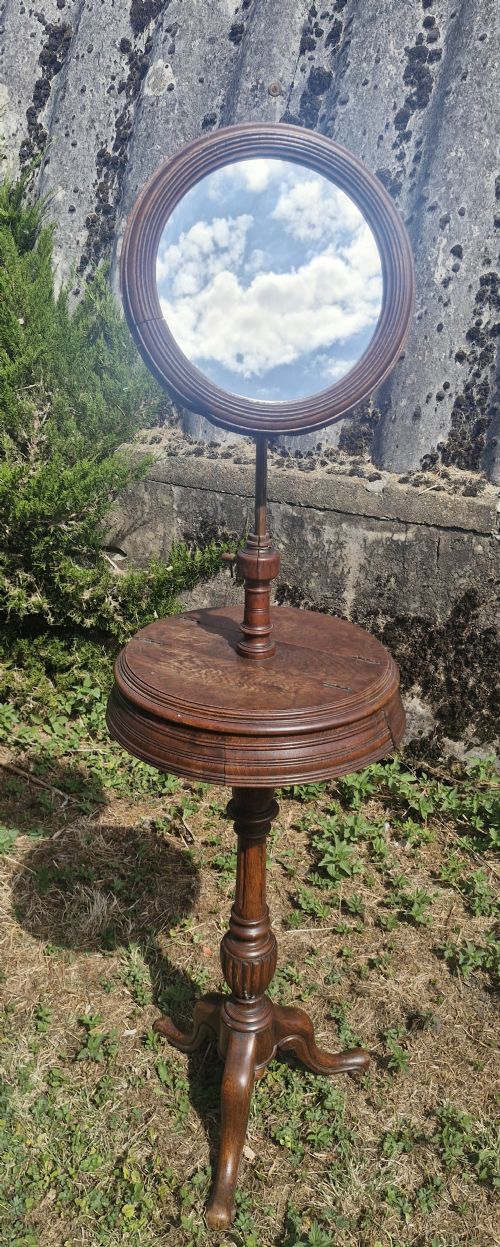
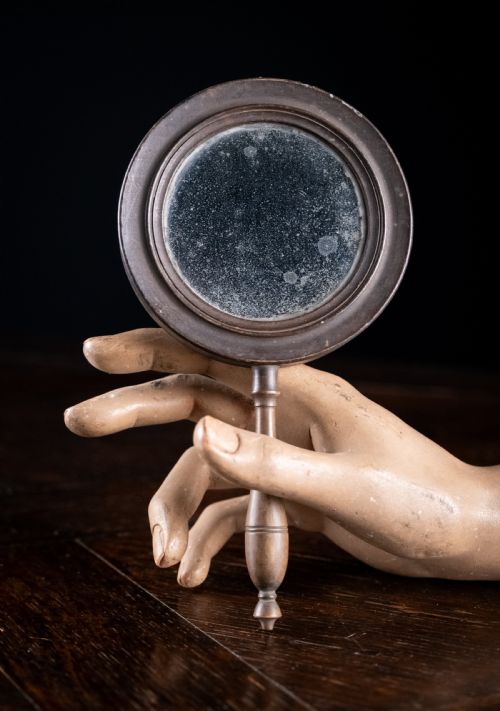
The selection ranges from small hand mirrors and adjustable shaving stands to large wall-hanging frames. Mahogany, walnut, oak, and satinbirch form the primary timber structures holding the glass plates.
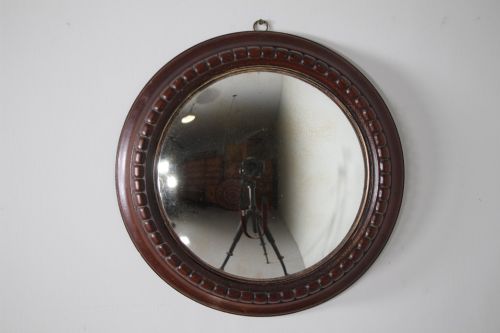
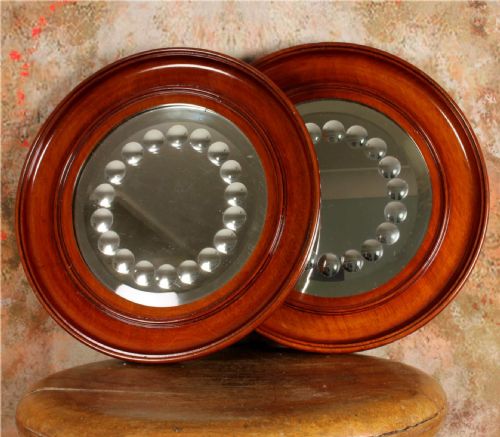
Convex sorcerer or witch's mirrors emerge within the Victorian selections alongside flat plates. Buyers encounter both wall-mounted designs and portable double-sided hand mirrors reflecting various historical periods.
Construction and materials
Frames are turned or carved from solid hardwoods such as mahogany, walnut, and oak. These timbers provide the structural rigidity necessary to support heavy glass plates.
Mirror plates include early examples with foxed surfaces and original glass. Brass fittings appear on adjustable stands and hand mirrors to secure the wooden frames and handles.
Circular Wooden Mirror Retail Price Guide 2026
Typical asking prices for circular wooden mirror among the pieces listed under this phrase on Sellingantiques today, from the lower quarter to the upper quarter. They describe what is for sale here now, not the wider market.
Some Victorian convex examples are known as sorcerer's mirrors, historically tasked with watching over the parlor.
Factors that distinguish quality
The integration of the timber grain dictates visual appeal, where selected mahogany or walnut veneers and solid cuts display rich patination. Superior pieces maintain crispness in the turned wooden mouldings around the perimeter.
Originality of components marks the distinction between standard examples and finer survivals. The presence of untouched mirror plates, original brass mountings, and uncompromised backing woods elevates the integrity of the object.
The Circular Wooden Mirror Glossary
- Convex mirror
- A curved glass plate that reflects a wide, distorted panoramic field of vision. These are often housed in circular frames.
- Foxed mirror plate
- Glass that exhibits age-related degradation and dark spots beneath the surface. This chemical alteration reflects the passage of time.
- Ebonised
- Wood treated with a dark finish to resemble ebony. This technique creates a stark, formal contrast against the reflective glass.
- Shaving stand
- A piece of furniture incorporating an adjustable mirror for grooming. These frequently feature wooden frames supported by pedestals or legs.
Circular Wooden Mirror: Frequently Asked Questions
How do I hang a heavy circular wooden mirror?
Heavy wall mirrors require secure fixings into structural wall studs or appropriate masonry anchors. The weight of solid hardwood frames and glass necessitates robust hardware.
Ensure the hanging wire or integrated brackets on the reverse match the designated load capacity of your wall fixings.
How should I clean antique mirror glass?
Clean antique mirror plates gently using a soft cloth and a minimal amount of distilled water or mild glass cleaner. Avoid spraying liquid directly onto the glass to prevent moisture seeping behind the plate.
Take care around the edges of the glass and the surrounding wooden frame to protect aged silvering and historic finishes.
How do I identify the period of a wooden mirror?
Dating relies on observing timber choices, construction techniques, and the characteristics of the mirror plate itself. Victorian and Edwardian pieces often display specific mouldings and backboards.
Consulting the fastener types, frame joinery, and wear patterns helps distinguish nineteenth-century production from early twentieth-century examples.