



Circular Wood Mirror
A circular wood mirror brings depth and light to a room, offering practical reflection packaged in a compact, balanced frame.
Circular Wood Mirror
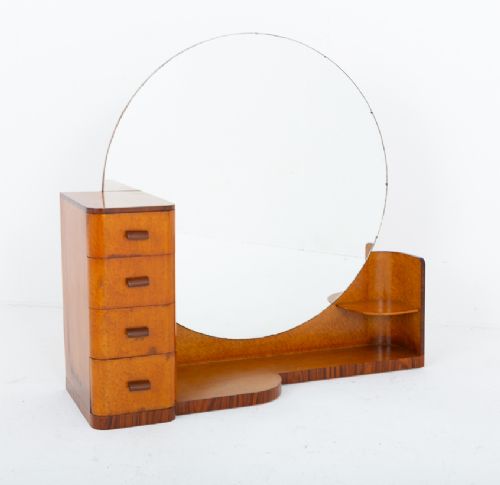
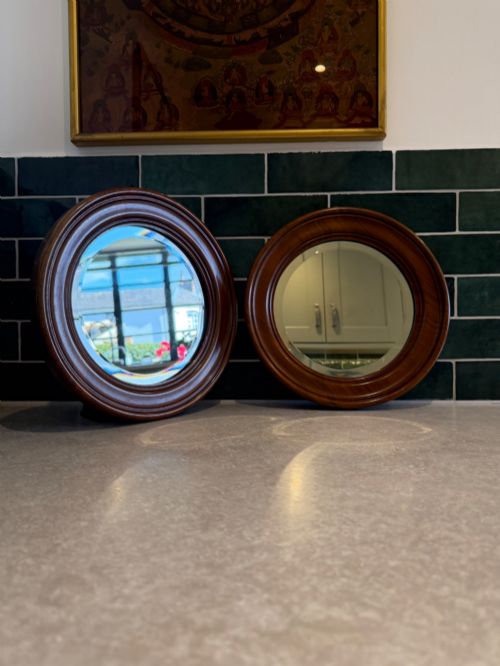
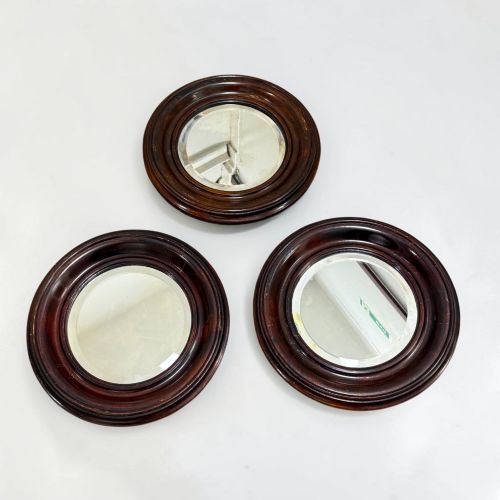
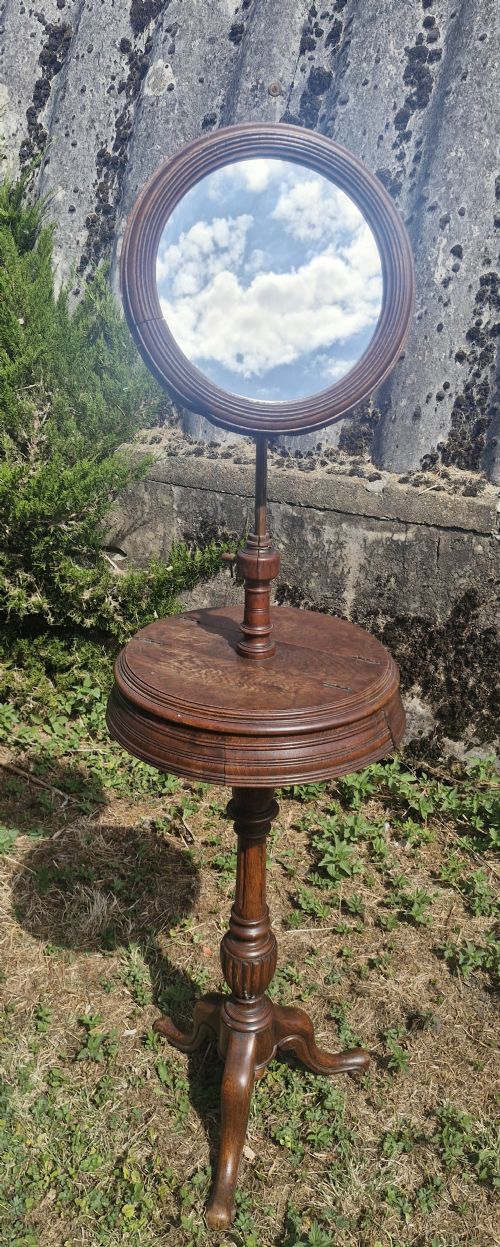
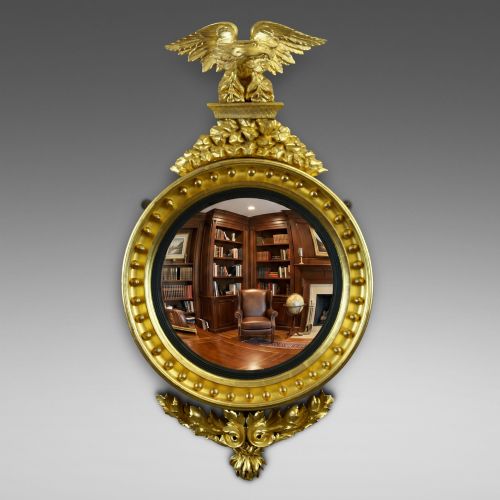
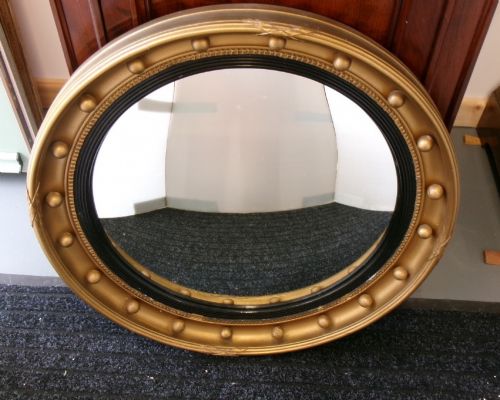
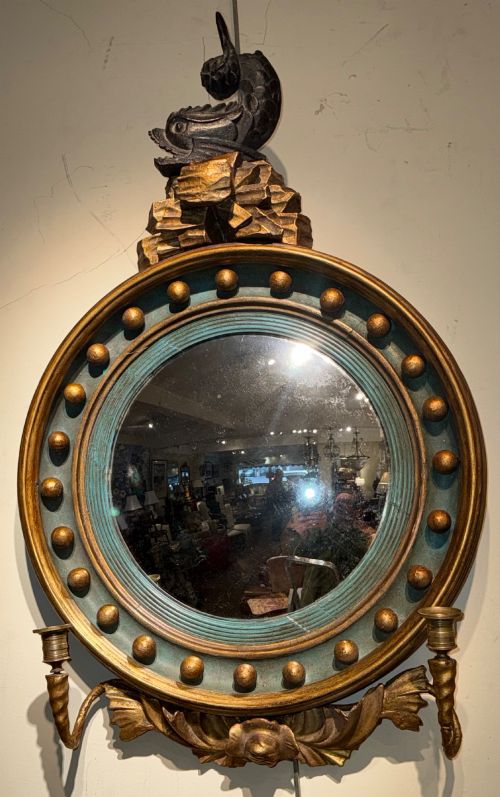
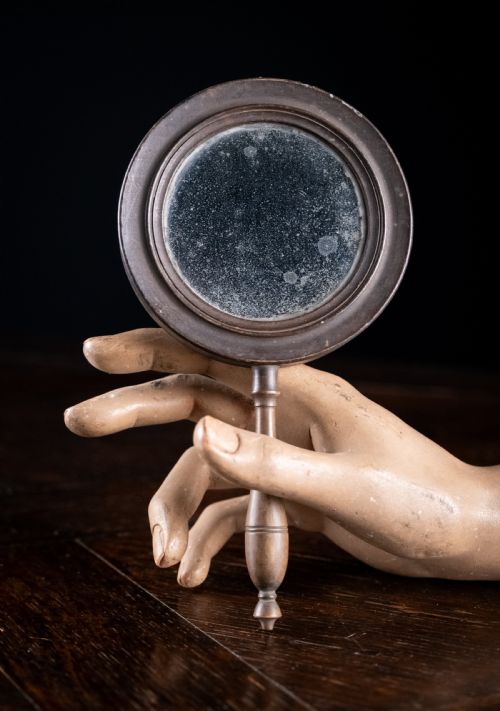
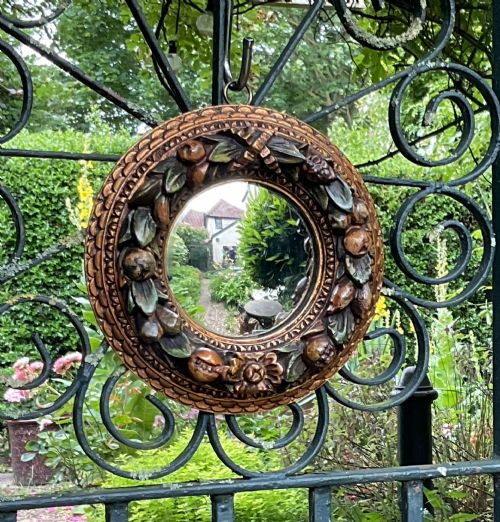
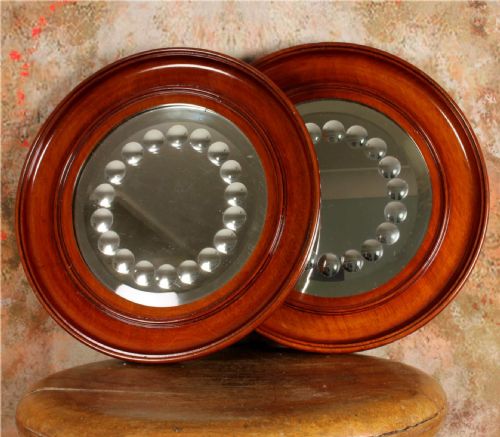
A circular wood mirror gathers light from across a room into a single convex or flat glass plate set within a timber or gilded wooden frame. These pieces span wall mirrors, dressing table accessories, shaving stands, and small hand mirrors from periods including the Regency era, the Victorian period, and the 1930s.
The most frequent finds on this page are convex wall mirrors framed in giltwood or mahogany, alongside Victorian shaving stands and walnut-framed rounds. Dating ranges from the early nineteenth century through to early twentieth-century revivals and Art Deco designs.
Origins include English workshops and continental European styles, encompassing Florentine Rococo carvings and simple Edwardian trims. The scale moves from compact hand-held pieces to large wall-hanging convex glasses.
Materials and construction
Makers shaped these frames from solid timbers such as mahogany, walnut, oak, and birds eye maple, frequently applying ebonisation or a gesso ground beneath gilding. Giltwood frames rely on carved wooden bases prepared with layers of gesso to hold metallic leaf.
Glass plates include both flat mirror glass and curved convex plate glass, sometimes retaining original foxed surfaces. Brass fittings appear on adjustable stands, while structural joints employ period joinery appropriate to each century.
Circular Wood Mirror Retail Price Guide 2026
Typical asking prices for circular wood mirror among the pieces listed under this phrase on Sellingantiques today, from the lower quarter to the upper quarter. They describe what is for sale here now, not the wider market.
Listings feature timbers including mahogany, walnut, oak, and birds eye maple, paired with giltwood and brass details.
Judging quality
Quality rests upon the crispness of the timber carving or the depth of the giltwood gesso layers. Crisp mouldings and well-preserved original mirror plates distinguish finer examples from plain later replacements.
Proportion and the integrity of the wooden frame determine the overall success of the piece. Subtle details such as original brass turn-screws on shaving stands or untouched ebonised surfaces elevate individual items.
Betty Joel
The Circular Wood Mirror Glossary
- Convex mirror
- A curved glass plate that reflects a wide, fish-eye field of view across the interior. These pieces are often housed in circular frames with applied gilt balls.
- Giltwood
- Timber coated with gold leaf applied over a prepared gesso ground. This technique creates a luminous surface common on Regency and Florentine frames.
- Gesso
- A plaster-like mixture applied to wood to create a smooth surface for gilding. It allows for intricate moulded decoration around the mirror rim.
- Ebonised
- Wood stained or painted black to imitate ebony. This finish appears on Victorian and Regency pieces for a sharp, dark contrast.
- Foxed mirror plate
- Glass showing dark spots or speckling caused by age and the degradation of the backing. Collectors often value this sign of antique authenticity.
- Plateau mirror
- A mirrored tray or base placed upon a surface to reflect objects set upon it. These are sometimes found in matched pairs.
Circular Wood Mirror: Frequently Asked Questions
What is a convex mirror used for?
A convex mirror provides a wide-angle view of an entire interior space from a single wall position. Historically, they allowed servants to monitor multiple doorways or gave occupants a comprehensive look at a parlour.
Today, they function primarily as decorative focal points that draw light into darker corners and break up the linearity of wall art.
How do I date an antique wood mirror?
Dating relies on examining the timber species, the construction of the backboards, and the manufacturing method of the glass plate. Regency and Victorian pieces often show distinct joinery techniques and specific frame profiles.
Matching the style of the carving, such as Florentine Rococo or Art Deco geometry, narrows down the period of manufacture.
Are original mirror plates common?
Original plates do survive in many pieces, often displaying characteristic foxing, minor speckling, and gentle distortion. These natural signs of ageing confirm the period of the glass.
Replacement plates are cleaner and clearer, which some buyers prefer for practical daily reflection in a hallway or dressing room.
How do I hang a heavy wood mirror?
Heavy wood and giltwood frames require secure fixing directly into wall studs or the use of appropriate cavity anchors rated for the weight. The hanging wire or brackets on the back must match the substantial load of solid timber and glass.
Consulting a professional installer ensures the piece remains secure against the wall without straining the antique frame joints.