





Circular Footstool
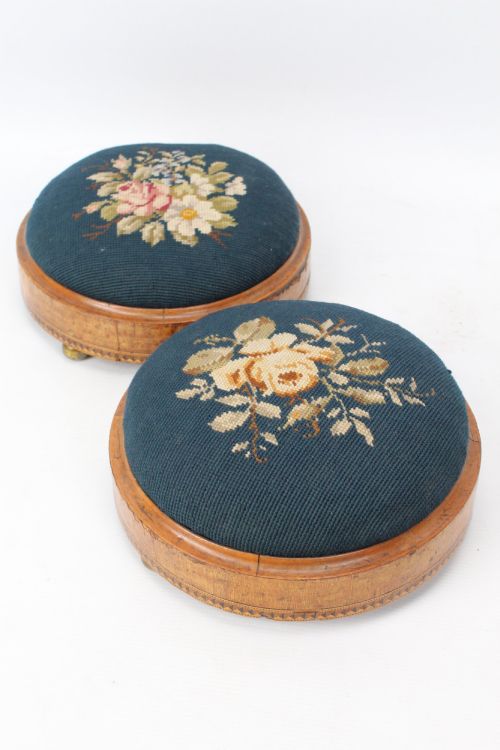
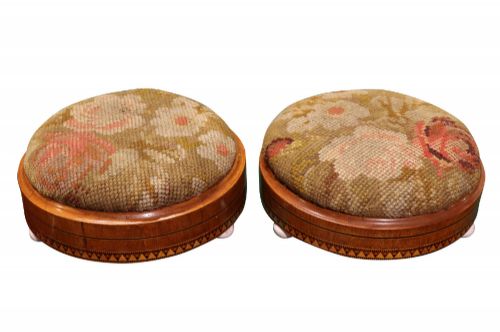
A circular footstool is a low, round seat designed for resting the feet, most commonly found here in Victorian walnut or mahogany.
Circular Footstool
A circular footstool is a compact, round seat designed for domestic comfort, appearing across the nineteenth and twentieth centuries in various domestic settings. These pieces range from simple country elm and oak designs to more decorative urban models featuring inlaid woods and carved frames.
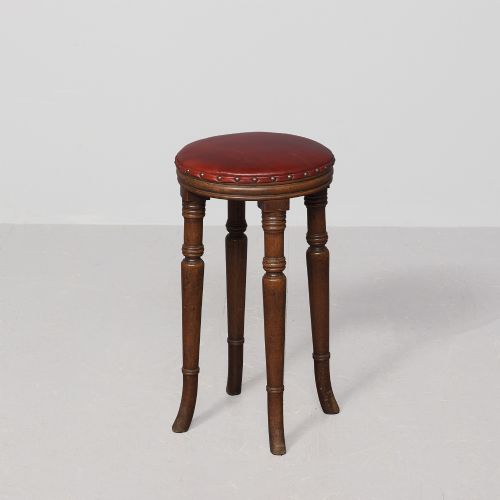
The version most likely to be met on this page is the Victorian walnut or mahogany footstool, frequently encountered with upholstered tops. Buyers also encounter piano stools, dressing stools, and larger French or George III examples spanning the eighteenth to the twentieth centuries.
How they were made
Makers constructed these frames predominantly from dense hardwoods such as mahogany, walnut, oak, and elm, often shaping them on a lathe or joining them with traditional cabinetmaking techniques. Brass accents, giltwood, and gesso moulding occasionally feature on more decorative French and nineteenth-century examples.
Upholstery forms a vital part of the construction, utilising textiles, wool-work, petit point tapestry, kelim, and leatherette secured over padding. Inlaid details such as Tunbridge work or marquetry frequently embellish the wooden surrounds of Victorian pieces.
Circular Footstool Retail Price Guide 2026
Typical asking prices for circular footstool among the pieces listed under this phrase on Sellingantiques today, from the lower quarter to the upper quarter. They describe what is for sale here now, not the wider market.
Styles span the George III period through Victorian, Arts and Crafts, and Art Deco eras.
What varies in quality
The quality of a circular footstool depends heavily on the selection of timber and the crispness of the woodwork, such as finely carved frames or precise marquetry inlay. Better pieces display superior proportions and thoughtful integration of decorative elements like giltwood or specialised upholstery.
Simpler vernacular examples rely on honest utility, using native woods like elm and oak without superfluous ornament. The distinction lies between standard production items and those enhanced by cabinetmakers using superior materials and decorative techniques.
James Shoolbred
The Circular Footstool Glossary
- Petit point
- A form of tent stitch embroidery using fine wool or silk on canvas, commonly seen on nineteenth-century footstool upholstery. This technique allows for intricate, highly detailed pictorial or geometric patterns.
- Tunbridge ware
- A type of decorative woodwork characterised by tiny mosaic tiles made of various coloured woods to form geometric or pictorial designs. It frequently decorates the borders of Victorian table tops and footstools.
- Giltwood
- Wood that has been coated with a thin layer of gold leaf or gesso and gold paint. It appears on decorative French nineteenth-century frames.
- Kelim
- A flatwoven textile or rug originating from the Middle East or Eastern Europe, sometimes repurposed as upholstery on nineteenth-century stools. It provides a durable and colourful covering.
- Mahogany
- A durable, reddish-brown tropical hardwood favored by cabinetmakers for its stability and fine grain. It forms the structure of many nineteenth-century pieces.
Circular Footstool: Frequently Asked Questions
What is a circular footstool used for?
These low round seats were originally designed for resting tired feet beside the fireplace in nineteenth-century parlours. Today, they serve a similar domestic function while also acting as decorative small seats or plant stands.
Their compact proportions allow them to fit easily beneath tables or beside armchairs without cluttering modern rooms.
How do I date a Victorian footstool?
Dating relies on examining the underlying timber, turning style, and upholstery methods used in the frame's construction. Pieces from around eighteen-sixty often feature solid mahogany or walnut with hand-stitched wool-work.
Later nineteenth-century examples may display machine-woven textiles, varied inlay work, or modified turned legs reflecting changing domestic fashions.
Are piano stools different from footstools?
Piano stools are generally taller and sometimes incorporate internal storage beneath the seat for sheet music. Footstools are built lower to the ground for comfortable foot elevation.
Both share round wooden frames and upholstered tops, making them visually similar across the nineteenth-century domestic interior.
How do I care for antique upholstery?
Care involves gentle vacuuming with a soft brush attachment to remove dust without damaging fragile vintage textiles or wool-work. Keeping the piece away from direct sunlight prevents the fading of traditional tapestries and fabrics.
Treating exposed wooden frames with appropriate furniture wax preserves the finish without harming the surrounding upholstery.