


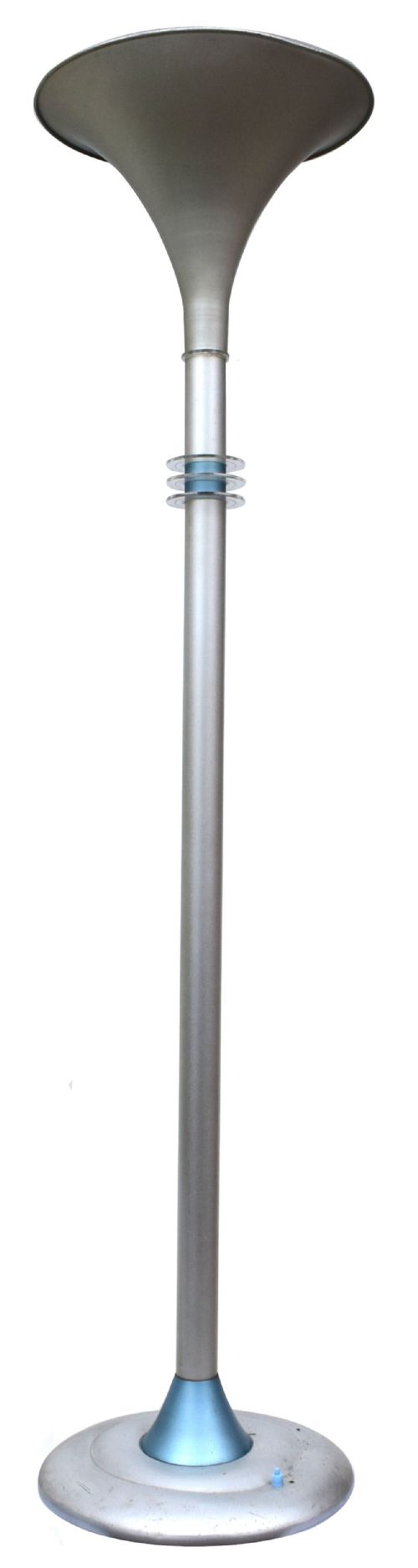


Chrome Uplighter Lamp
A chrome uplighter lamp brings directional light and clean geometric lines to a room, channelling the spirit of interwar design.
Chrome Uplighter Lamp
A chrome uplighter lamp is a light fitting designed to cast illumination upwards, taking the form of floor lamps, wall lights, and table lamps. These pieces belong predominantly to the Art Deco and Modernist movements, originating from the Edwardian period through to the 1930s.
The selection on this page centres on wall lights, sconces, and floor-standing torchiere models. Buyers meet trumpet sconces, matching pairs, and standard lamps that utilise polished metal and directional shades.
Forms range from wall-mounted brass and chrome fixtures to tall floor lamps and desk lamps. The visual language relies on streamlined shapes, metal finishes, and glass components that direct light toward the ceiling.
How they were made
Construction relies on metal fabrication, employing chrome plating over base metals alongside solid bronze and aluminium structures. These metal components provide the structural integrity and polished sheen characteristic of the period.
Art Deco lighting occasionally brings a cherub into the mix, proving that even streamlined modernity cannot resist a little classical charm.
What varies in quality
Quality rests in the heaviness of the metal casting and the crispness of the Art Deco or Modernist geometry. Better examples maintain consistent plating across complex trumpet sconces and multi-tiered floor lamp stems.
The integration of original glass components, such as frosted or opaline shades, elevates a piece significantly. Superior construction shows in the clean alignment of matching pairs and the secure mounting of glass to metal frames.
GEC
The Chrome Uplighter Lamp Glossary
- Torchiere
- A tall floor lamp featuring an upward-facing bowl or shade. These fixtures gained immense popularity during the interwar period for ambient illumination.
- Opaline
- A milky, translucent glass used for lamp shades to soften and diffuse light evenly. It appears frequently in desk lamps and wall sconces.
- Bakelite
- An early form of synthetic plastic used for electrical fittings, switches, and decorative accents. Its presence confirms the period authenticity of many interwar components.
- Sconce
- A wall-mounted light fixture secured directly to a vertical surface. These often appear in matching pairs or sets to flank architectural focal points.
Chrome Uplighter Lamp: Frequently Asked Questions
What is a chrome uplighter lamp?
A chrome uplighter lamp is an interior lighting fixture that casts light upwards towards the ceiling. These pieces draw on Art Deco and Modernist design principles from the early twentieth century.
They appear as floor lamps, desk lamps, and wall sconces, combining polished metal with glass shades to create ambient room illumination.
How do I style a wall sconce?
Wall sconces work effectively in pairs or sets to frame mirrors, fireplaces, or doorways. Matching pairs create a balanced, symmetrical aesthetic in hallways and living spaces.
Positioning them at eye level ensures the upward beam distributes light evenly across the wall and ceiling surfaces.
What materials are used in 1930s lamps?
Interwar lighting relies heavily on chrome, aluminium, and bronze for structural frames and wall mounts. These metals provide a durable and reflective finish.
Glass elements, particularly frosted and opaline varieties, soften the upward glare, while Bakelite is utilised for switches and electrical housings.
Are these lamps suitable for daily use?
These pieces function well in modern interiors when wired safely to contemporary electrical standards. Floor lamps serve as reading or ambient lights, while wall sconces add layered illumination.
Buyers should consult a qualified electrician to ensure vintage wiring meets current safety regulations before installation.