



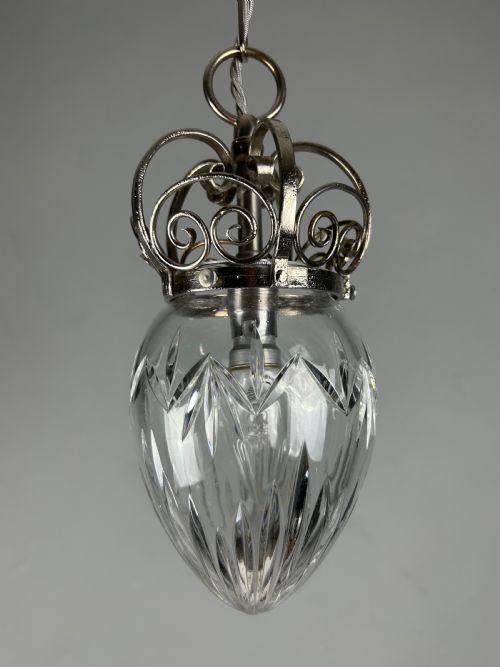


Chrome Glass Pendant Light
A chrome glass pendant light brings industrial strength and sleek geometric lines together for bright, focused overhead illumination.
Chrome Glass Pendant Light
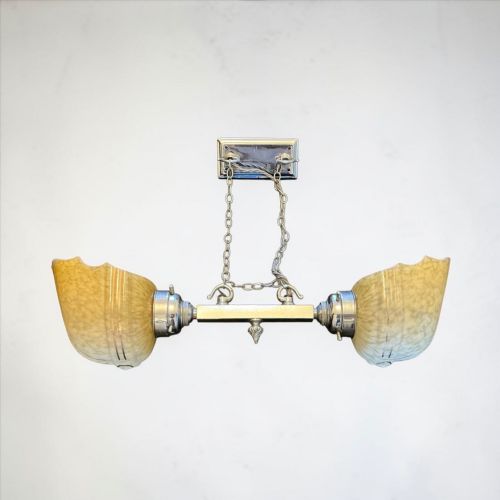
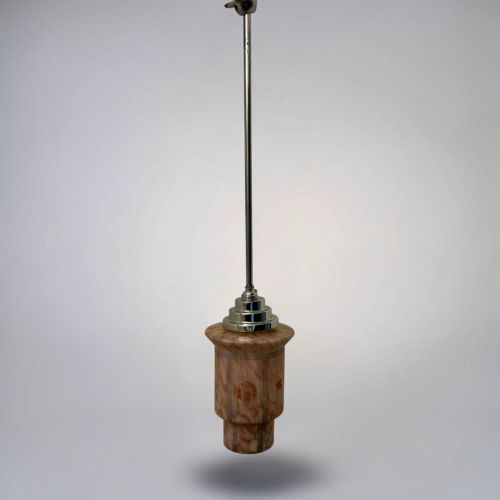
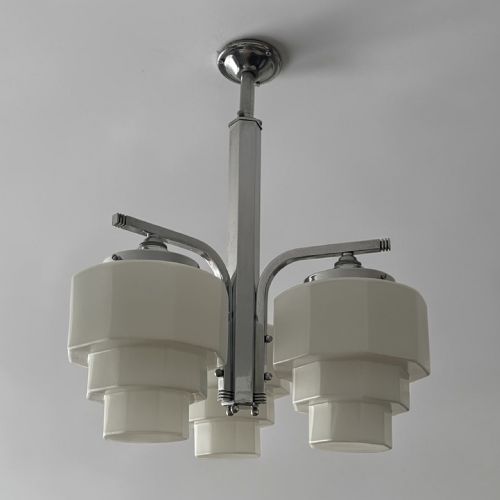
A chrome glass pendant light combines polished metal hardware with translucent shades to create striking overhead illumination for modern and period interiors alike. These fixtures emerge predominantly from the Art Deco period of the 1920s and 1930s, displaying characteristic geometric forms and streamlined industrial appeal.
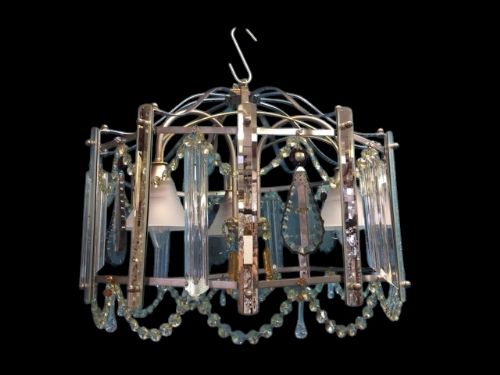
Buyers meet variations ranging from simple hanging lights to multi-piece suites, bag chandeliers, and pendant lanterns. The forms utilise distinct shade silhouettes, including clam shell, fish scale, and reeded designs, suspended from ceilings to serve as functional centrepieces.
How they were made
The construction relies on the pairing of metal structures with various forms of glass. Makers utilise chrome, nickel plated metal, steel, and brass for the galleries and frames, providing a durable and reflective metallic skeleton.
The glass components are shaped into frosted glass, opaline glass, cut glass, and crystal shades. These are secured by specialised metal galleries to diffuse light evenly while exposing the contrasting textures of polished chrome and smooth or textured glass.
Chrome Glass Pendant Light Retail Price Guide 2026
Typical asking prices for chrome glass pendant light among the pieces listed under this phrase on Sellingantiques today, from the lower quarter to the upper quarter. They describe what is for sale here now, not the wider market.
Listings span the 1920 and 1930 periods, incorporating materials such as chrome, frosted glass, opaline glass, steel, brass, and crystal.
What varies in quality
Quality reveals itself through the complexity of the glass moulding and the finish of the metalwork. Pieces featuring intricate cutting or specialised opaline textures demand greater craftsmanship than plain translucent shades.
The integrity of the structural hardware, from the chrome gallery to the supporting chains, dictates the overall refinement of the fixture. Matching suites and matched pairs command greater interest for unified interior schemes.
Émile-Jacques Ruhlmann
The Chrome Glass Pendant Light Glossary
- Chrome
- A hard, corrosion-resistant metallic coating applied to base metals to provide a bright, reflective finish. It became a defining material for twentieth-century industrial and Art Deco design.
- Opaline glass
- A milky, semi-translucent white glass that diffuses light softly without harsh glare. It appears frequently in period lighting for its clean and even illumination.
- Pendant light
- A hanging light fixture suspended from the ceiling by a cord, chain, or metal rod. It directs illumination downward into a specific area of a room.
Chrome Glass Pendant Light: Frequently Asked Questions
What periods do these lights come from?
The available pieces originate primarily from the 1920s and 1930s, aligning with the height of the Art Deco movement.
These decades produced the distinctive industrial and geometric styles seen across the current selection.
How do I hang a pendant light?
Pendant lights suspend from the ceiling using chains, rods, or cords attached to a secure electrical junction box.
Professional installation is recommended to support the weight of the metal and glass components safely.
What glass types are used?
Shades are formed from frosted glass, opaline glass, cut glass, and crystal.
Each type alters the quality of the light, ranging from soft diffusion to sharp, refractive sparkle.
Are these lights suitable for low ceilings?
Pendant lights hang down from the ceiling, so clearance must be measured carefully before installation.
Shorter fixtures or flush ceiling lights work better in rooms with restricted vertical space.