


Christian Devotional Oil Artwork
Christian devotional oil artwork comprises painted sacred subjects on canvas and panel intended for prayer, spanning centuries of European religious tradition.
Christian Devotional Oil Artwork
Christian devotional oil artwork encompasses religious paintings created for contemplation and spiritual focus within domestic or institutional settings. These pieces range from intimate small-scale panels to monumental canvases portraying sacred figures and Biblical narratives.
Buyers encountering this selection will find works spanning the sixteenth, seventeenth, eighteenth, and nineteenth centuries, alongside twentieth-century examples. Italian, Spanish, Central European, and Hessian schools are represented among the regional origins.
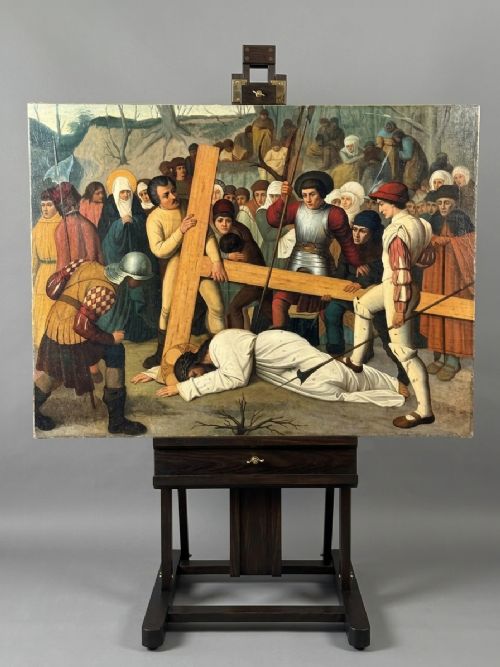
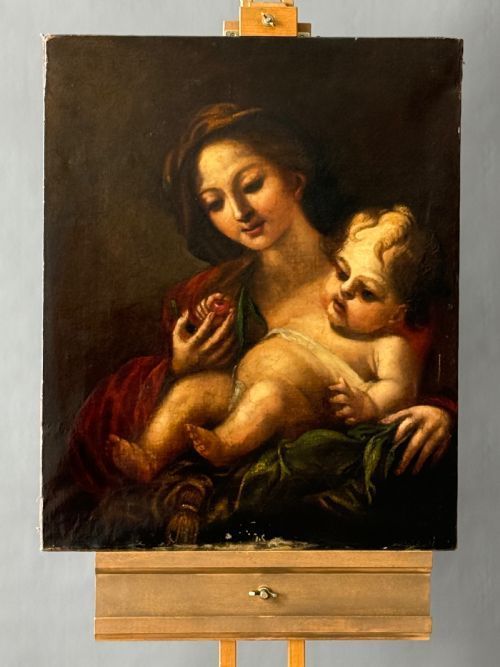
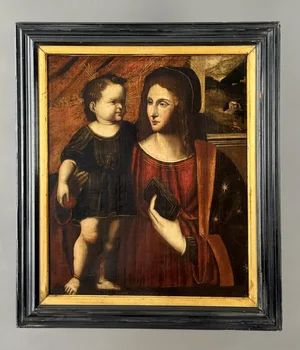
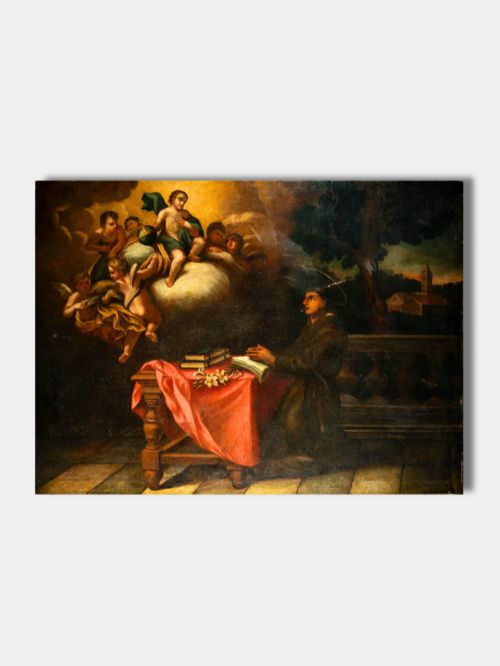
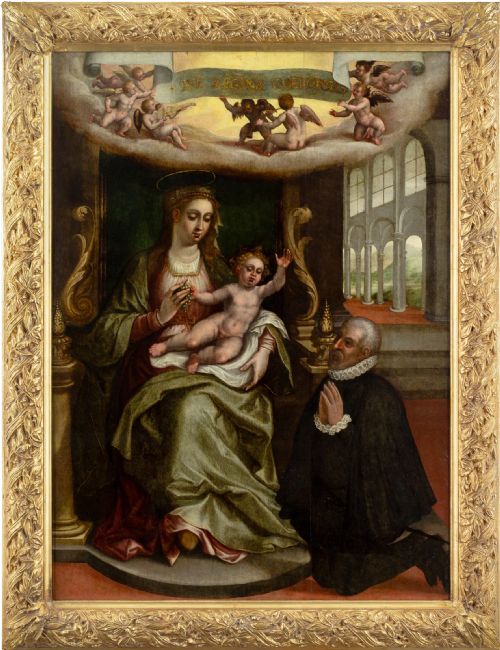
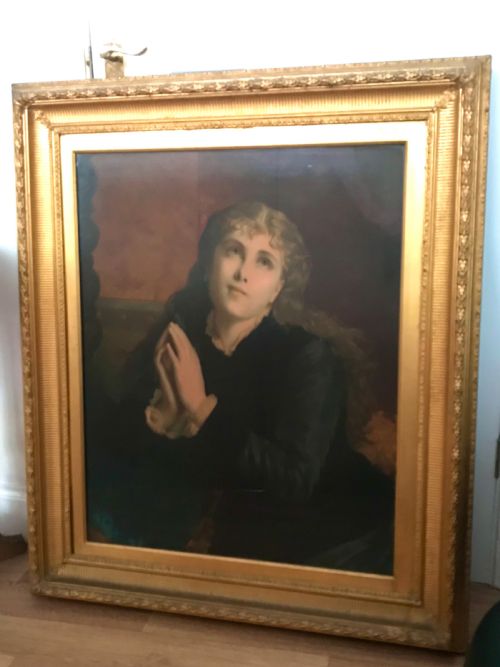
Common subjects include the Virgin and Child, holy families, and individual saints such as Mary Magdalene and Saint Anthony of Padua. Paintings frequently reflect historical movements including the Renaissance, Baroque, and subsequent revival periods.
Materials and Technique
These works utilise oil paint applied to prepared surfaces of canvas or wood panels, sometimes incorporating gold leaf and gilded wood framing. Pigments are layered to build depth in religious portraits and narrative scenes.
Many examples are attributed to specific regional schools or created in the manner of established masters, employing traditional European studio techniques. Framing often consists of gilt wood that complements the devotional nature of the central image.
Listings feature oil paintings on canvas and wood, spanning from the sixteenth century to the nineteen thirties across multiple European schools.
Assessing Quality
Quality in these devotional paintings rests upon the execution of the brushwork, the expressiveness rendered in the figures' faces, and the handling of light and shadow. Works demonstrating accomplished draftsmanship and subtle tonal gradation stand apart from more formulaic studio productions.
The integrity of the original paint layer and the condition of the canvas or wood panel also influence the standing of a piece. Historical framing, whether original or period-appropriate gilded wood, contributes to the overall cohesion of the artwork.
Jozef Jansessens·Bernardino Luini·Miguel Barroso·Raffaello Sanzio Da Urbino·Girolamo Dai Libri·Reynard Le Vieux
The Christian Devotional Oil Artwork Glossary
- Oil on Canvas
- Pigment mixed with drying oil applied to a stretched woven fabric support. This combination allows for rich colour blending and durability over centuries.
- Panel Painting
- A flat wooden board used as a rigid support for oil pigments. Master painters often utilised seasoned timber for stability before canvas became dominant.
- Baroque
- An artistic style originating around sixteen hundred characterised by dramatic lighting, deep shadows, and emotional intensity. Religious works from this period emphasise dynamic movement and theatrical devotion.
- Gilded Wood
- Timber surfaces coated with a thin layer of gold leaf or metallic powder. This technique enhances frames and structural elements to catch candlelight in sacred spaces.
Christian Devotional Oil Artwork: Frequently Asked Questions
What periods do these paintings date from?
The selection includes works originating from the sixteenth through the early twentieth centuries. Earlier pieces often reflect Renaissance and Baroque traditions.
Later examples demonstrate nineteenth-century revival styles and early twentieth-century interpretations of traditional iconography.
What subjects appear most frequently?
Common themes centre on the Virgin and Child, the Holy Family, and individual saints in contemplation. Narrative scenes such as the Crucifixion also feature prominently.
These subjects were designed to aid private devotion and prayer in domestic or ecclesiastical settings.
Are these works painted on canvas or wood?
The listings feature both oil on canvas and oil on panel supports. Wood panels are more common in earlier centuries before canvas became the standard medium.
Some pieces incorporate gilded wood frames that complement the religious subject matter.
How do regional schools differ?
Italian, Spanish, and Central European schools display distinct stylistic characteristics in their handling of composition and light. Italian works often draw on Renaissance and Baroque masters.
Spanish and Hessian pieces frequently exhibit dramatic contrasts and specific regional devotional iconography.