
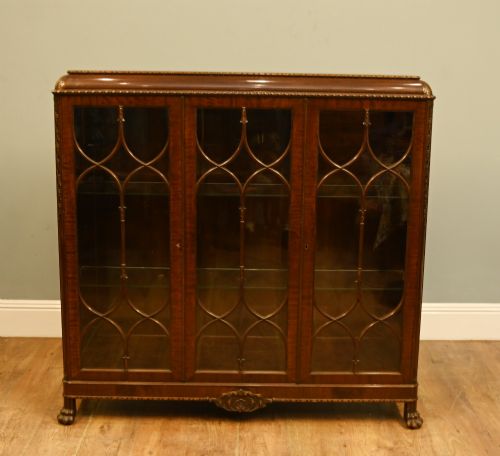
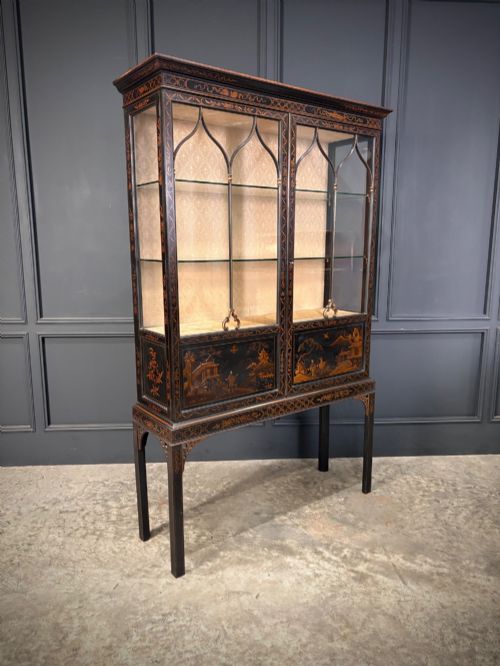
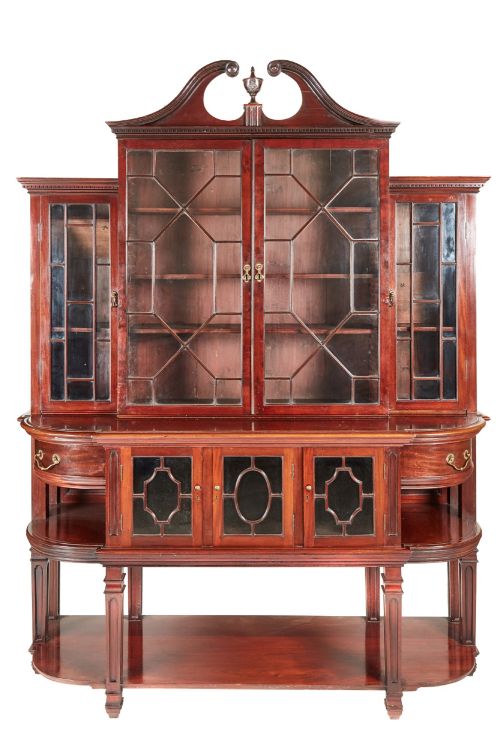
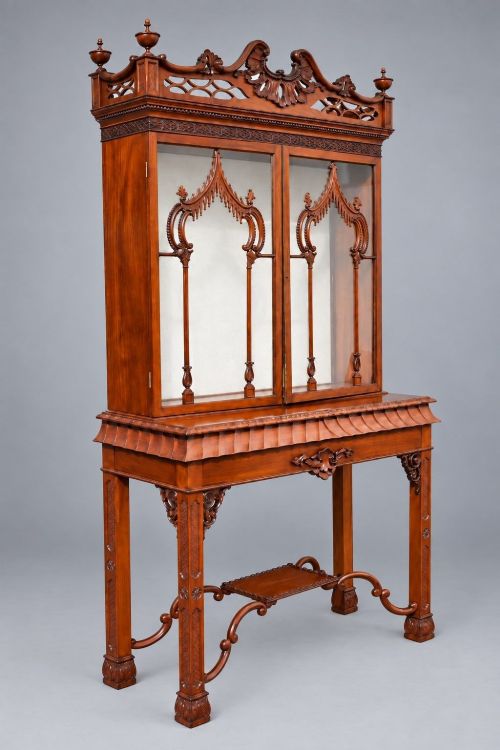


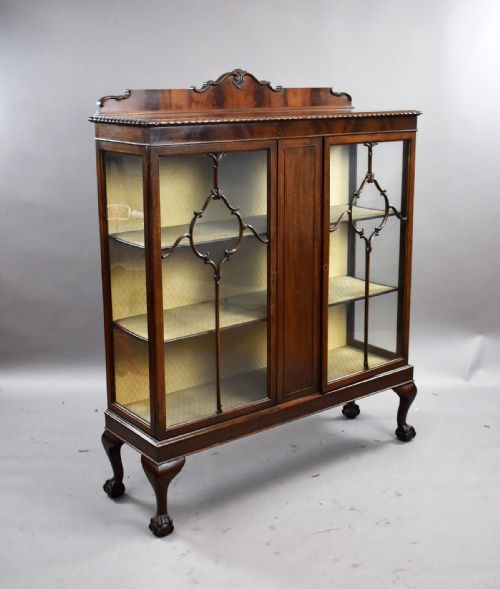


Chippendale Vitrine Cabinet
Chippendale vitrine cabinet designs combine glazed display spaces with revival mahogany frames, offering structured elegance for collections.
Chippendale Vitrine Cabinet
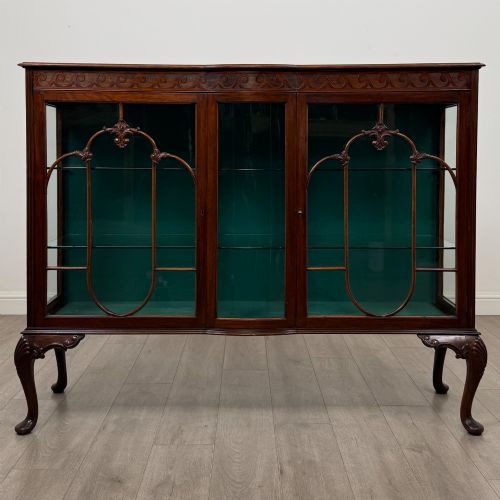
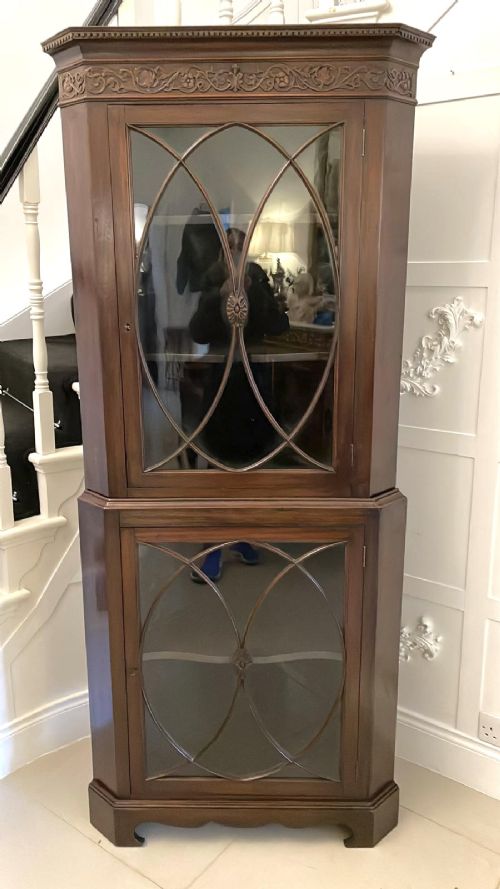
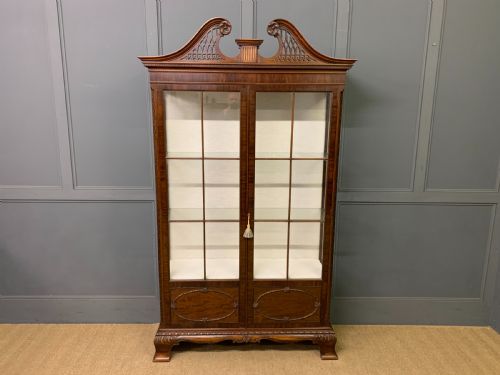
A chippendale vitrine cabinet brings together the display functions of bookcases, corner cabinets, and bijouterie tables within revival aesthetics. These pieces primarily date from the nineteenth century, the Edwardian era, and the early twentieth century.
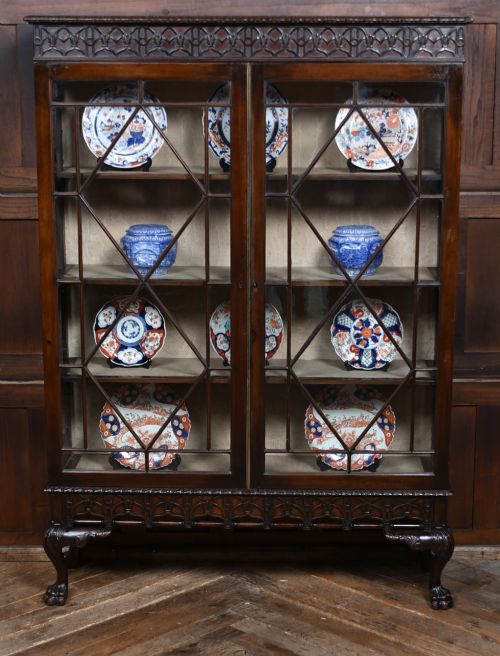
Buyers frequently encounter revival models alongside Chinese Chippendale interpretations featuring glazed doors and glass panels. Cabinets on stands and breakfront formats dominate the available forms.
Evaluating Quality
Quality rests upon the crispness of the timber carving and the precision of the astragal glazing bars framing the glass. Cabinet proportions and the integration of stands or bases dictate the visual balance.
The refinement of internal linings, such as velvet or mirror work, alongside the quality of brass fittings, distinguishes standard production from more ambitious workshop output.
Cabinets designed for tiny trinkets ensure that small porcelain dogs finally get their own architectural architecture.
Edwards and Roberts·Warings
The Chippendale Vitrine Cabinet Glossary
- Astragal
- Glazing bars that divide glass panes within a cabinet door. These slender wooden strips form geometric patterns across the front.
- Bijouterie
- A low display table or cabinet designed for small valuables and trinkets. Glass tops and glazed sides allow all-round viewing.
- Breakfront
- A piece of furniture where the central section projects forward from the flanking wings. This format adds architectural depth to large cabinets.
- Chinoiserie
- European interpretations of Chinese artistic motifs and styles. The aesthetic appears frequently in revival cabinet ornamentation.
- Demi-Lune
- A half-moon or semicircular shape utilised in the footprint of specific cabinets. Such forms fit flat against walls while softening room angles.
Chippendale Vitrine Cabinet: Frequently Asked Questions
What is a Chippendale vitrine cabinet?
A Chippendale vitrine cabinet is a glazed display piece created during the revival periods of the nineteenth and early twentieth centuries. These cabinets draw upon eighteenth-century design vocabulary to showcase porcelain, silver, and curiosities.
Such pieces range from tall standing bookcases and corner units to compact cabinets on stands and low bijouterie tables.
How do I date a revival cabinet?
Dating relies upon timber characteristics, construction methods, and stylistic markers recorded across the Victorian and Edwardian eras. Revival pieces often blend Georgian proportions with late nineteenth-century manufacturing techniques.
Cabinet hardware, glass production methods, and secondary timbers provide further clues for distinguishing 1880 examples from 1920 productions.
Where should I place a display cabinet?
Display cabinets require stable interior environments away from direct sunlight to protect both the timber and internal fabric linings. Placing them in drawing rooms or dining spaces allows the glass panels and glazed doors to catch natural light.
Corner cabinets and demi-lune formats utilise awkward room angles effectively while maintaining floor circulation.
What is Chinese Chippendale style?
Chinese Chippendale style incorporates fretwork, lattice patterns, and pagoda-inspired motifs into mahogany furniture frames. This aesthetic gained immense popularity during the late nineteenth-century revival movements.
Cabinets in this taste combine traditional glazed display sections with distinctive oriental ornamentation on the stands and cornices.
How do I care for mahogany furniture?
Mahogany requires stable humidity levels to prevent timber movement and cracking in the joints. Regular dusting with a soft cloth preserves the polish without building up residue.
Internal velvet or fabric linings benefit from gentle vacuuming with a low-suction attachment, while glass panels need standard non-abrasive cleaners.