



Chippendale Style Server Table
These Chippendale style server tables combine formal mahogany construction with historic carving, bringing distinct eighteenth century character to contemporary dining and reception rooms.
Chippendale Style Server Table
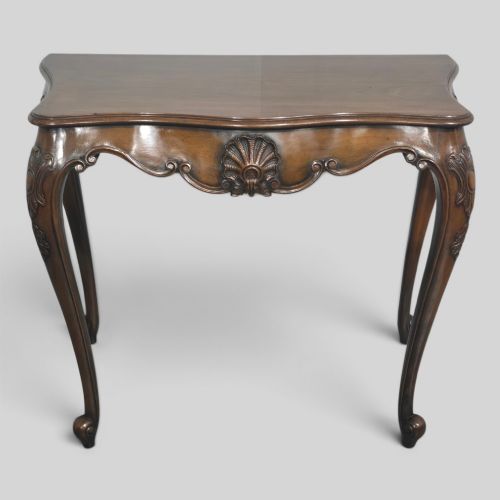
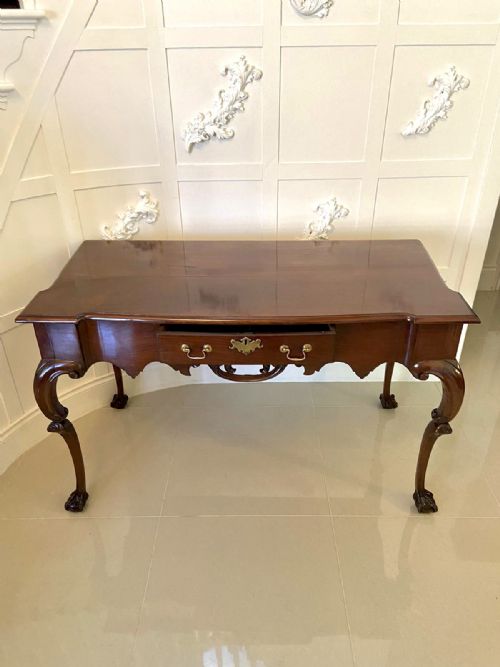
A chippendale style server table takes the form of a heavy mahogany side table, console, or sideboard designed for formal dining rooms and halls. You will encounter pieces spanning from genuine eighteenth century examples through nineteenth century revivals and twentieth century reproductions.
Materials and construction
Cabinetmakers constructed these tables primarily using solid mahogany, frequently enhanced with flame mahogany veneer or burr walnut surfaces. Structural elements such as oak and secondary timbers provide hidden durability beneath the polished exteriors.
Makers applied hand carving techniques to shape cabriole legs, ball and claw feet, and intricate gadrooned edges. Brass hardware appears on drawer pulls and mounts, while giltwood accents occur in specific revival pieces.
The listings span from the eighteenth century through the nineteenth and twentieth century revival periods, predominantly rendered in mahogany.
Judging quality and execution
The standard of carving defines the division between ordinary production and superior craftsmanship. Crisp execution in the acanthus leaves and claw feet indicates a maker working with high skill.
Timber selection and grain matching separate fine examples from basic utilitarian furniture. Solid timber thickness and the integrity of the joinery determine structural longevity.
Elkington and Co·Butler
The Chippendale Style Server Table Glossary
- Lowboy
- A small dressing table or side table featuring one or more rows of drawers beneath the top. These pieces typically stand on slender cabriole legs terminating in pad or claw and ball feet.
- Serpentine front
- A furniture front characterised by a convex central section flanked by concave curves. This shape requires advanced woodworking skill to construct and fit accurately.
- Giltwood
- Timber that has been coated with a thin layer of gold leaf or gold paint. This finish appears on decorative mouldings and specific revival frames.
- Breakfront
- A piece of furniture where the central section projects forward from the flanking outer sections. This architectural arrangement creates depth and shadow across the facade.
Chippendale Style Server Table: Frequently Asked Questions
How do I spot a true revival piece?
Twentieth century revival tables often utilise machine cut joints and standardised timber thicknesses that differ from older hand built construction methods.
Examine the underside and drawer linings for tool marks and timber ageing patterns that indicate the true period of manufacture.
Where should I place a server table?
These tables function effectively in dining rooms as servers, or in entrance halls as console surfaces for lamps and decorative objects.
Ensure the depth of the piece matches your clearance requirements in narrower hallways or passage spaces.
Are these tables suitable for daily use?
Solid mahogany construction provides robust stability for everyday placement and holding heavy items such as serving trays.
Use coasters and protective mats to prevent moisture rings and scratches on polished timber surfaces.
How do I maintain mahogany surfaces?
Dust regularly with a soft dry cloth and apply occasional natural wax to nourish the timber grain.
Keep tables away from direct heat sources and strong sunlight to prevent veneer cracking and fading.