




Chippendale Ribbon Back
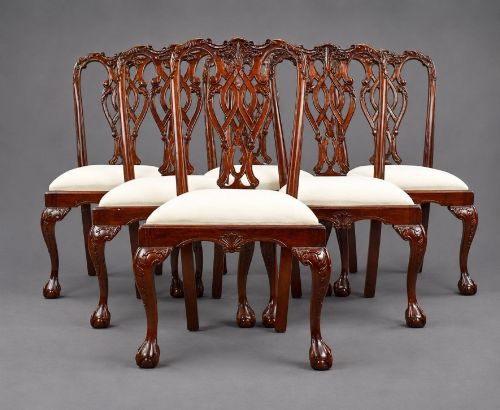
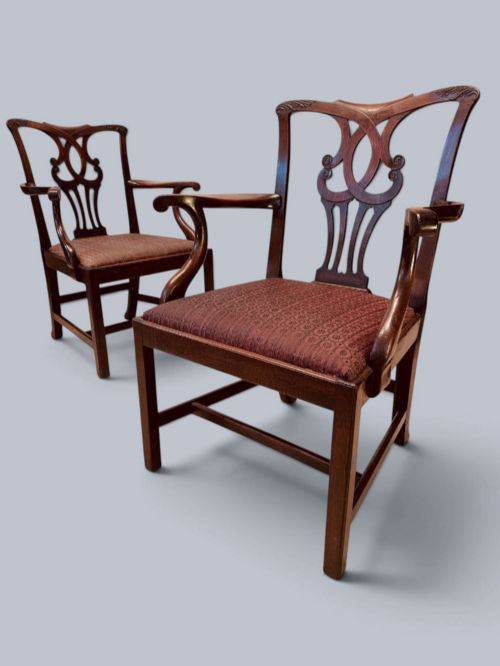
These Chippendale ribbon back chairs bring carved mahogany elegance to a room, offering the intricate splats and solid frames that define classic seating.
Chippendale Ribbon Back
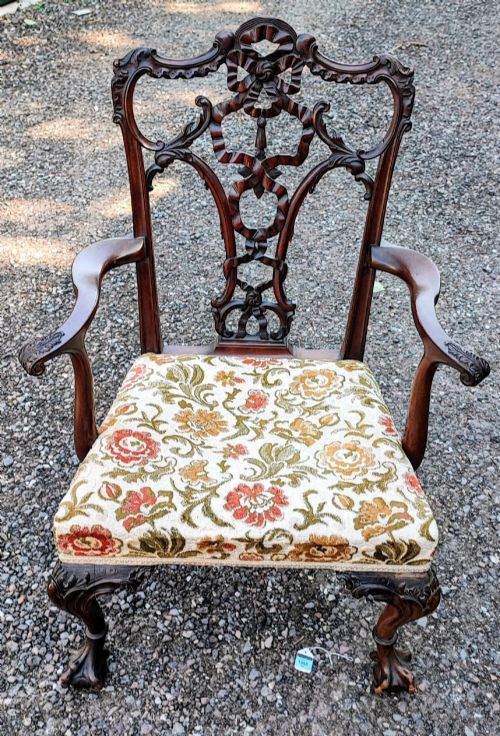
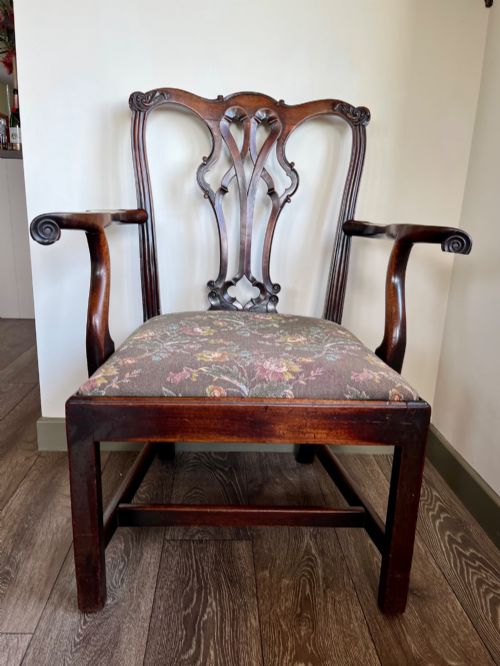
A search for chippendale ribbon back brings up sophisticated seating designed around carved wooden splats that imitate flowing ribbon. These pieces emerge in Georgian periods and appear frequently in later revival forms from the nineteenth and early twentieth centuries.
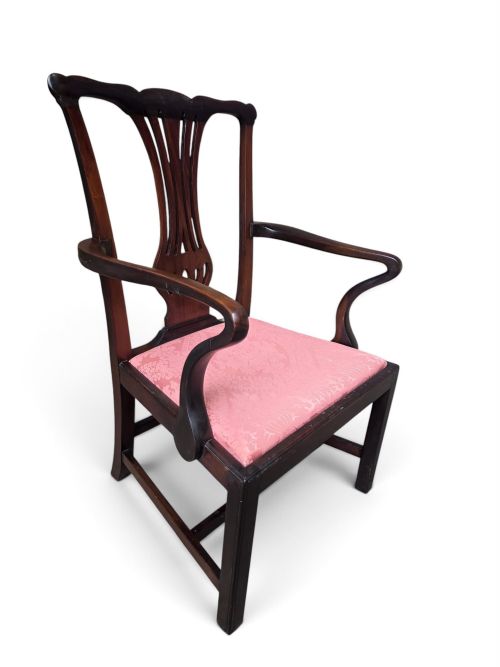
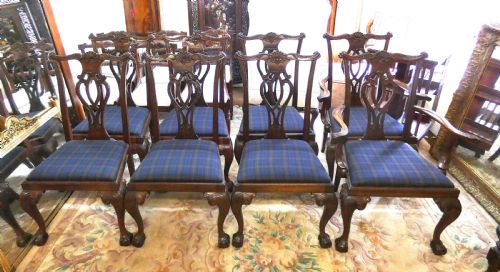
The inventory on this page consists primarily of dining chairs, armchairs, desk chairs, and carvers executed in rich mahogany. Buyers encounter single chairs, pairs, and large sets spanning Georgian originals to Victorian and Edwardian interpretations.
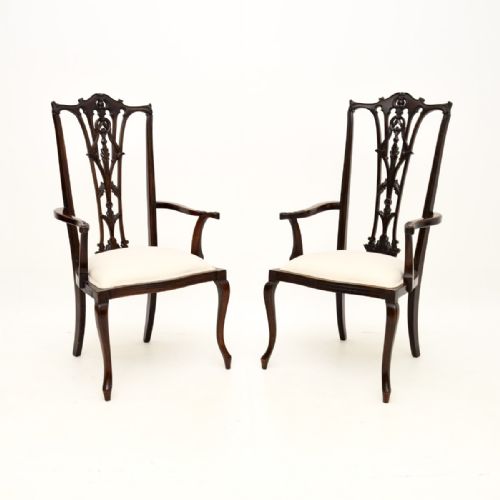
Revival iterations from the late nineteenth and early twentieth centuries dominate the selection, capturing the elaborate pierced splats and cabriole legs of the original eighteenth-century aesthetic. Walnut variants also appear alongside the predominant mahogany frames.
Materials and construction methods
Makers construct these chairs primarily from solid mahogany, utilising dense timber to support intricate openwork carving along the backsplats. Craftsmen shape the curving top rails and interlaced ribbon motifs by hand, ensuring structural integrity despite delicate profiles.
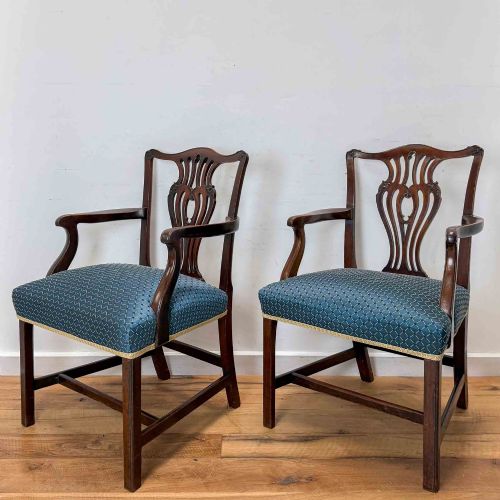
Upholstery forms an integral part of the finished seating, with drop-in pads or fixed seats covered in fabric, leather, textile, velvet, or damask. Workshops secure these coverings over traditional stuffing to provide firm support within the mahogany rails.
Chippendale Ribbon Back Retail Price Guide 2026
Typical asking prices for chippendale ribbon back among the pieces listed under this phrase on Sellingantiques today, from the lower quarter to the upper quarter. They describe what is for sale here now, not the wider market.
Mahogany serves as the primary timber across the inventory, complemented by occasional walnut frames and various upholstery textiles.
Evaluating craftsmanship and execution
Quality rests upon the crispness of the carved ribbon motif within the splat and the depth of relief achieved in the mahogany. Superior examples display fluid, sharply defined loops and scrolls that demonstrate confident tool work by the artisan.
Structural robustness distinguishes finer seating, particularly where the back uprights join the seat rail and legs. Examples with tight joints, substantial timber gauge, and carefully finished secondary woods achieve greater durability over centuries of use.
The Chippendale Ribbon Back Glossary
- Ribbon back
- A chair splat carved to resemble intertwined ribbons or bows, associated with mid-eighteenth-century design. This intricate openwork requires skilled carving to achieve a sense of movement in solid wood.
- Carver chair
- An armchair, traditionally placed at the head of a dining table or used as a desk seat. These pieces feature supportive armrests matching the side chairs in a set.
- Chippendale Revival
- A late nineteenth and early twentieth-century movement replicating eighteenth-century furniture styles. Makers during this period reinterpreted classic forms using contemporary workshop techniques.
- Splats
- The vertical central strip of wood within a chair back connecting the seat to the top rail. In these pieces, the splat takes the distinctive perforated form of a ribbon.
- Drop-in seat
- A removable wooden frame padded and upholstered separately before fitting into the seat rails. This construction allows easy reupholstery without dismantling the main chair frame.
Chippendale Ribbon Back: Frequently Asked Questions
How do I spot a Georgian original?
Examine the timber patination, hand-cut joinery, and the specific crispness of the mahogany carving under magnification.
Original eighteenth-century pieces display authentic age-related wear and construction methods distinct from later nineteenth-century revival furniture.
Are these chairs comfortable for daily dining?
Many people use them daily around a dining table, provided the seat padding offers adequate support.
The upright backs encourage an attentive posture suitable for formal meals and desk work.
What is the difference between single and arm chairs?
Single chairs feature an open frame without armrests, designed to fit compactly in rows along a dining table.
Armchairs include supporting rests for the arms and generally occupy the ends of the table or serve as desk seating.
How should I care for mahogany frames?
Maintain the wood by applying appropriate wax polish sparingly and avoiding placement near direct heat sources.
Keep upholstered elements clean using methods suitable for the specific fabric, leather, or damask covering.