


Chippendale Revival Carver
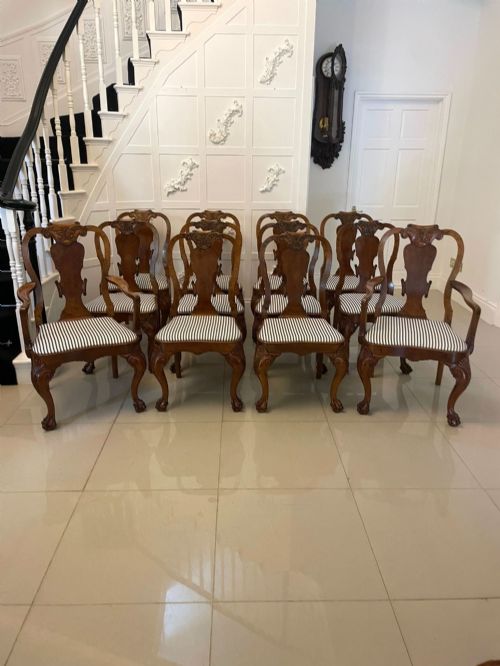
A chippendale revival carver brings eighteenth-century grandeur into late Victorian and Edwardian dining rooms with substantial mahogany frames and elaborate open arms.
Chippendale Revival Carver
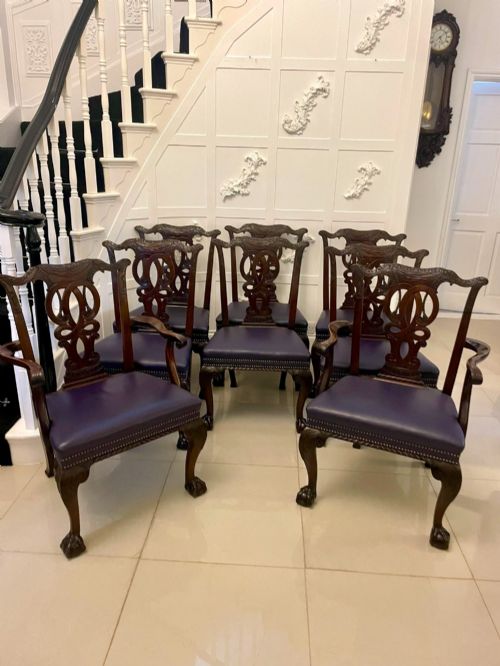
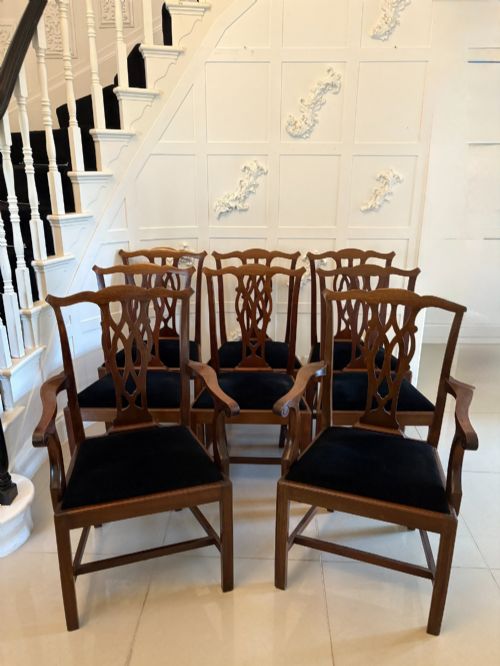
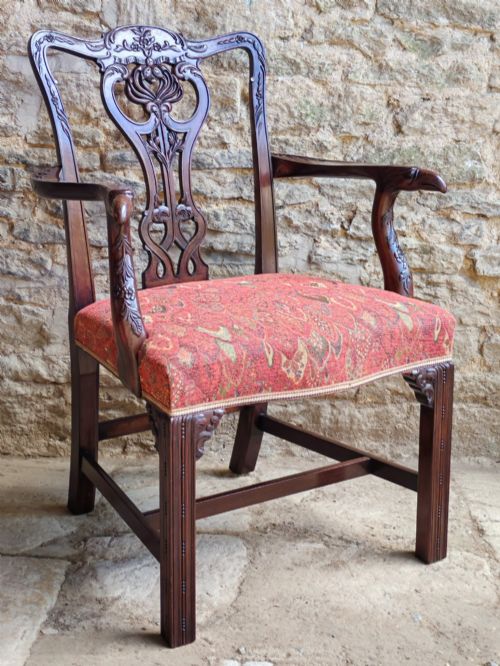
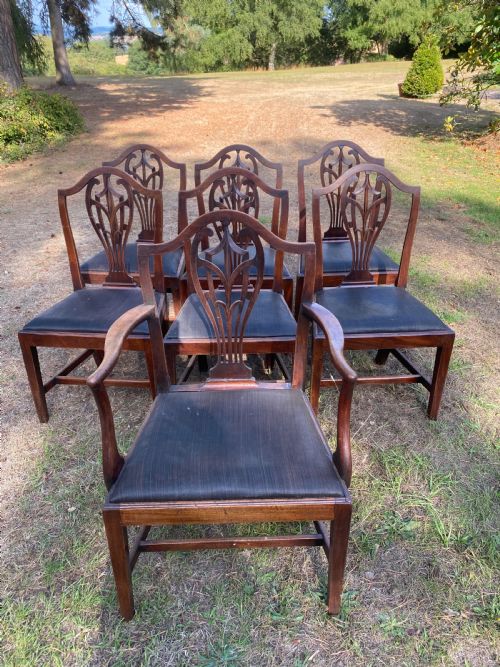
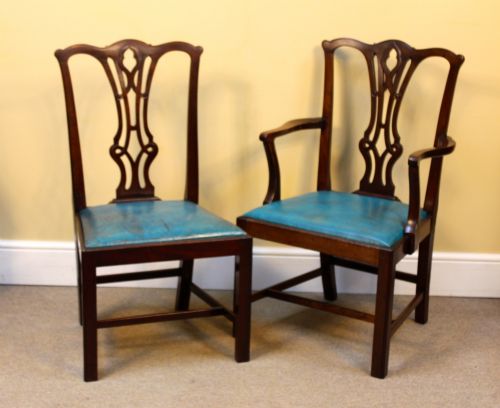
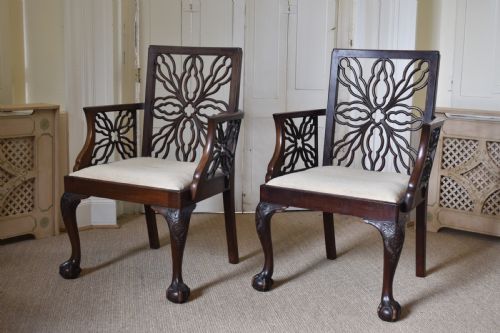
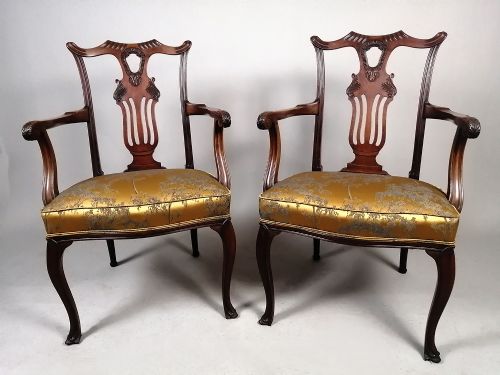
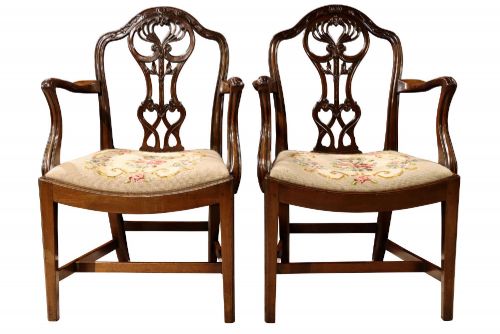
A chippendale revival carver is an armchair designed to match a set of single dining chairs, typically featuring carved back splats and scroll terminals on the arms. These pieces emerge predominantly during the late nineteenth and early twentieth centuries, spanning the Victorian and Edwardian periods.
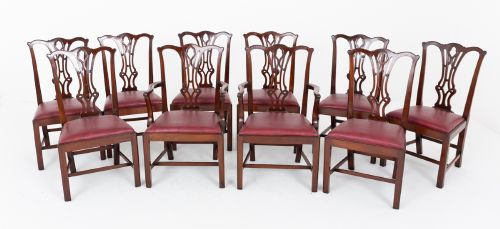
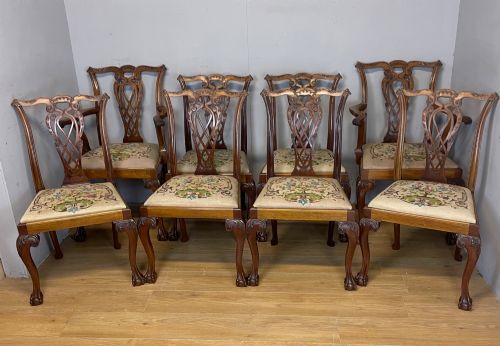
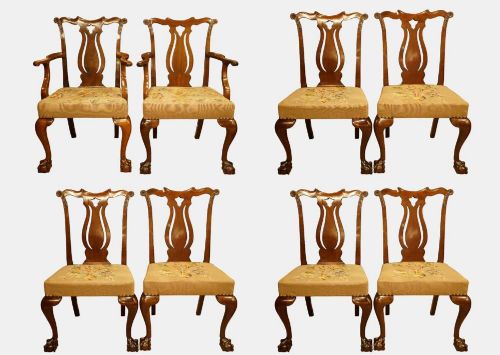
The form adapts mid-eighteenth-century George II and Chippendale designs for later households, often appearing as pairs of elbow chairs or as the armchairs accompanying larger dining sets. Single examples and matched pairs surface frequently alongside sets of six or eight dining chairs.
Makers of this period draw heavily on mahogany timber, shaping the wood into intricate interlaced ribbon backs or pierced vase splats that echo the original Georgian aesthetics.
Materials and Construction
Cabinetmakers utilise dense mahogany for the primary structure, relying on its strength to support the intricate fretwork and deep carving characteristic of the style. The timber is frequently polished to a rich dark lustre that highlights the natural grain of the wood.
Seat frames are traditionally upholstered over webbing and stuffing, receiving top covers in materials such as leather, velvet, tapestry, or patterned upholstery fabric. Brass tacks often secure the perimeter of the seat covering to the wooden rail.
Joinery techniques combine traditional mortise and tenon joints with robust corner blocking to ensure the chairs withstand regular dining use while maintaining delicate carved details on the knees and ball-and-claw feet.
Listings span the nineteenth and early twentieth centuries, featuring mahogany frames paired with diverse coverings including tapestry, leather, and woven fabric.
Levels of Execution
The distinction between standard commercial production and superior workshop output lies in the crispness and depth of the timber carving. Master carvers render acanthus leaves, C-scrolls, and ribbon motifs with sharp undercut relief, whereas lesser pieces display shallow, machine-smoothed contours.
Proportion and timber selection further separate the grades, with finer examples utilising straight-grained Cuban or Honduras mahogany matched across sets. Robust structural framing that avoids excessive reliance on glued-on surface decorations defines the upper tier of these revival pieces.
Howard and Sons·Warings·Robert Strahan Dublin·Jas Shoolbred
The Chippendale Revival Carver Glossary
- Carver
- An armchair designed to match a set of dining chairs, traditionally placed at the head of a dining table. The term distinguishes the seating piece from the smaller single chairs in a dining set.
- Splat
- The vertical wooden slat positioned in the centre of a chair back. In these revival pieces, the splat is frequently pierced and interlaced in imitation of mid-eighteenth-century patterns.
- Elbow chair
- An alternative historical term for an open armchair with wooden armrests. These chairs frequently serve as desk chairs or parlor seating alongside dining applications.
- Claw and foot
- A carved furniture foot depicting a bird's talon gripping a ball. This decorative terminal is a defining feature on the legs of many pieces in this category.
- George II revival
- A design movement looking back to the architectural and furniture forms of the 1720 to 1760 era. The style emphasises heavy mahogany construction and sculptural carved ornament.
Chippendale Revival Carver: Frequently Asked Questions
How do I distinguish a carver from a single chair?
A carver includes structural armrests designed to support the elbows, making it wider and heavier than the standard single dining chairs in a set. They were traditionally reserved for the host.
On this page, carvers appear individually, in pairs, or as the designated armchairs included within larger dining chair sets.
What wood was used for these chairs?
Mahogany serves as the primary timber across the vast majority of pieces in this category. The wood provides the necessary tensile strength for slender carved splats and intricate cabriole legs.
Cabinetmakers selected the timber for its dense grain and ability to hold crisp carved details without splintering along the grain.
How do I date a revival piece?
Dating relies on examining the timber patina, secondary woods in the frame construction, and the style of the upholstery webbing. The revival period spans from the mid-nineteenth century through the early twentieth century.
Maker stamps, where present, provide a direct link to specific workshops operating during the Victorian or Edwardian periods.