





Chippendale Gothic Dining Chairs
These Chippendale gothic dining chairs combine robust timber frames with intricate tracery, offering a sturdy yet striking seat for any formal table.
Chippendale Gothic Dining Chairs
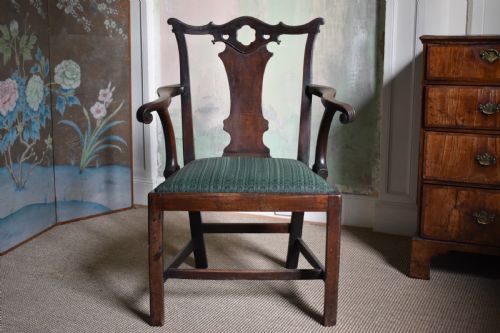
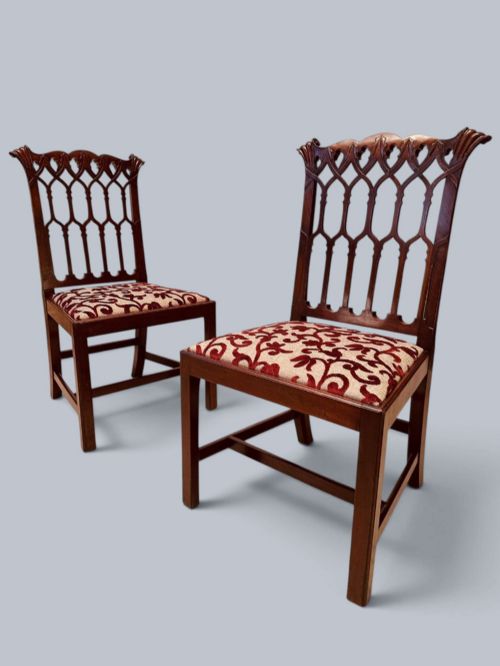
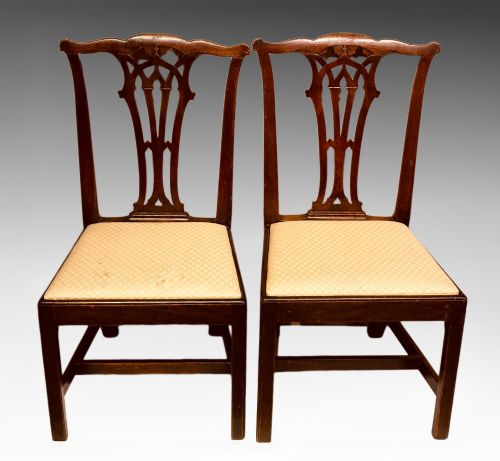
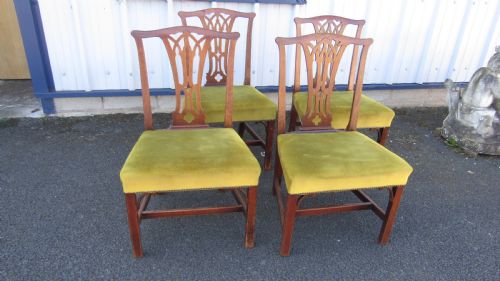
When you search for chippendale gothic dining chairs, you encounter seating that blends the mid-Georgian aesthetic with medieval architectural motifs. The forms span side chairs, armchairs, and occasional hall pieces designed for formal domestic spaces.
You are most likely to meet mahogany or oak examples originating from the eighteenth and nineteenth centuries. These include sets of various sizes alongside individual apprenticeship pieces and matched pairs.
The style adapts revival periods as well as original Georgian periods, showcasing arched top rails and pierced splats. Such seating remains practical for modern dining while carrying centuries of design history.
Materials and construction
Cabinetmakers utilised dense timbers like mahogany and oak to support the intricate fretwork and open tracery characteristic of the design. These durable woods allowed artisans to carve deep, sharp profiles along the top rails and uprights without risking structural failure.
Seats incorporated drop-in frames finished with diverse coverings including leather, fabric, and velvet. Traditional joinery secured the heavy frames, ensuring the chairs could withstand generations of daily use around the dining table.
Chippendale Gothic Dining Chairs Retail Price Guide 2026
Typical asking prices for chippendale gothic dining chairs among the pieces listed under this phrase on Sellingantiques today, from the lower quarter to the upper quarter. They describe what is for sale here now, not the wider market.
The documented forms include armchairs, hall chairs, and large dining sets alongside single apprentice pieces.
Assessing quality and execution
The distinction between ordinary and superior pieces lies in the crispness and depth of the hand carving. Finer examples display meticulous attention to the pointed arches and geometric tracery, whereas simpler versions rely on shallow or mechanised decoration.
Proportion and timber selection further separate the ranges, with top-tier items utilising well-figured grain and balanced structural symmetry. The integration of the splat into the seat rail dictates the structural integrity and visual harmony of the finished chair.
The Chippendale Gothic Dining Chairs Glossary
- Tracery
- Openwork pattern in the back splat resembling stone window divisions of medieval buildings. This decorative element defines the gothic aesthetic.
- Chippendale Revival
- A later nineteenth-century movement recreating eighteenth-century forms. Makers during this period drew heavy inspiration from Thomas Chippendale's Director.
- Top Rail
- The uppermost horizontal member of a chair back. Gothic versions typically display serpentine curves combined with pointed arches.
Chippendale Gothic Dining Chairs: Frequently Asked Questions
Are these chairs comfortable for daily dining?
The supportive upright backs and generous seat pads make them suitable for regular meals.
Upholstery variations range from simple leather to rich velvet, offering different levels of cushioning.
How do I distinguish eighteenth century from revival pieces?
Original period items show distinct timber ageing and hand-tool marks beneath the frame. Revival pieces from the nineteenth century often feature uniform machine preparation alongside period stylistic copies.
Did original chairs come in large sets?
Dining seating from the Georgian era was often commissioned in matched groups of six or more. Surviving large sets are scarce due to families splitting collections over centuries.
What maintenance do mahogany frames require?
Regular dusting with a dry cloth helps preserve the timber finish and rich grain. Avoid placing antique wood in direct sunlight or near heat sources to prevent cracking.