

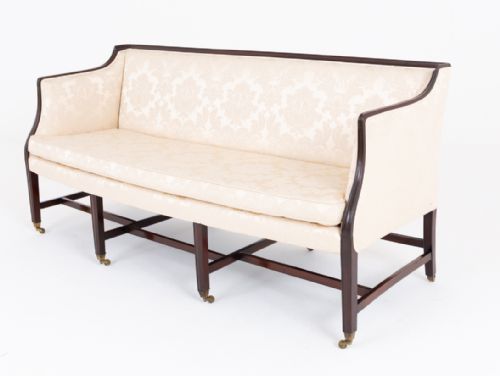


Chippendale Couch
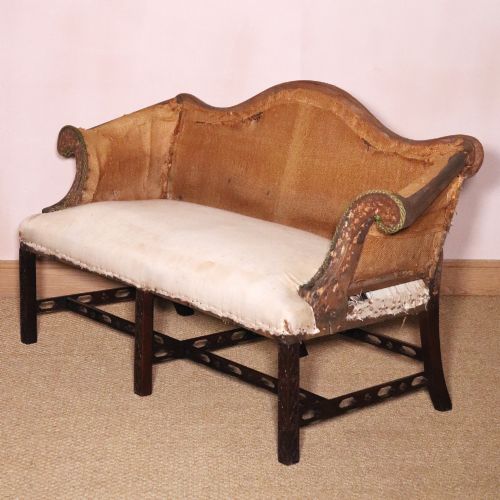
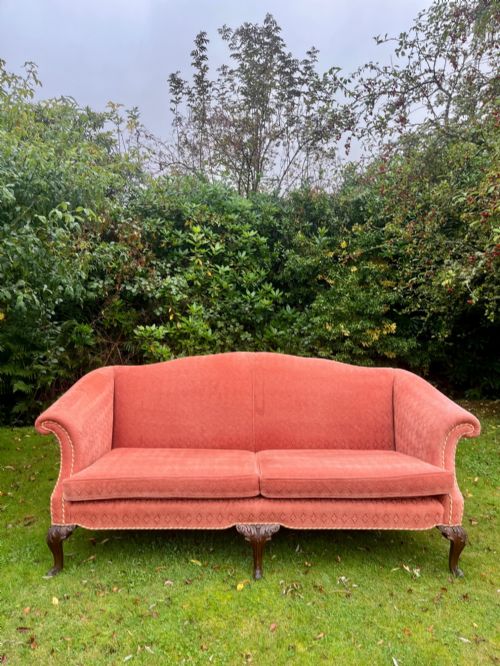
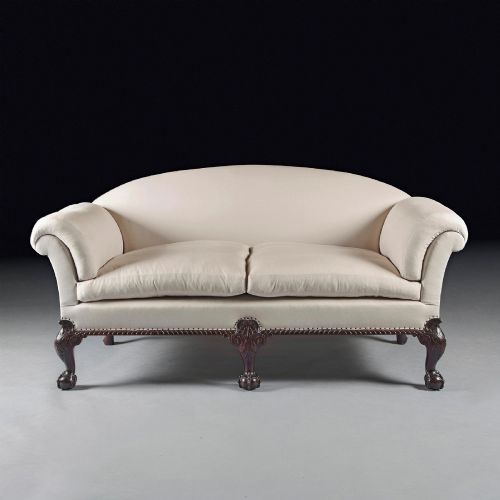
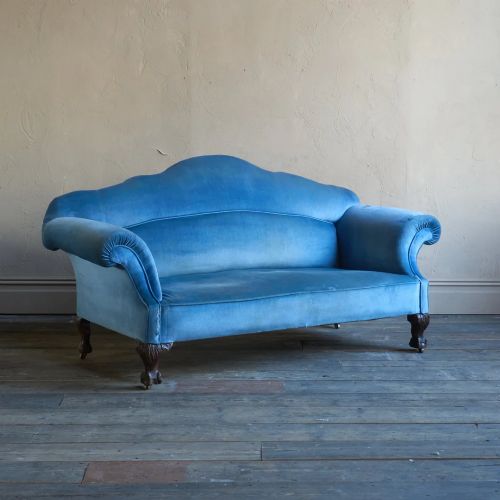
These chippendale couch pieces are classic mahogany settees and camelback sofas built for formal drawing rooms.
Chippendale Couch
A chippendale couch is a traditional form of seating encompassing sofas, settees, and camelback frames shaped by Georgian and later revival aesthetics. The most frequent examples met here belong to the nineteenth century and the Edwardian era, carrying the characteristic proportions of earlier centuries.
Makers produced these seats in various formats, including serpentine front camel backs, triple-back settees, and library study sofas. These pieces often served in formal reception rooms and parlours, pairing practical seating capacity with ornamental woodwork.
How they were made
Carpenters constructed the primary frames using timber, specifically mahogany and walnut, selected for structural strength and grain quality. Skilled carvers shaped the wood into ball and claw feet, hawk claw feet, and intricate back rails.
Upholstery completed the work, utilising traditional fabrics such as damask, velvet, cotton calico, and leather alongside cane panels. Brass elements occasionally appeared in castors or decorative hardware supporting the frame.
Chippendale Couch Retail Price Guide 2026
Typical asking prices for chippendale couch among the pieces listed under this phrase on Sellingantiques today, from the lower quarter to the upper quarter. They describe what is for sale here now, not the wider market.
Listings feature mahogany, walnut, and timber frames paired with leather, damask, velvet, and cane across eighteenth, nineteenth, and early twentieth-century periods.
What varies in quality
The standard of carving sets the superior examples apart, distinguishing crisp, hand-chiselled ball and claw feet from simpler, softer execution. The depth of the timber frame and the architectural balance of the serpentine camel back shape also dictate the grade of the piece.
The integrity of the original wood structure and the choice of covering materials, whether fine leather, patterned damask or woven cane, mark the difference between standard workshop production and high-status seating.
Howard and Sons·J. S. Kinsey
The Chippendale Couch Glossary
- Camel back
- A sofa or settee back featuring a smooth, undulating curve resembling a camel's hump. This profile became a signature of eighteenth-century and revival seating.
- Ball and claw
- A foot motif depicting a bird's talon clutching a ball, commonly carved on mahogany furniture legs. This detail draws from Chinese artistic influences popularised in Georgian design.
- Serpentine
- A front rail or edge shaped with a central convex curve flanked by concave sweeps. This line adds visual movement to the heavy timber frame.
- Bergere
- An enclosed armchair or settee style featuring cane work panels on the back and sides. Edwardian suites frequently utilised this lighter technique.
Chippendale Couch: Frequently Asked Questions
How do I date a chippendale couch?
Dating relies on examining the timber species, joinery methods, and the crispness of the carved details on the legs and frame. Eighteenth-century pieces show specific hand tool marks and timber ageing absent in later revival copies.
Revival pieces from the nineteenth and early twentieth centuries often adopt Georgian proportions while using machine-assisted joinery and contemporary upholstery textiles.
Where should I place a settee?
These settees suit formal reception rooms, studies, or large entrance halls where their carved mahogany frames and upholstered backs remain visible. They function well as central statement seating or positioned against panelled walls.
Protection from direct sunlight preserves both the timber finish and delicate textile coverings like damask, velvet, or cane panels.
What is the difference between a sofa and a settee?
In historical terminology, settees generally denote smaller, upholstered wooden benches seating two or three people, often sharing design traits with dining chairs. Sofas frequently indicate larger, fully padded structures designed for lounging.
Many listings use these terms interchangeably, particularly when describing nineteenth-century revival pieces built for extended seating.
How do I care for mahogany frames?
Maintaining mahogany frames involves dusting with a soft, dry cloth and avoiding modern chemical polishes that build up residue. Environmental stability regarding humidity prevents the timber from splitting or warping.
Upholstery requires gentle vacuuming with a brush attachment to protect fabrics such as cotton calico, leather, and woven cane.