

Chippendale Carver and Side Chairs
Chippendale carver and side chairs are sturdy timber seating units designed for dining and study, offering robust construction alongside elaborate carved details.
Chippendale Carver and Side Chairs
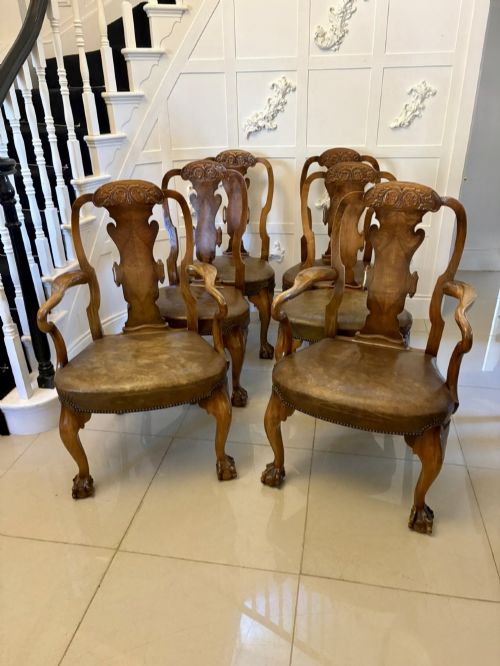
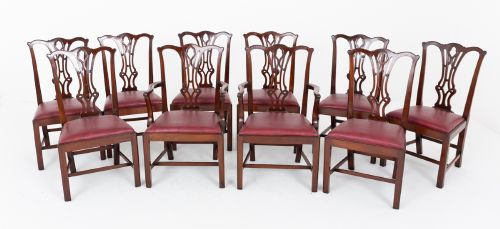
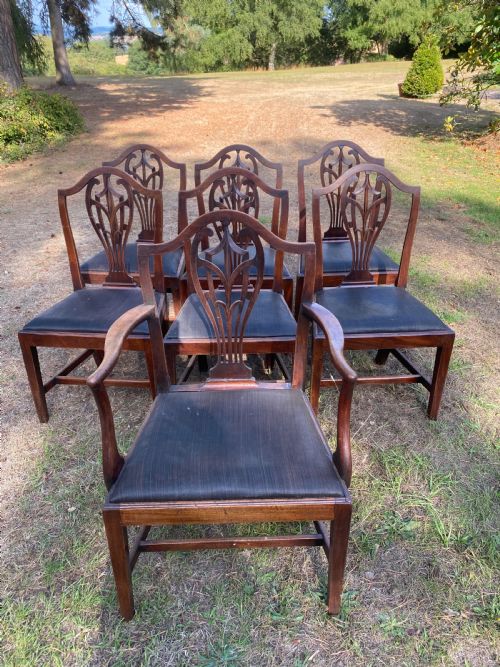
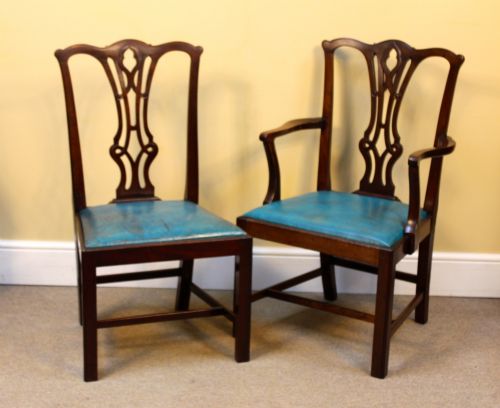
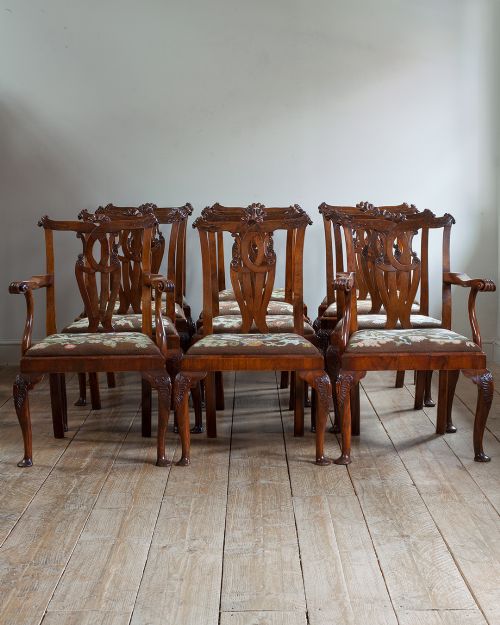
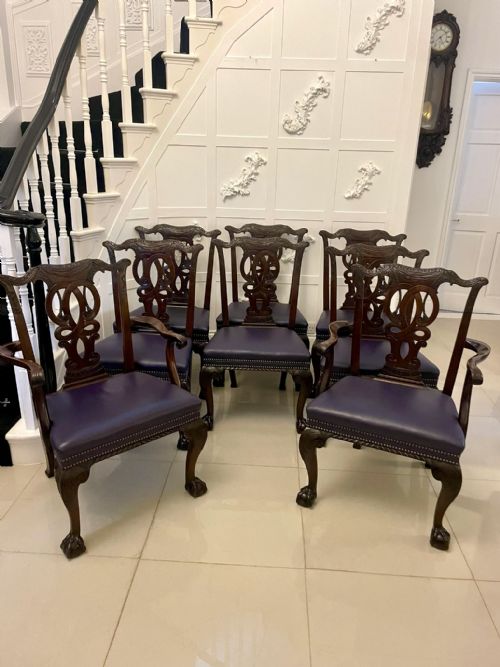
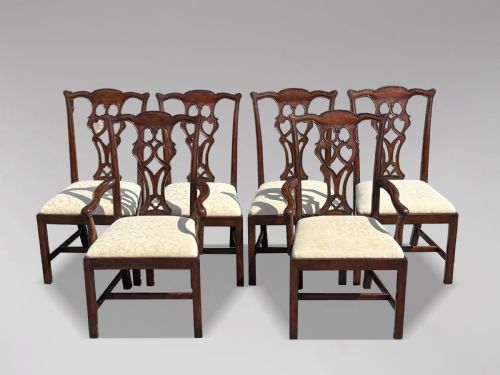
A buyer examining chippendale carver and side chairs encounters dining chairs, armchairs, and desk chairs originating from the eighteenth century through to the early twentieth century. The selection includes original Georgian pieces alongside later revivals from the Victorian, Edwardian, and 1930 periods.
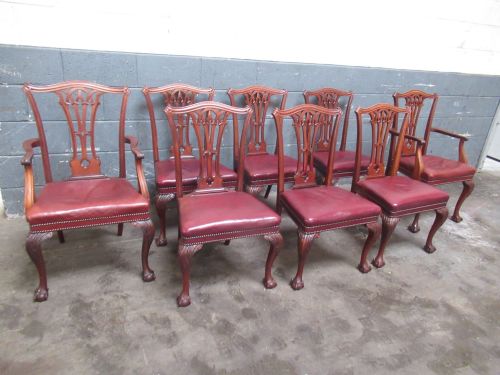
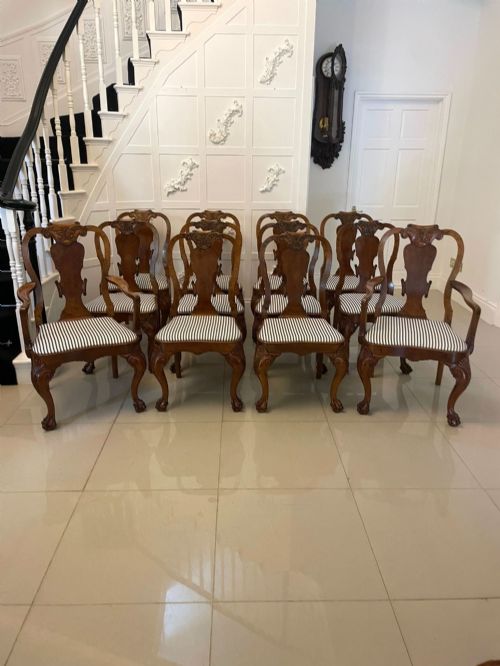
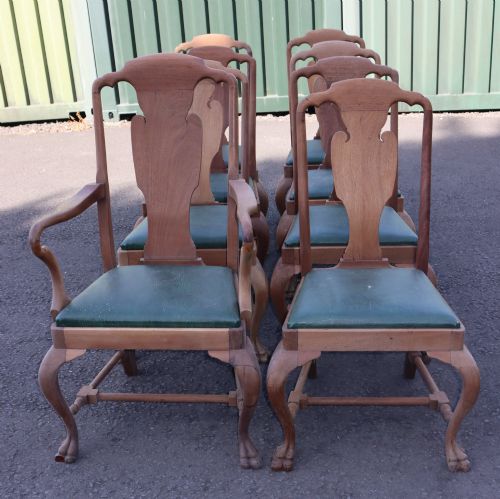
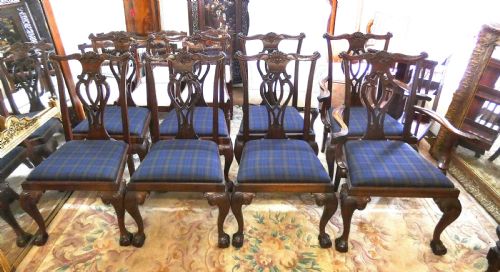
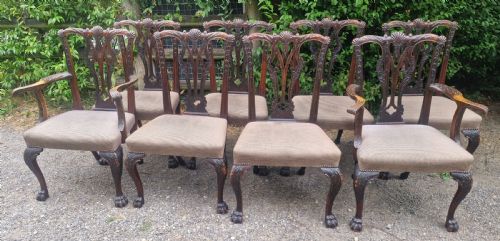
Sets commonly appear in groups ranging from pairs to twelve items, often combining a pair of carvers with multiple side chairs. Mahogany and walnut form the primary timber framework for these seating designs.
Most examples visible on this page represent revival interpretations from the nineteenth and early twentieth centuries, particularly Chippendale revival and Georgian style designs, rather than purely original eighteenth-century productions.
Materials and Construction Techniques
Makers utilised solid timbers, predominantly mahogany and walnut, to construct the load-bearing frames and intricately carved backs of these chairs. Joinery techniques relied on traditional mortise and tenon joints to secure the legs, seats, and upper rails.
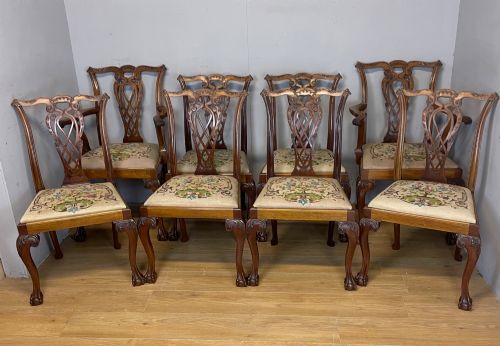
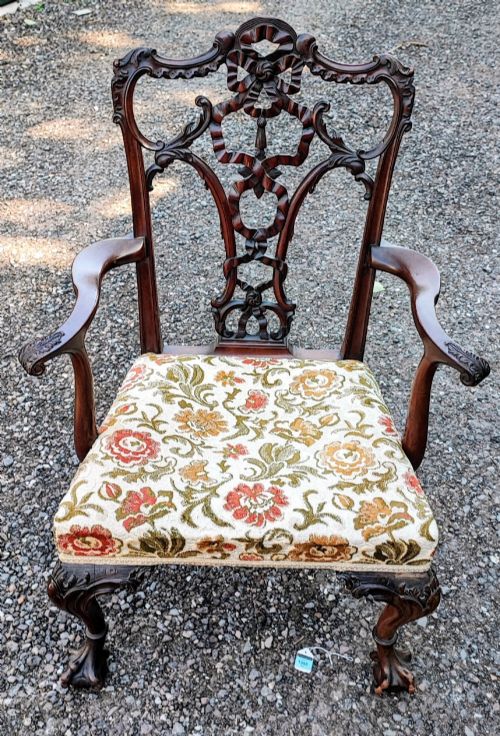
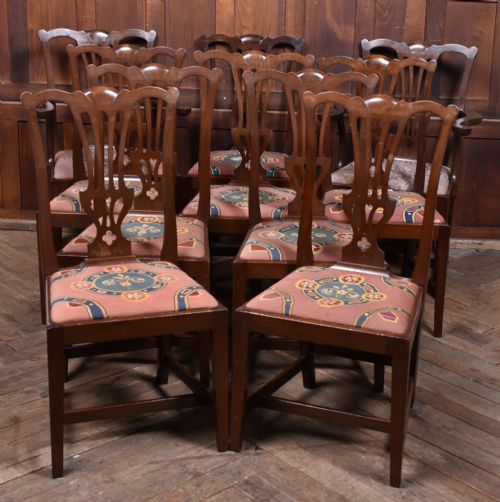
Seating surfaces incorporate diverse materials such as leather, fabric, upholstery fabric, textile, velvet, and brass tacks. Original tapestry seats appear on specific Victorian iterations, fastened directly to the wooden rails.
Materials recorded across the inventory include mahogany, walnut, leather, velvet, brass, and assorted upholstery fabrics.
Factors Determining Quality
The precision and depth of the carved motifs on the chair backs differentiate standard production pieces from higher quality examples. Crisp lines in the timberwork indicate superior artisan skill during the manufacturing process.
The choice of primary wood grain and the integrity of the original construction materials, including leather, velvet, and textile upholstery, influence the overall standard of each chair set.
Warings·Wheelers of Arncroach·William Walker & Sons
The Chippendale Carver and Side Chairs Glossary
- Carver
- An armchair designed with armrests, typically placed at the head of a dining table. These pieces match the style of the accompanying side chairs.
- Side chair
- A dining chair manufactured without armrests, built to sit alongside tables and fit compactly when not in use.
- Chippendale style
- A furniture design movement originating from eighteenth-century patterns associated with Thomas Chippendale, characterised by carved splat backs and cabriole or straight legs.
- Georgian revival
- A later nineteenth or twentieth-century aesthetic movement that reinterprets eighteenth-century Georgian forms, proportions, and decorative motifs.
- Ladderback
- A chair back construction featuring multiple horizontal wooden slats arranged like the rungs of a ladder between the vertical uprights.
Chippendale Carver and Side Chairs: Frequently Asked Questions
What is a chippendale carver?
A chippendale carver is an armchair equipped with supportive side rests, historically positioned at the head and foot of a dining table.
These pieces match the design and carved details of the accompanying side chairs in a dining set.
How do I spot a revival chair?
Revival chairs date from the nineteenth or early twentieth century rather than the original eighteenth-century Georgian period.
Makers during the Victorian and Edwardian eras replicated earlier Chippendale patterns, using denser timber cuts and different internal construction methods.
How were the seats upholstered?
Seats utilise materials like leather, velvet, fabric, and tapestry secured over padding or webbed frames.
Many period chairs retain their original upholstery fabric and brass fastening tacks.
Can I mix carvers and side chairs?
Dining sets frequently combine two armchairs with multiple side chairs to create a uniform arrangement around a table.
Matching timber species and carved back styles ensure a cohesive appearance across the seating group.