
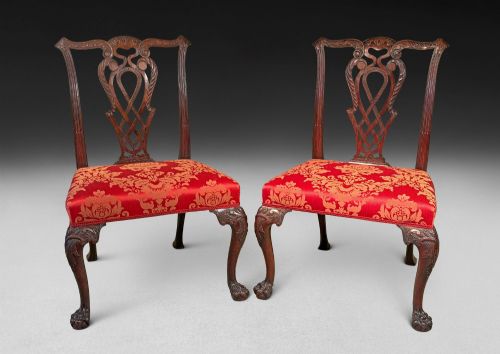
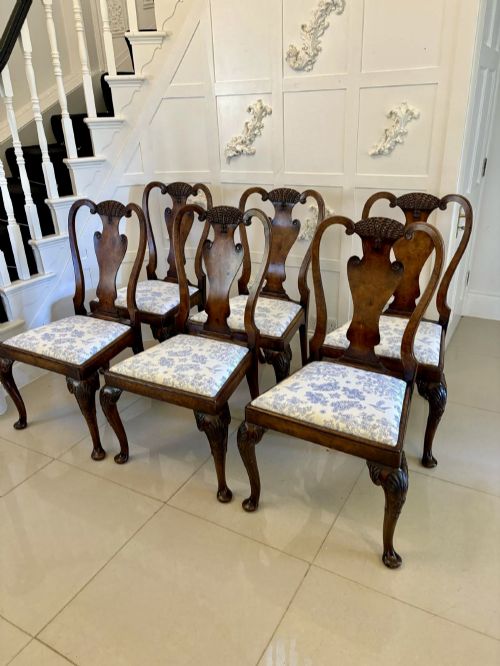
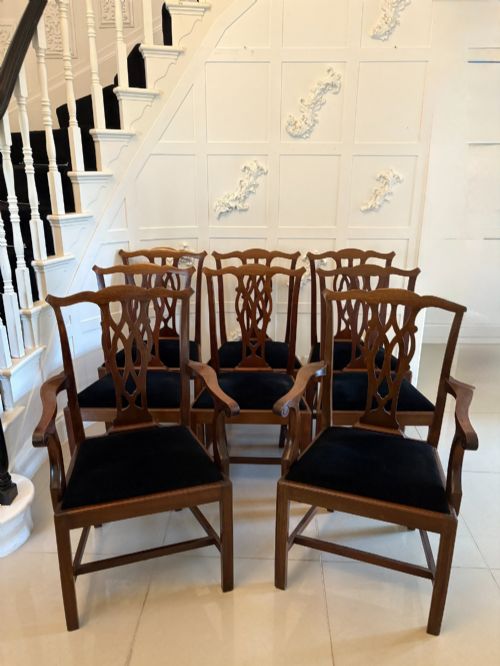
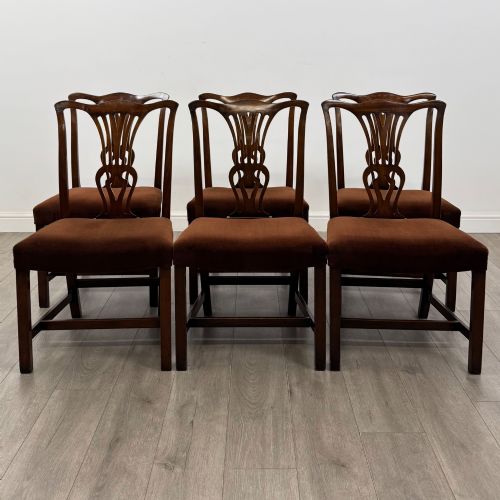
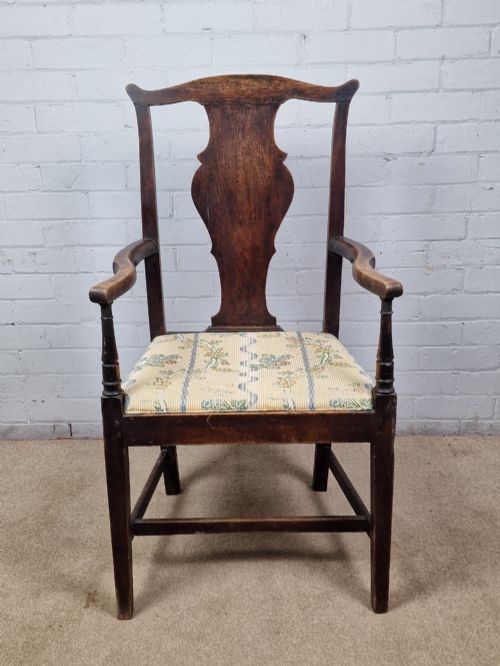
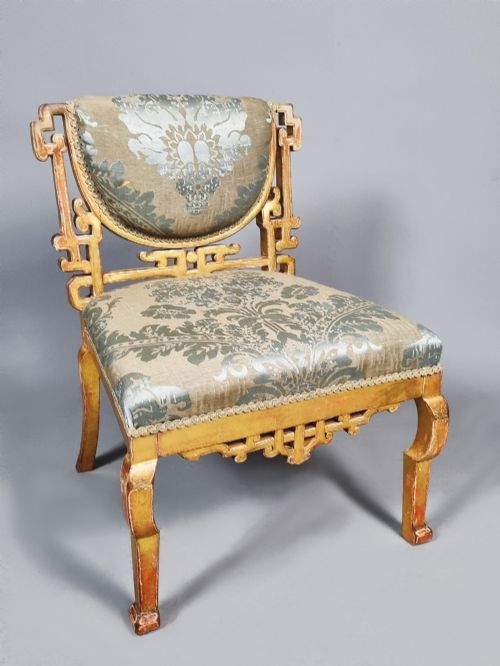
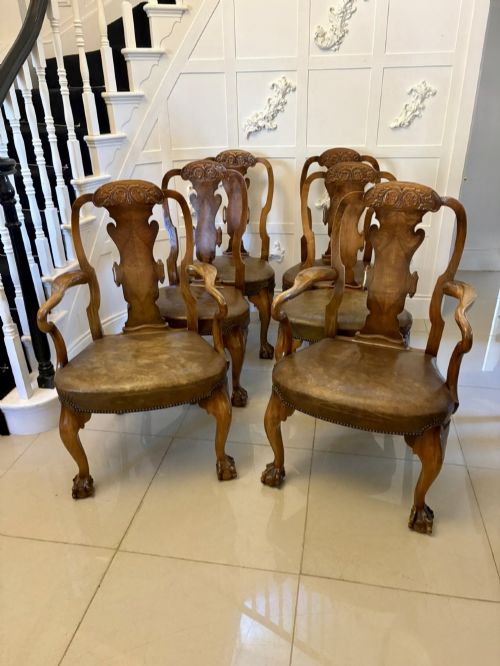
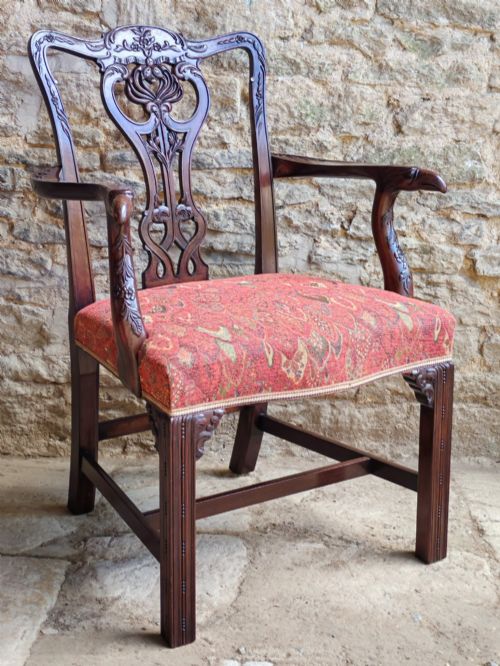

Chippendale Back Chairs
Chippendale back chairs combine classical proportion with intricate pierced splats, offering both robust seating and historical presence.
Chippendale Back Chairs
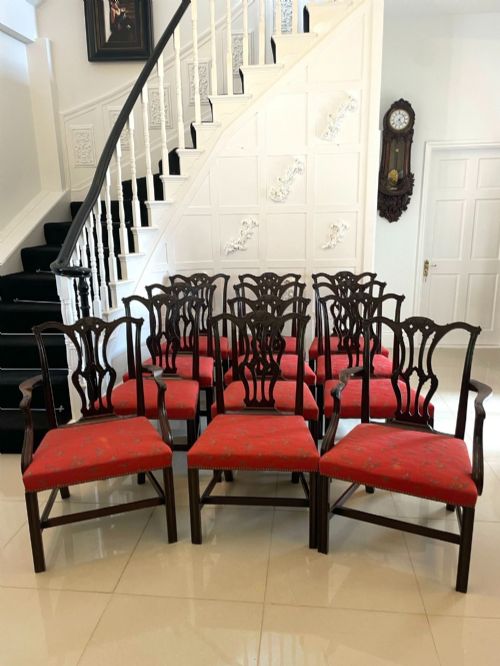
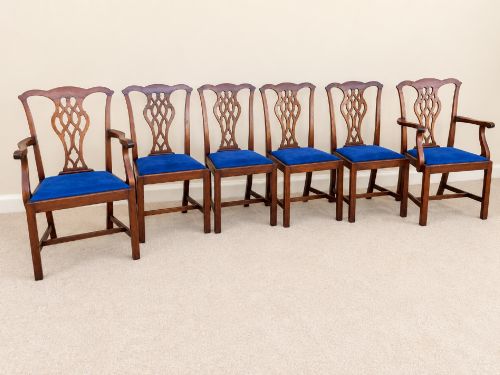
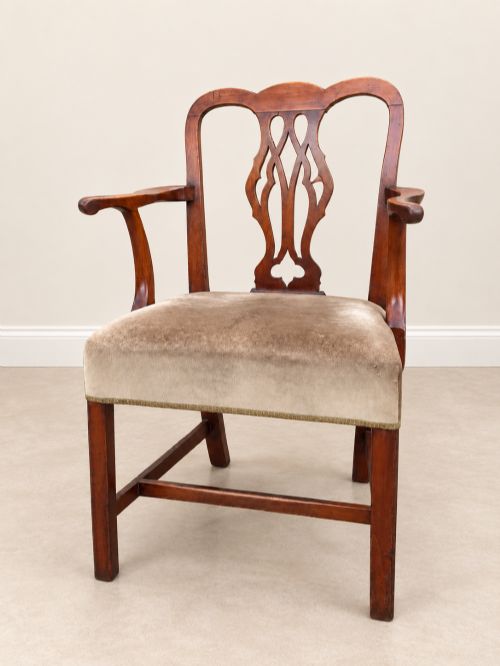
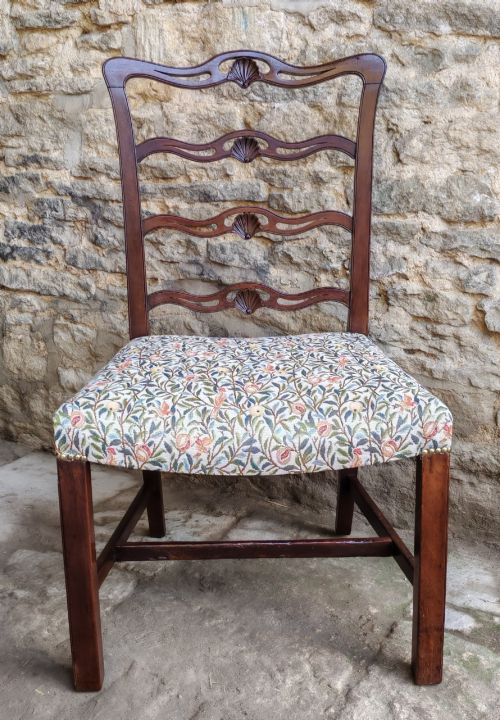
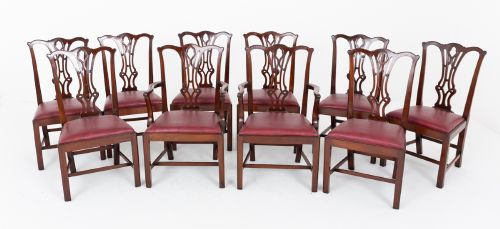
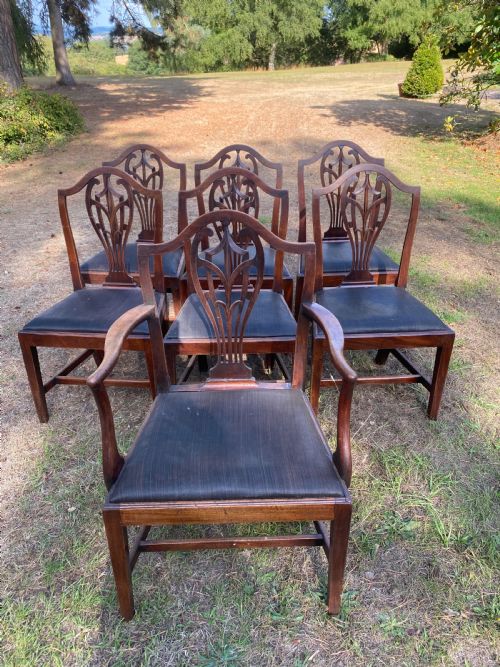
Chippendale back chairs encompass dining seats, open armchairs, and desk chairs defined by their distinctive interlaced or ladder-back splats. The inventory ranges from mid-eighteenth-century Georgian originals to later revival pieces produced during the Victorian and Edwardian eras.
Buyers frequently encounter sets of dining chairs alongside paired armchairs executed in mahogany or walnut. These seating forms draw upon eighteenth-century design vocabulary, incorporating ribbon backs, pierced lattice work, and Chinese Chippendale motifs.
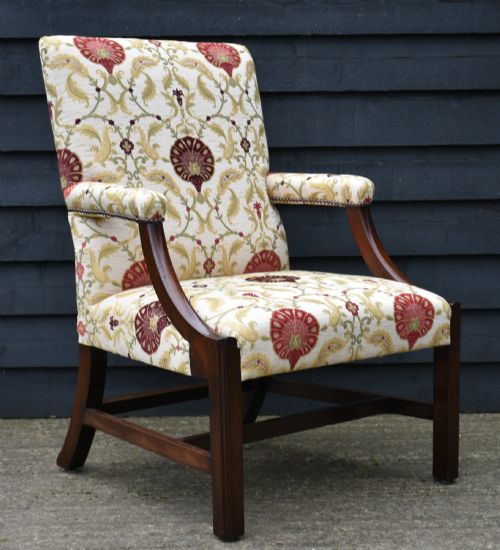
The category extends beyond formal dining arrangements to include library seating, wing chairs, and occasional settees sharing the characteristic carved splat and bracketed leg. Pieces span from the 1750s through to early twentieth-century interpretations.
Materials and construction
Makers relied primarily on dense tropical hardwoods, predominantly mahogany and occasionally walnut or oak, selected for their tensile strength under intricate fretwork. Timber was seasoned carefully to allow cabinetmakers to execute deep pierced carvings along the vertical splats without compromising structural integrity.
Joinery techniques utilised traditional mortise and tenon frames, reinforced with corner blocks to support the load-bearing requirements of dining and elbow seats. Upholstered drop-in seats or fixed pads incorporated materials such as leather, horsehair, and textile coverings.
The inventory spans Georgian originals to Edwardian revival pieces, including dining chairs, desk chairs, and wing armchairs.
Distinctions in craftsmanship
The refinement of the hand-carving determines the tier of the piece, separating crisp pierced ribbon motifs from softer, mechanical mouldings. Depth and undercut detailing in the splat and the knees of the cabriole leg show the carver's hand.
Selection of timber grain and the preservation of original framing timbers without extensive structural replacement govern the standing of individual chairs. Cohesion within a assembled set, where proportions and timber colour match uniformly, dictates desirability.
Thomas Chippendale·Howard and Sons·Alfred Allen of Birmingham
The Chippendale Back Chairs Glossary
- Ribbon back
- A chair splat carved to resemble undulating, folded ribbons tied in knots. This motif appears in high-status mid-eighteenth-century seating.
- Cockpen
- A lattice-work chair design inspired by Chinese geometric patterns. These pieces feature straight uprights and open intersecting wooden grids.
- Splatt
- The vertical central strip of wood running from the seat up to the top rail of a chair back. It receives the primary ornamental carving in Chippendale designs.
- Carver
- A traditional term for an armchair, typically used in a set alongside matching side chairs for dining tables. They feature supporting armrests.
- Cabriole leg
- A furniture leg that curves out at the knee and tapers inward to an ankle, terminating in a pad or claw foot. It reflects prevailing Georgian aesthetic preferences.
Chippendale Back Chairs: Frequently Asked Questions
How do I distinguish eighteenth-century chairs from later revivals?
Eighteenth-century examples show hand-tool marks, timber shrinkage consistent with age, and construction methods specific to period cabinetmaking. Revival pieces from the Victorian and Edwardian eras often utilise machine-assisted shaping and standardised joinery.
Examination of the timber underneath and the wear patterns on the foot terminals helps confirm the true production period of the frame.
Were these chairs originally made as large sets?
Dining sets frequently comprised six or twelve single chairs accompanied by a pair of matching carvers for the head of the table. Surviving large dining sets often reflect how wealthy households commissioned extensive suites for formal entertaining.
Many of these suites were later divided, meaning matched groups found today may have been assembled or paired over subsequent generations.
What upholstery materials are appropriate for these frames?
Historically, drop-in seats utilised woven horsehair, wool damask, or leather secured with decorative brass tacks. Modern restorations often employ traditional textiles or aged leathers that complement the dark tones of mahogany and walnut.
Selecting appropriate upholstery maintains the historical character of the seating while ensuring everyday usability.
How should I care for mahogany chair frames?
Mahogany requires stable room humidity and protection from direct sunlight to prevent timber splitting and fading of the polished finish. Periodic application of microcrystalline wax nourishes the wood surface without building up sticky residues.
Lifting chairs by their main seat rails rather than their delicate back splats prevents strain on the structural joinery.