


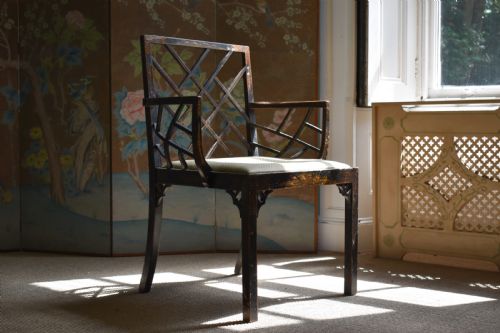


Chinoiserie Style Chair
These chinoiserie style chair pieces bring hand-painted motifs and oriental inspiration into interiors, offering striking forms for collectors of decorative seating.
Chinoiserie Style Chair
A chinoiserie style chair combines European seating forms with decorative schemes inspired by Chinese art and design. These decorative seats appear across several historical periods, including the eighteenth century and the Victorian era.
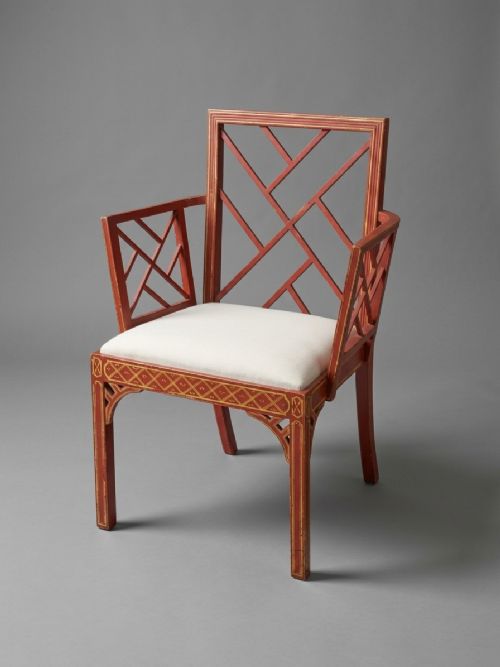
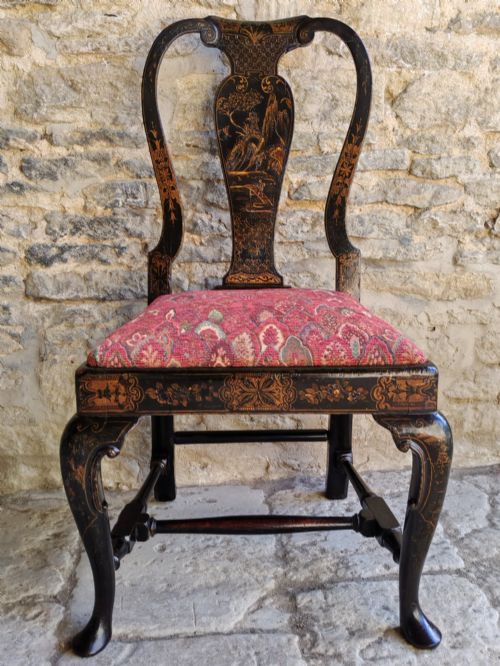
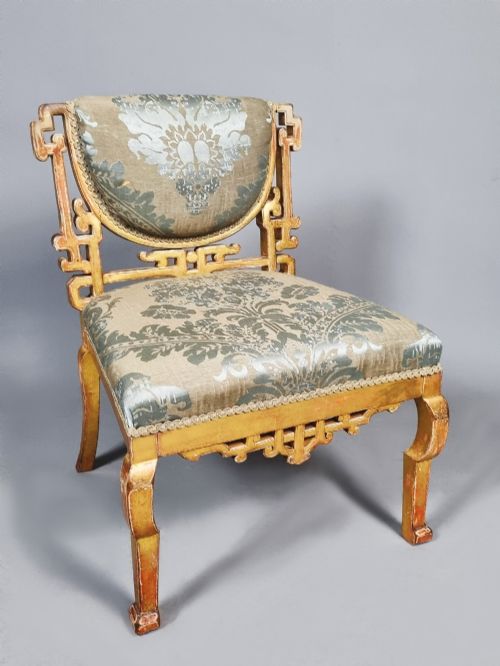
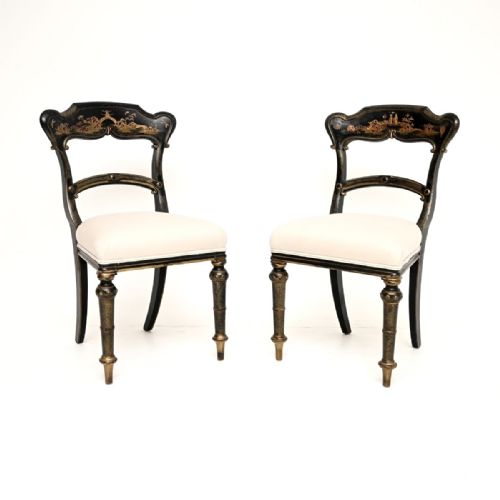
The inventory on this page includes armchairs, side chairs, and hall chairs alongside occasional seating like elbow seats. These examples span styles from Chinese Chippendale to Regency faux bamboo and Edwardian interpretations.
Buyers will encounter materials such as mahogany, walnut, satinwood, and ebonised wood finished with lacquer, gilt, and cane. Makers like Waugh & Son also contribute to the historical range seen within these listings.
How they were made
Makers utilised hardwoods like mahogany and walnut to build the foundational frames of these chairs. These timbers were carved or turned into specific silhouettes, including Chinese Chippendale designs and faux bamboo frameworks.
Surface decoration relies heavily on lacquer, japanning, and giltwork applied to wood. Artisans also integrated woven cane into seat panels and utilised fabric upholstery for armchairs and side chairs.
Chinoiserie Style Chair Retail Price Guide 2026
Typical asking prices for chinoiserie style chair among the pieces listed under this phrase on Sellingantiques today, from the lower quarter to the upper quarter. They describe what is for sale here now, not the wider market.
Period styles range from Queen Anne and Georgian Chinoiserie to Regency faux bamboo and Edwardian designs.
What varies in quality
The refinement of the hand-painted lacquer and gilt decoration distinguishes finer examples from simpler provincial work. Crisp carving on mahogany or satinwood frames also elevates the visual weight of the piece.
Integrity of construction across joints, cane panels, and original timber surfaces marks the difference between standard production and exceptional craftsmanship.
Waugh & Son
The Chinoiserie Style Chair Glossary
- Chinoiserie
- European decorative art imitating Chinese artistic styles. This aesthetic appears across furniture, lacquerwork, and textiles from the eighteenth century onwards.
- Japanning
- A European imitation of East Asian lacquer work. It involves layering varnishes and resins, often cured by heat and decorated with gilt motifs.
- Chinese Chippendale
- A mid-eighteenth-century English furniture style incorporating fretwork, pagoda motifs, and lattice patterns. It draws heavily on Chinese architectural elements.
- Cockpen
- An armchair style featuring an open lattice framework. This design is closely associated with Chinese Chippendale seating.
- Faux bamboo
- Wood turned and carved to resemble natural bamboo stalks. It was particularly popular during the Regency period for seating and occasional furniture.
Chinoiserie Style Chair: Frequently Asked Questions
What periods do these chairs date from?
The pieces span from the early eighteenth century through the Regency and Victorian eras into the Edwardian period and the early twentieth century.
This broad chronological spread means buyers encounter both eighteenth-century originals and later revival pieces influenced by historical styles.
Are these chairs comfortable for daily use?
Many examples feature upholstered seats, elbow rests, or cane panels designed for comfortable sitting in reception rooms or parlours.
Armchairs and side chairs offer varying degrees of support depending on their specific form and period of manufacture.
How do I identify a Chinese Chippendale chair?
Chinese Chippendale pieces typically feature intricate fretwork, lattice backsplats, and straight legs with bracket mounts.
These structural details distinguish the style from plain mahogany frames or later Victorian interpretations.
What is the difference between lacquer and japanning?
Lacquer traditionally refers to resin harvested from Asian trees, whereas japanning is the European technique developed to imitate it using varnishes.
Both finishes create a glossy, dark surface suited to painted gilt decoration.