







Chinoiserie Pedestal Table
A chinoiserie pedestal table brings painted lacquer, carved hardwood and distinctive oriental motifs directly into a traditional room.
Chinoiserie Pedestal Table
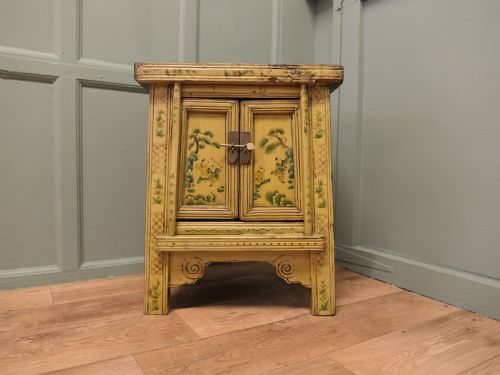
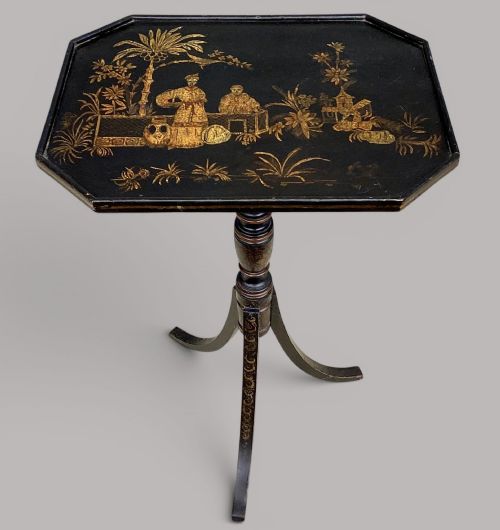
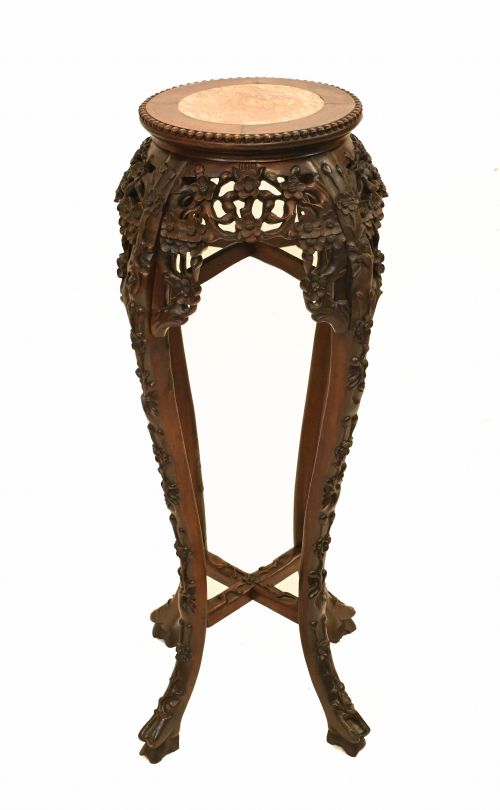
A chinoiserie pedestal table encompasses plant stands, wine tables and torchers drawing on Chinese and Qing Dynasty styles alongside English Georgian and Regency interpretations. When searching for a chinoiserie pedestal table, expect to encounter forms ranging from tripod wine tables to marble-topped plant stands.
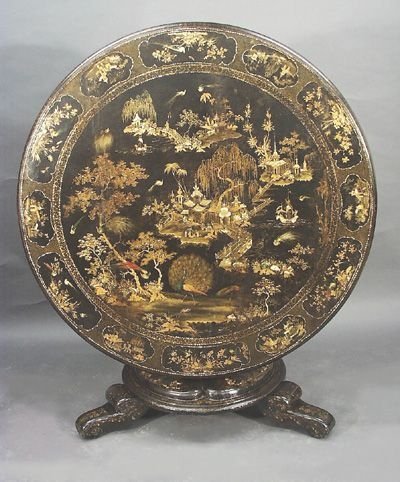
The periods represented span from Georgian and Regency eras through the nineteenth century, 1900, 1920 and 1930 revivals. These pieces frequently feature hand-painted decoration, japanning or carved hardwood structures designed to display vases or lamps.
Materials and construction
Construction relies heavily on hardwood, mahogany and rosewood, often paired with inset marble tops for plant and vase stands. Artisans utilised traditional joinery alongside heavy carving to shape the central pedestals and tripartite bases.
Surfaces receive elaborate treatments including lacquer, gold leaf, paint and japanning to achieve the characteristic oriental decoration. Glazed elements and enamel details appear on specific side tables and lamps within the selection.
Chinoiserie Pedestal Table Retail Price Guide 2026
Typical asking prices for chinoiserie pedestal table among the pieces listed under this phrase on Sellingantiques today, from the lower quarter to the upper quarter. They describe what is for sale here now, not the wider market.
Several plant stands moonlight as heavy-duty drinkers' companions, proving that nineteenth-century ferns and wine glasses required identical architectural support.
Assessing the workmanship
Quality rests upon the execution of the hand-painted or lacquered decoration and the crispness of the carved hardwood details. Finer examples display meticulous brushwork and depth within the japanning rather than flat, uniform surfaces.
The integrity of the central pedestal and the stability of the tripartite base dictate the structural merit of each piece. Heavier inset marble tops require precise housing within the wooden frame to demonstrate superior cabinetmaking.
Viardot·Gillows
The Chinoiserie Pedestal Table Glossary
- Chinoiserie
- European artistic interpretation of Chinese and East Asian decorative styles, popular across Georgian and revival periods. This aesthetic relies on whimsical motifs, figures and landscapes.
- Japanning
- European imitation of East Asian lacquerwork involving layered varnishes and heat-curing. It creates a hard, glossy black or coloured surface often finished with gold decoration.
- Torchere
- A tall, slender stand or pedestal designed to support a lamp or candleholder. These pieces typically feature a single central column raised on a stable footed base.
- Tripod base
- A support structure comprising three legs radiating from a central pillar. This configuration ensures stability on uneven floors.
- Qing Dynasty style
- Design characteristics originating from the last imperial dynasty of China, frequently referenced in nineteenth-century hardwood stands. It emphasises robust carving and inset stone panels.
Chinoiserie Pedestal Table: Frequently Asked Questions
What is a chinoiserie pedestal table used for?
These tables traditionally serve as plant stands, jardiniere supports, wine tables or small occasional tables for lamps and decorative objects. Their compact footprint allows them to occupy corners and hall spaces effectively.
Historically, they elevated prized porcelain and flora to enhance visibility within a drawing room or parlour. Today, they function similarly while adding a strong decorative accent to interior schemes.
How do I identify a genuine period piece?
Examination of the timber, joinery and ageing of the lacquer or paint provides the primary clues to a piece's age. Nineteenth-century and earlier examples display hand-tooling marks and natural wear consistent with their lifespan.
Revival pieces from the early twentieth century often employ different secondary woods and chemical treatments to simulate age. Comparing the weight and construction methods against documented period pieces clarifies the dating.
Are marble top stands fragile?
The marble inserts add considerable weight to the top of the stand, making them sturdy in use but heavy to move. The stone sits within a recessed wooden frame designed to support the downward load safely.
Care should be taken during relocation to lift the entire structure rather than pulling from the upper edges. The stone itself requires mild cleaning agents to protect the polished surface from acidic staining.
How do I style these tables at home?
Pairing a lacquered or painted pedestal table with neutral surroundings allows the intricate oriental motifs and gold leaf details to stand out. They work well as standalone accent pieces beside seating or in entrance halls.
Placing a ceramic bowl, small lamp or potted plant on top completes the traditional function of the furniture. Avoid overcrowding the surface to maintain the visual balance of the carved or painted base.