







Chinoiserie Pedestal Stand
These chinoiserie pedestal stand examples bring together painted lacquer, carved hardwood and marble tops across periods from the Regency to the mid-twentieth century.
Chinoiserie Pedestal Stand
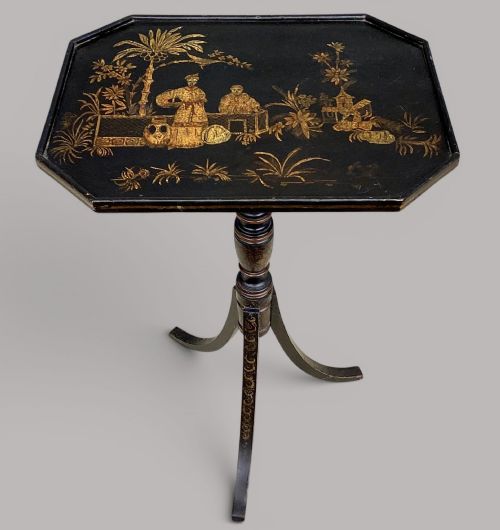
A chinoiserie pedestal stand serves to elevate decorative objects, plants and lamps within a room, taking forms such as torcheres, plant stands and occasional tables. The pieces found here span the nineteenth century, the Regency era, nineteen-hundred, nineteen-twenty and nineteen-forty, drawing upon Chinese export, Qing Dynasty and Victorian revival styles.
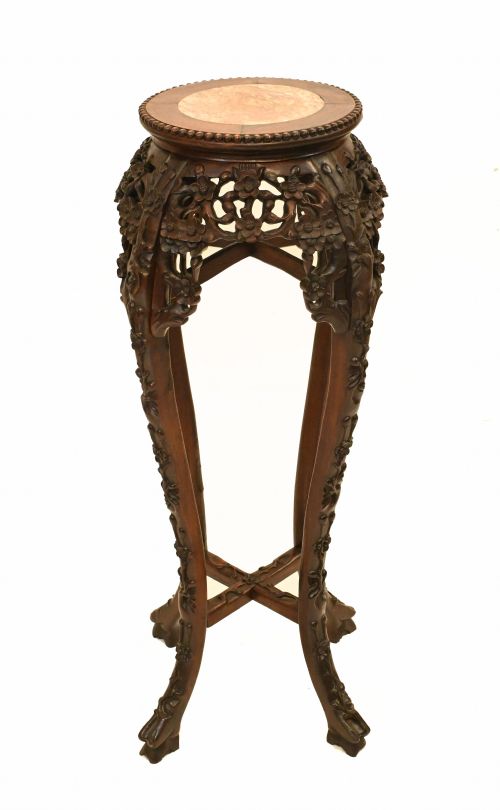
Buyers most frequently meet wooden and lacquered constructions featuring hand-painted decoration, alongside carved hardwood frames inset with marble tops. These items function as focal points or supporting furniture, reflecting both European interpretations of Asian design and authentic Chinese export production.
How they were made
The physical construction relies on hardwood, lacquered wood and marble, shaped through traditional joinery and carving techniques. Surface decoration employs gold leaf, paint and enamel to build up intricate scenes and borders.
Lacquered pieces receive multiple coats to achieve a deep finish, while marble inserts provide a durable, cool surface atop carved wooden frames. Artisans utilised hand-painting directly onto the prepared wood or lacquer grounds.
Chinoiserie Pedestal Stand Retail Price Guide 2026
Typical asking prices for chinoiserie pedestal stand among the pieces listed under this phrase on Sellingantiques today, from the lower quarter to the upper quarter. They describe what is for sale here now, not the wider market.
Listings feature items from the Regency, Georgian, and nineteenth century alongside nineteen-twenty and nineteen-fourt years.
What varies in quality
Quality rests upon the crispness of the wood carving, the depth and preservation of the lacquer, and the hand-painted details. Earlier Regency and Georgian examples often display finer joinery and more refined proportions than later revivals.
The integration of materials also defines the standard, such as the snug fit of an inset marble top and the stability of tripartite or carved bases. Intact gold leaf and well-preserved enamel work elevate the visual presence of the piece.
The Chinoiserie Pedestal Stand Glossary
- Chinoiserie
- European decorative style reflecting Chinese artistic influences, prominent in furniture and lacquerwork from the eighteenth century onwards. It relies on imaginative scenes of figures, pavilions and landscapes.
- Torchere
- A tall stand or pedestal originally designed to hold a candle or torch, later adapted for lamps and small decorative objects. They often feature slender columns and supportive bases.
- Comport
- A shallow bowl or dish raised on a stem and foot, used traditionally for serving fruit or sweets. In ceramic forms, they complement the display of larger pedestals.
- Cloisonné
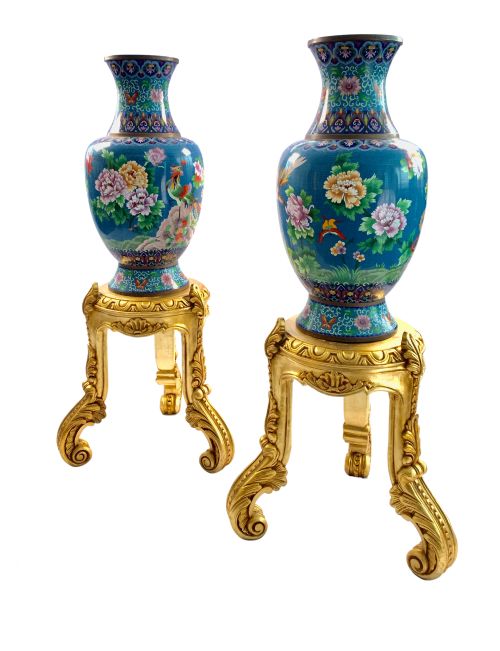
- Enamelwork technique where thin metal wire creates compartments on a base, which are then filled with coloured paste and fired. This method produces vibrant decorative patterns on vases and vessels.
- Jardiniere
- An ornamental pot or stand for holding plants or flowers, frequently integrated into nineteenth-century interior arrangements. They appear in ceramic, wood and metal.
- Tripod base
- A three-legged support structure commonly found on wine tables and torchere stands to ensure stability on uneven floors. It distributes weight evenly from the central pedestal.
Chinoiserie Pedestal Stand: Frequently Asked Questions
What is a chinoiserie pedestal stand used for?
These stands provide an elevated surface for displaying table lamps, floral arrangements, vases and decorative objects within domestic interiors. Their vertical proportions draw the eye upward and make efficient use of floor space in corners or empty alcoves.
Historically, they also served as torchere supports or occasional tables for wine and refreshments during evening gatherings. Today, they function primarily as sculptural furniture that anchors a room's decorative scheme.
How do I date a lacquer stand?
Dating relies on examining the construction methods, the wood beneath the lacquer, and the style of the painted decoration. Regency and Georgian pieces show different joinery techniques compared to later revival items from nineteen-hundred or nineteen-twenty.
Wear patterns, the formulation of the lacquer, and the specific motifs used in the painted scenes also provide clues. Comparing the piece to documented examples from the same period helps narrow down the decade of manufacture.
Are marble top stands fragile?
The marble inserts are heavy and solid, but they simply rest within wooden frames rather than being permanently bonded. Care must be taken when moving the stand to prevent the stone from shifting or chipping at the edges.
The wooden or lacquered bases require standard furniture care to protect the surface finish from moisture and direct heat. Lifting the entire piece from the base rather than the top ensures structural stability.
What distinguishes Chinese export from Victorian chinoiserie?
Chinese export pieces were manufactured in China specifically for the Western market, utilising native hardwoods, traditional carving methods, and authentic regional techniques. They often reflect Qing Dynasty workmanship adapted to European tastes.
Victorian chinoiserie, by contrast, was produced in Europe during the nineteenth century as part of various revival movements. These items apply painted lacquer and decorative motifs to Western furniture forms like wine tables and torcheres.