





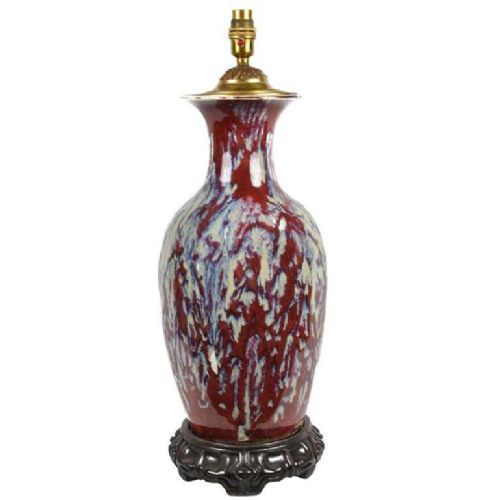

Chinese Wooden Lamp
These Chinese wooden lamp examples combine hardwood craftsmanship with traditional forms, bringing authentic Oriental character and warm illumination to any interior space.
Chinese Wooden Lamp
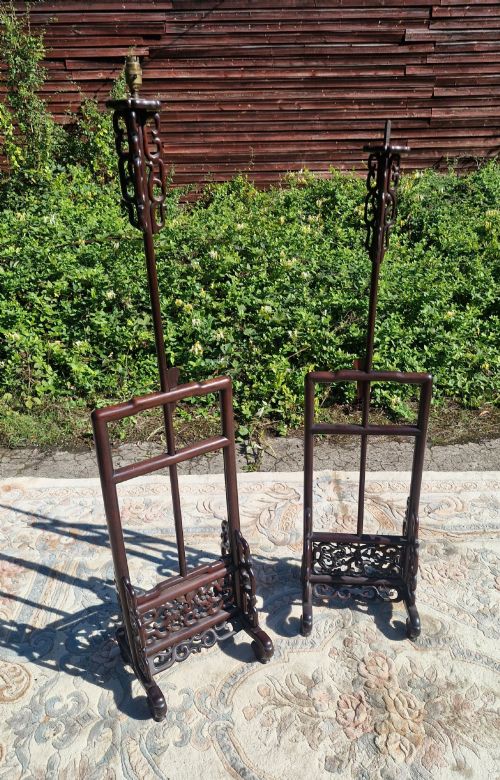
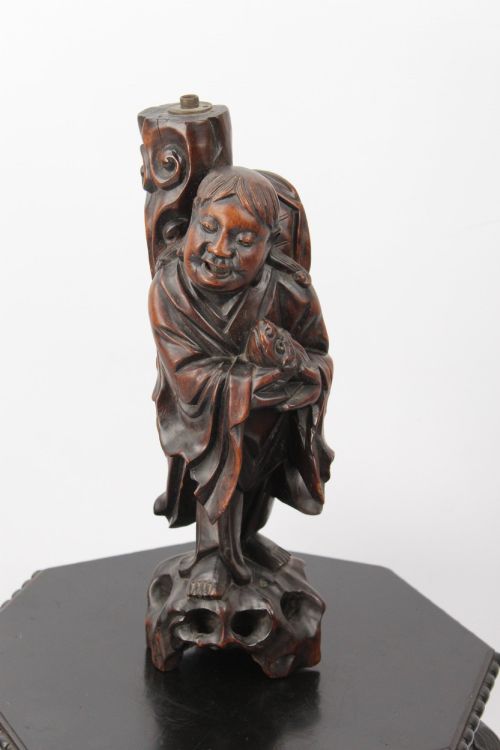
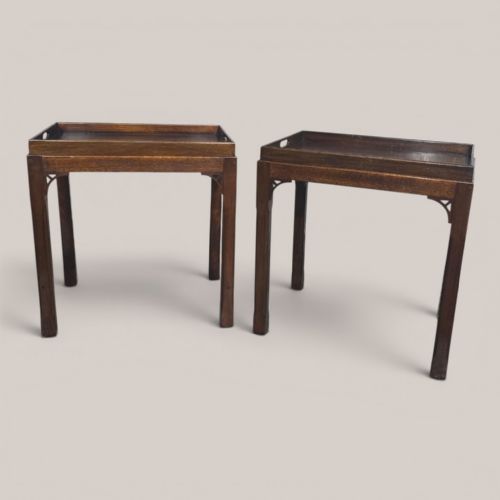
When searching for a chinese wooden lamp, buyers encounter various forms including standard lamps, lantern stands, carved root wood table lamps, and converted vases from the nineteenth century onward. These pieces range from towering torchiere standards to smaller occasional tables and planter stands repurposed for lighting.
The selection on this page leans heavily toward nineteenth-century hardwood standards, carved root wood designs, and table lamps fashioned from Chinese export porcelain such as famille rose and celadon vases. Alongside these stand larger floor-standing fixtures and carved dragon lantern stands that reflect traditional Qing craftsmanship and later revival styles.
How they were made
Makers utilised dense timbers such as hardwood, padauk wood, elm, and mahogany, often shaping the material through intricate hand carving. Skilled artisans incorporated brass mounts, marble inserts, and lacquered finishes to construct sturdy structures like lantern stands and occasional tables.
Many lighting pieces incorporate converted porcelain elements, including sang de boeuf, famille verte, and celadon vases mounted on wooden bases. Fabric shades and internal wiring complete the adaptation of antique vessels and furniture stands into functional lamps.
Chinese Wooden Lamp Retail Price Guide 2026
Typical asking prices for chinese wooden lamp among the pieces listed under this phrase on Sellingantiques today, from the lower quarter to the upper quarter. They describe what is for sale here now, not the wider market.
Some nineteenth-century dragon lantern stands doubled as occasional tables, proving that mythical beasts make surprisingly reliable furniture.
What varies in quality
The refinement of the hand carving dictates much of the distinction between pieces, particularly in the rendering of dragon motifs and figural details on root wood and hardwood frames. Crisp, deep relief work on lantern stands and torchiere poles signifies superior artisan skill compared to softer, shallower tool marks.
The integration of materials also defines the tier of a piece, such as the weight and figuring of the timber, the thickness of inset marble tops, and the quality of the ceramic glaze on converted vases. Well-balanced proportions in adjustable standards and pairs of lamp tables further separate standard items from finer examples.
The Chinese Wooden Lamp Glossary
- Hardwood
- Dense, durable timber utilised for traditional Chinese furniture and lantern stands. It provides the structural integrity required for tall standard lamps and carved tables.
- Famille Rose
- A palette of opaque enamel colours dominated by pink, used on Chinese porcelain ceramic vessels. Vases decorated in this style frequently appear converted into table lamps.
- Torchiere
- A tall standing floor lamp designed to direct light upwards. These pieces often feature elaborate hand-carved wooden dragons and sturdy pillar supports.
- Root wood
- Timber formed from the root mass of a tree, highly prized for its gnarled, organic shapes. Carvers exploit these natural contours to create unique table lamp bases and rustic stands.
- Celadon
- A pale green jade-like glaze applied to Chinese ceramics. Vases bearing this finish are frequently mounted as lamps while retaining their original nineteenth-century character.
Chinese Wooden Lamp: Frequently Asked Questions
Are these lamps converted from antiques?
Many listings feature nineteenth-century Chinese vases, ginger jars, and elm or hardwood stands that have been adapted into functional lamps.
This process combines antique ceramic vessels or furniture frames with modern electrical fittings to create usable lighting.
What periods do these lamps come from?
The available pieces span the nineteenth century and the early twentieth century, including Victorian-era imports and Qing Dynasty styles.
Dates recorded in the evidence range from the 1880s through to the 1920s.
What woods are used in these lamps?
Craftsmen utilised dense materials such as mahogany, padauk wood, elm, and general hardwood for structural durability.
Root wood is also common for organic, highly textured table lamp bases.