




Chinese Pedestal Stool
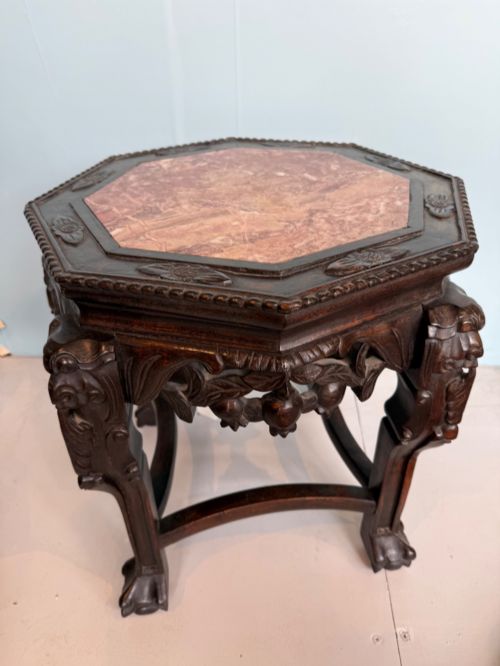
A Chinese pedestal stool offers a solid timber platform for displaying plants or lamps, bringing traditional carving and inset stone into a room.
Chinese Pedestal Stool
A chinese pedestal stool serves primarily as a plant stand, side table, or occasional table, raised on sturdy legs to display decorative objects or lamps. The versions most commonly encountered on this page date from the nineteenth century and the Victorian era, reflecting periods of strong export and traditional craftsmanship.
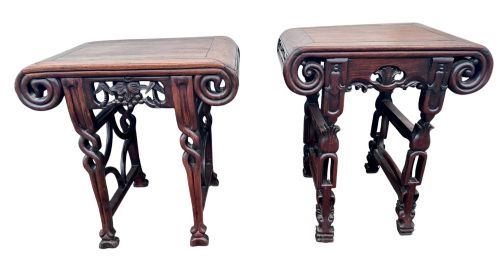
Makers shaped these pieces in various forms, including plant stands, side tables, occasional tables, and stools. The designs draw from Qing Dynasty traditions, Chinese Export styles, and rustic Chinese aesthetics, often incorporating circular or dish tops.
Originating from workshops producing Chinese Traditional, Qing Dynasty, and Chinese Republic Period items, these pieces bridge functional furniture and decorative art. They function equally well as solitary statement pieces or in matched pairs.
Materials and construction
Carvers shaped these stands using dense timbers such as hardwood, rosewood, ebonised hardwood, huali, and rootwood, ensuring structural strength for heavy table tops. Artisans frequently integrated natural stone elements, setting marble or deep quartz directly into the timber frame.
Surface decoration involved traditional techniques, seen in lacquered painted finishes and mother-of-pearl details that accent the carved wood. Joinery relied on precise traditional woodworking methods to support the weight of inset stone panels and heavy pots.
Chinese Pedestal Stool Retail Price Guide 2026
Typical asking prices for chinese pedestal stool among the pieces listed under this phrase on Sellingantiques today, from the lower quarter to the upper quarter. They describe what is for sale here now, not the wider market.
Materials recorded across the inventory include hardwood, rosewood, rootwood, ebonised timber, marble, quartz, lacquer, and mother-of-pearl.
Factors of quality
Quality rests in the crispness of the carving and the selection of the primary timber, where dense hardwoods and figured rootwood demonstrate superior craftsmanship. The fit and figuring of inset marble or quartz tops also distinguish finer examples from simpler rustic pieces.
The integrity of the structural joinery and the preservation of original lacquered or painted surfaces dictate the overall standing of an individual stand. Pieces showing deliberate proportion in their pedestal design and careful attention to edge profiling hold greater visual weight.
The Chinese Pedestal Stool Glossary
- Hardwood
- Dense, slow-growth timber used for durable furniture construction. It provides the necessary structural rigidity for intricate carving.
- Rouge marble
- A reddish decorative limestone inset into table tops. This material offers a smooth, cool surface contrasting with the dark timber.
- Rootwood
- Burl or root sections of timber selected for natural, gnarled shapes. Craftsmen utilised these organic forms to create rustic stands.
- Jardiniere
- An ornamental pot or stand designed to hold large plants. These vessels often paired with dedicated pedestals.
Chinese Pedestal Stool: Frequently Asked Questions
What is a chinese pedestal stool used for?
These pieces function primarily as elevated platforms for holding heavy plants, lamps, or decorative ceramic vessels. Their sturdy construction allows them to serve easily as small side tables or occasional tables in a room.
Historically, craftsmen designed them to lift prized decorative objects off the floor to display them properly. Today, they fit well beside seating or in corners where a compact surface is useful.
How do I identify a nineteenth-century piece?
Nineteenth-century stands typically display dense hardwoods, hand-carved detailing, and traditional joinery methods. Many incorporate inset marble or quartz tops characteristic of Qing Dynasty production.
Examining the underside and joints reveals hand tools marks and natural ageing of the timber. These physical traits help distinguish genuine nineteenth-century items from later reproductions.
Are these stands suitable for daily use?
Hardwood pedestal stands possess robust construction suited for supporting everyday items like lamps and drinks. The solid timber frames handle regular weight without difficulty.
Care should be taken to protect polished timber and inset stone surfaces from moisture and harsh impacts. Using coasters and protective pads preserves the finish during daily use.
What is the difference between a stool and a plant stand?
While construction materials often overlap, plant stands typically feature taller pedestals and flat or dish-shaped tops designed specifically for display. Stools generally offer a slightly wider, flatter surface intended for seating or lower placement.
Many surviving nineteenth-century examples bridge both categories, functioning interchangeably as low tables or display pedestals.