

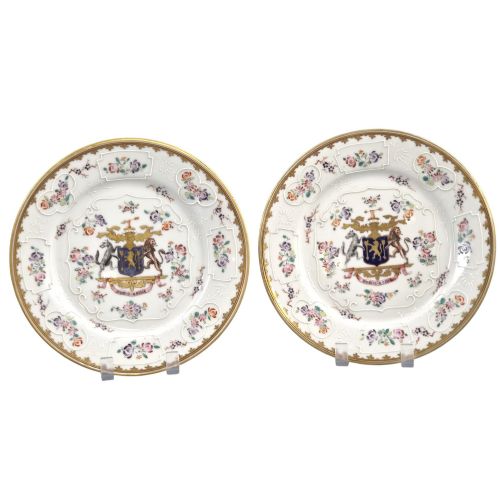


Chinese Export Style Dish
A chinese export style dish brings centuries of East Asian decorative tradition and European imitation into your home with painted porcelain.
Chinese Export Style Dish
A chinese export style dish represents a cross-cultural exchange in ceramics, spanning periods from the seventeenth century through to the twentieth century. These pieces encompass decorative plates, chargers, and deep saucer-dishes produced in various forms.
The selections on this page feature items originating from diverse stylistic backgrounds, including Chinese Qing style, Regency Chinoiserie, Georgian Chinoiserie, and nineteenth-century French interpretations. You will encounter both direct Asian imports and European factories imitating these specific aesthetics.
Forms vary from standard decorative plates to larger chargers and specialised deep saucer-dishes. The chronological spread includes Victorian examples, Georgian specimens, and pieces dated around seventeen-fifty, nineteen-hundred, and nineteen-thirty.
Materials and Construction
Makers utilised porcelain, earthenware, and ironstone as the primary physical bodies for these items. These ceramic foundations provide the durable base required for detailed surface decoration.
Surface ornamentation relies on enamel, cobalt glaze, and gilt applied over or under the glaze. Hand painting techniques deliver intricate imagery such as dragons, figures, and botanical motifs.
Chinese Export Style Dish Retail Price Guide 2026
Typical asking prices for chinese export style dish among the pieces listed under this phrase on Sellingantiques today, from the lower quarter to the upper quarter. They describe what is for sale here now, not the wider market.
Green dragons and cranes share shelf space with European interpretations of the hundred antiques design.
Assessing Quality
The refinement of the painted brushwork dictates the visual success of the surface imagery. Finer specimens display precise control in cobalt blue or multi-coloured enamel work.
The purity of the ceramic body and the smoothness of the glaze layer separate standard utilitarian items from ambitious decorative plates and chargers. Potteries achieved different levels of vitrification and kiln stability across the various centuries represented.
C.J. Mason
The Chinese Export Style Dish Glossary
- Porcelain
- A hard, white, translucent ceramic fired at high temperatures. It forms the primary material for many export and imitation plates.
- Cobalt Glaze
- A deep blue metallic oxide pigment used under the glaze for durable painted decoration. This colour defines much of the traditional blue and white ware.
- Enamel
- Opaque or translucent glass applied over fired glaze and fixed in a muffle kiln. It permits a wide palette of colours beyond traditional blue.
- Gilt
- A thin layer of gold applied to surface details for decorative enhancement. It frequently highlights rims and prominent design elements.
- Chinoiserie
- The European interpretation and imitation of Chinese and East Asian artistic traditions. This style influenced numerous Georgian and Regency period productions.
- Charger
- A large decorative plate utilised primarily for display rather than dining. These items offer expansive surfaces for complex painted narratives.
Chinese Export Style Dish: Frequently Asked Questions
What is a chinese export style dish?
A chinese export style dish is a ceramic plate or charger made either in Asia for Western markets or in Europe imitating Eastern designs.
These pieces use porcelain, earthenware, and ironstone decorated with hand-painted enamels, cobalt blue, or gilt.
How were these dishes used?
Many of these items functioned as decorative plates and chargers for display in formal interiors rather than everyday dining.
Deep saucer-dishes and larger chargers served both aesthetic and specialised serving purposes depending on their historical period.
How do I live with antique porcelain?
Display these plates securely using appropriate wall mounts or stable plate stands designed for antique ceramics.
Keep them away from direct sunlight and clean them gently with dry or slightly damp cloths without harsh chemical detergents.
How do I tell periods apart?
Examine the ceramic body, glaze characteristics, and painting style to identify the likely period of manufacture.
Seventeenth-century Ming styles differ significantly from nineteenth-century French interpretations and nineteen-thirty productions.