







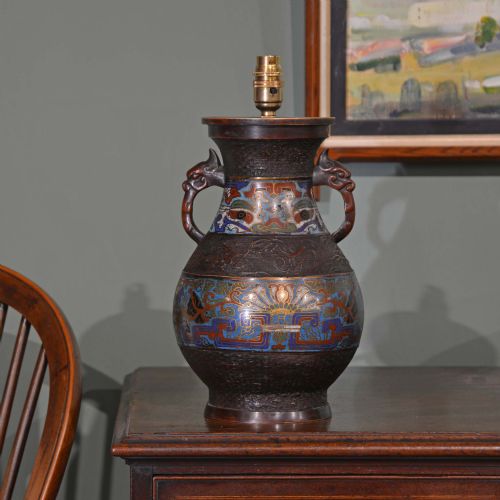

Chinese Dragon Handle Vases
Chinese dragon handle vases are substantial metal and ceramic vessels featuring mythical beast mounts, offering collectors striking sculptural forms and rich historical detail.
Chinese Dragon Handle Vases
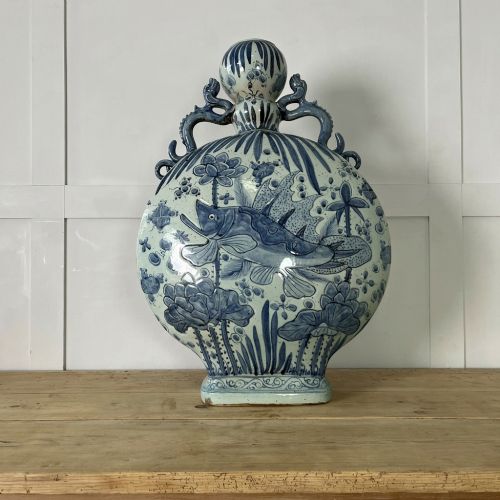
Chinese dragon handle vases draw the eye immediately through their assertive handles fashioned as winding scaled beasts, anchored to substantial bodies designed for display or ritual use. Collectors searching for these pieces encounter a robust selection dominated by heavy cast metal vessels and ceramic moon flasks or altar forms.
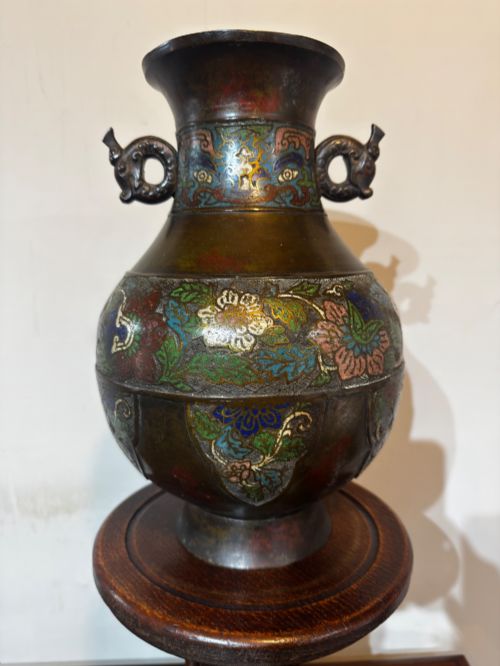
The material record on this page centres on cast bronze and champlevé enamel, alongside porcelain pieces from the nineteenth century. Forms range from monumental altar vessels and heavy display urns to converted table lamps and Canton porcelain vases.
Originating across periods from the seventeenth century through to the early twentieth century, these objects reflect both domestic Chinese production and historical export markets tailored for Western interiors. Victorian interpretations and Chinoiserie adaptations sit alongside earlier Qing Dynasty works, offering diverse scales and patination.
Materials and Making
Bronze casting forms the backbone of these pieces, utilising lost-wax or sectional mould techniques that allow intricate relief work and sculptural dragon handles to integrate seamlessly with the main vessel body. Artisans then applied champlevé enamel cells directly into the bronze surface, filling the recessed channels with coloured glass pastes before firing and polishing.
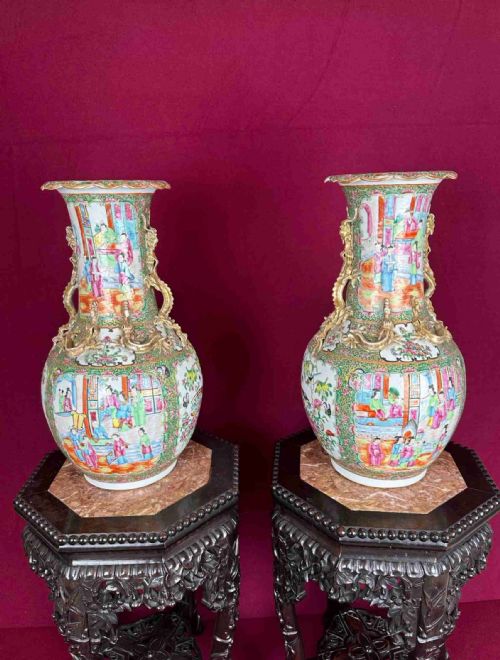
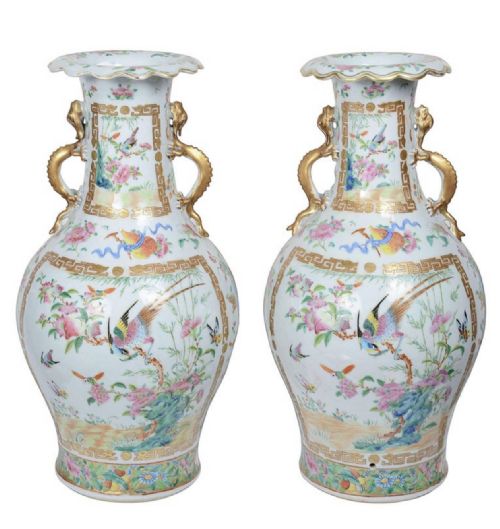
Porcelain examples rely on high-fired ceramic bodies finished with hand-painted polychrome enamels, as seen in Canton and Rose Medallion productions from the nineteenth century. Secondary materials such as silver mountings and cherry wood bases appear in specific export pieces, demonstrating mixed-media craftsmanship.
Chinese Dragon Handle Vases Retail Price Guide 2026
Typical asking prices for chinese dragon handle vases among the pieces listed under this phrase on Sellingantiques today, from the lower quarter to the upper quarter. They describe what is for sale here now, not the wider market.
Listings span periods from the 17th century to 1930, uniting heavy cast bronze, champlevé enamel, and nineteenth-century porcelain.
Assessing Quality
Quality in these vessels reveals itself primarily in the crispness of the bronze casting and the depth of the chased surface detail, where sharper scales and articulated claws distinguish superior work from softer, mass-produced examples. The integration of the dragon handle into the shoulder and neck demonstrates the maker's structural ambition and control over the molten metal.
In enamelled pieces, the uniformity of the glass paste fill within the bronze cells and the richness of the underlying patination separate accomplished workshops from routine output. Weight also serves as an indicator of substance, particularly in bronze altar vases where thick walls and solid mounts define the baseline of manufacture.
The Chinese Dragon Handle Vases Glossary
- Champlevé
- An enamelling technique where troughs or cells are chiselled or cast into the surface of a metal object and filled with vitreous enamel before firing. This method creates vibrant patterns of colour bounded by raised metal lines.
- Moon Flask
- A flattened ceramic or metal vessel with a circular body, narrow neck, and small loop handles, often supported on a rectangular foot. The shape derives from ancient pilgrim flasks.
- Altar Vase
- A rigid, formal vessel traditionally cast in bronze for use in temples or domestic shrines, characterised by symmetrical proportions and handles designed for ritual placement.
- Patinated Bronze
- Metal surfaces altered by chemical processes, oxidation, or age to produce a stable, decorative coating ranging from deep brown to verdigris. This finish protects the metal while adding visual depth.
- Canton Vase
- Porcelain vessels decorated in the southern Chinese port of Canton during the nineteenth century, typically featuring vibrant panels of figures, birds, and flowers framed by gilt foliage.
Chinese Dragon Handle Vases: Frequently Asked Questions
What are chinese dragon handle vases used for?
These vessels served primarily as ritual altar bronzes, decorative display pieces, or receptacles for flowers in traditional settings.
Today, collectors place them as sculptural focal points in interiors, and some nineteenth-century examples have been adapted as table lamps.
How do I date a bronze vase?
Dating relies on examining the quality of the casting, the composition of the patination, and stylistic markers associated with the Qing Dynasty or Victorian export periods.
Heavier altar bronzes and pieces with integrated champlevé work often point towards nineteenth-century production or earlier.
Are porcelain and bronze versions different?
Porcelain versions offer bright polychrome enamel palettes and painted pictorial scenes, whereas bronze pieces rely on sculptural form, relief work, and metal patination.
Both incorporate dragon handles, but bronze examples tend to offer greater weight and a more architectural presence.
How do I clean patinated bronze?
Bronze with historic patination requires minimal intervention, usually limited to gentle dusting with a soft, dry brush to preserve the surface skin.
Harsh chemical cleaners or metal polishes strip away the aged patination that collectors value.