






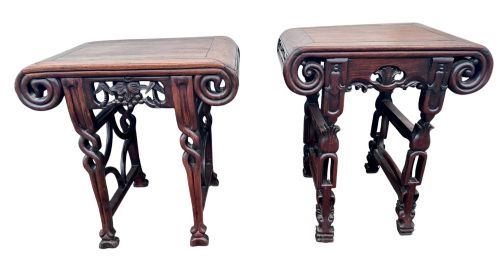


Chinese Display Pedestal
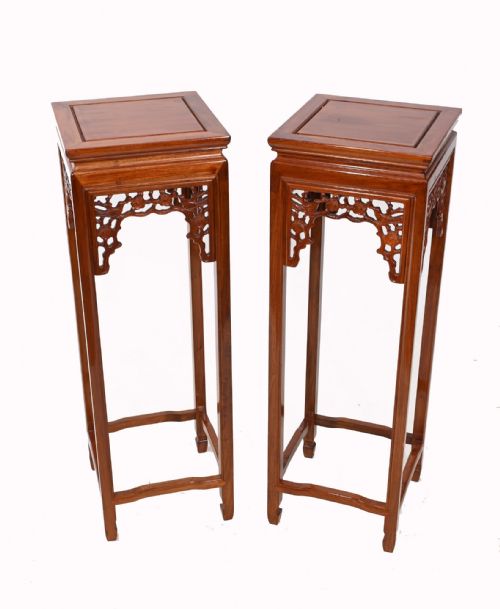
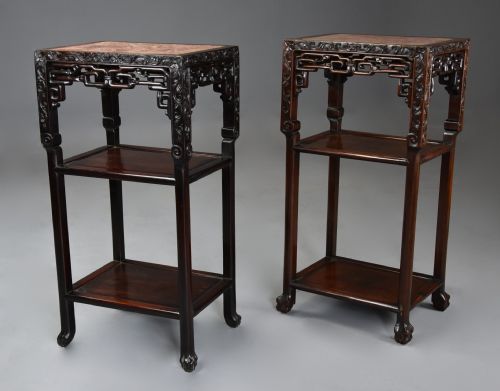
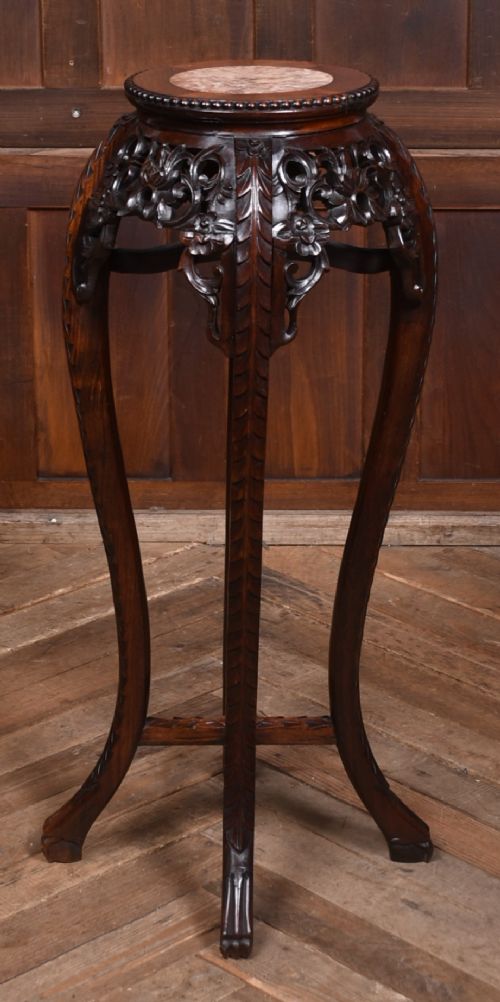
A Chinese display pedestal elevates an interior through dense timber and cold stone, bringing height and structural focus to a room.
Chinese Display Pedestal
A Chinese display pedestal serves to elevate plants, vases, urns, and lamps within domestic spaces. The pieces gathered here span from the nineteenth century into the early decades of the twentieth, encompassing Victorian interpretations alongside Qing Dynasty and Chinese Export work.
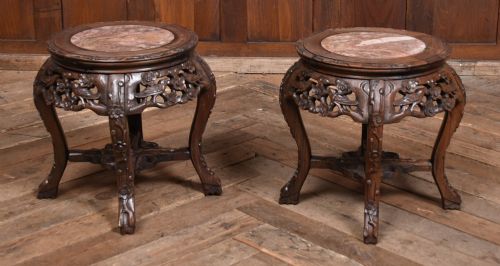
The most common forms on this page take the shape of compact pot stands, jardiniere tables, and occasional side tables. These range from low vase supports to tall freestanding pedestal tables designed to carry heavy ceramic vessels.
How they were made
Cabinet makers utilised dense exotic timbers such as hongmu, padouk, and rosewood, selected for their strength and dark natural grain. These woods support intricate relief carving and stable joinery without relying on excessive structural metalwork.
Insets of white and rouge marble form the flat centrepiece of many tops, while mother of pearl inlay occasionally decorates the timber surfaces. Lacquered and painted finishes appear alongside polished natural wood.
Chinese Display Pedestal Retail Price Guide 2026
Typical asking prices for chinese display pedestal among the pieces listed under this phrase on Sellingantiques today, from the lower quarter to the upper quarter. They describe what is for sale here now, not the wider market.
Listings draw heavily from the nineteenth century, featuring hardwood, rosewood, hongmu, and padouk paired with inset rouge and white marble.
What varies in quality
The depth and crispness of the hand carving separate standard commercial items from superior examples. Finely articulated floral and scroll motifs require patient chiselling that maintains sharp edges across dense tropical timber.
The fit of the inset marble top within the wooden frame indicates the standard of original construction. Tight joints and well-figured stone panels demonstrate greater skill in matching materials.
The Chinese Display Pedestal Glossary
- Hongmu
- A dense tropical hardwood prized in Chinese furniture making for its deep reddish-brown tone and heavy weight. It withstands intricate carving without splintering.
- Padouk
- A sturdy exotic timber displaying rich red and brown hues that darkens with age. Makers chose it for structural stability in load-bearing plant stands.
- Jardiniere
- A large ornamental pot or container for plants and flowers. Stands built specifically for these vessels feature reinforced tops to carry heavy damp earth and ceramic.
- Chinoiserie
- European artistic style reflecting Chinese motifs and decorative techniques. Items created for export often blend these aesthetic influences with traditional domestic forms.
- Inlay
- A decorative technique where contrasting materials like mother of pearl are embedded flush into the timber surface. This creates flat patterning that contrasts with carved relief work.
Chinese Display Pedestal: Frequently Asked Questions
What were Chinese display pedestals used for?
These pieces held heavy ceramic planters, bronze urns, and decorative vases to raise them above floor level. Placing plants and vessels on dedicated stands protected household surfaces from water and dirt.
They also served as occasional side tables for lamps and wine in nineteenth-century interiors. Their compact footprint allowed them to fit easily into corners and hallways.
How do I identify a Qing Dynasty stand?
Authentic Qing Dynasty pieces display traditional Chinese joinery methods and dense tropical hardwoods like hongmu and padouk. Carved motifs typically reference classical flora, fauna, and geometric border patterns.
Many examples include inset marble tops designed to hold damp flower pots safely. The weight of the timber and the depth of the carving provide strong indicators of period manufacture.
How do I style a pedestal in a modern room?
A tall hardwood stand functions effectively as a sculptural anchor in an empty corner or beside seating. Placing a single ceramic vessel or lamp on top creates vertical interest without cluttering the floor space.
Paired stands work well flanking a doorway or fireplace to create symmetry. The dark wood tones contrast cleanly against plain white or neutral walls.
Are marble top stands fragile?
The stone insets are heavy and thick, designed to bear the weight of large ceramic planters and bronze vessels. Normal domestic placement poses little risk to the structural integrity of the top.
Care should be taken when moving these pieces to prevent the unbonded marble slab from shifting out of its wooden rebate.