






Chinese Camphor Trunk
A chinese camphor trunk brings aromatic timber and durable campaign construction together, offering practical storage with a distinct colonial history.
Chinese Camphor Trunk
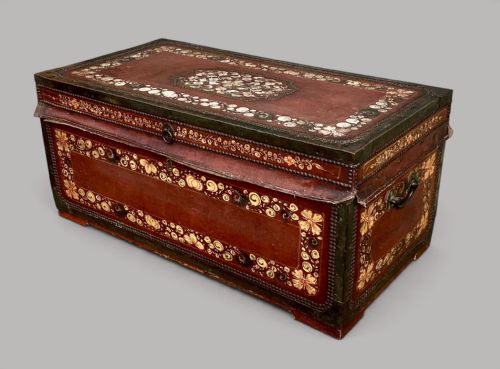
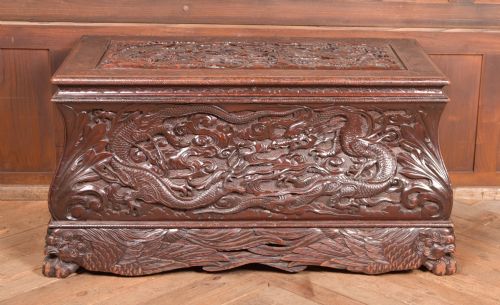
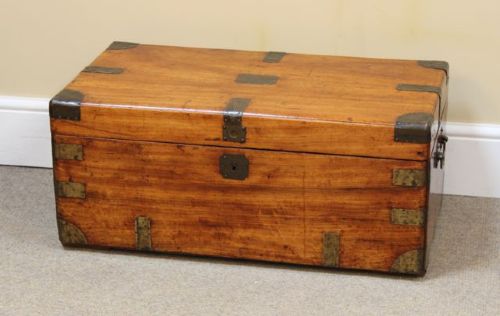
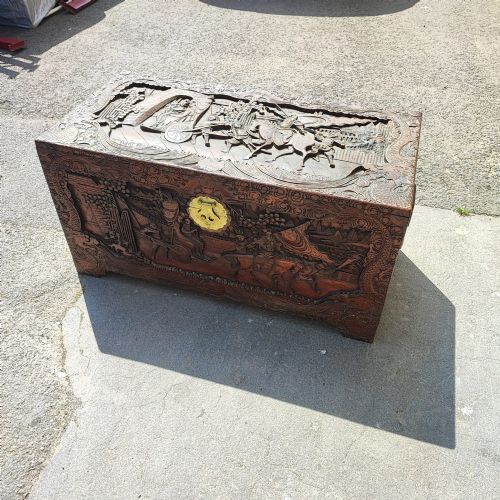
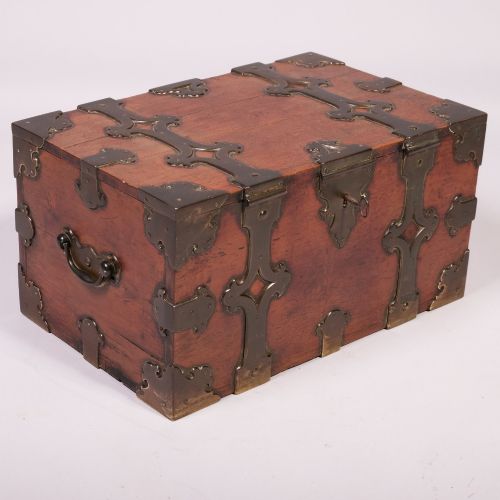
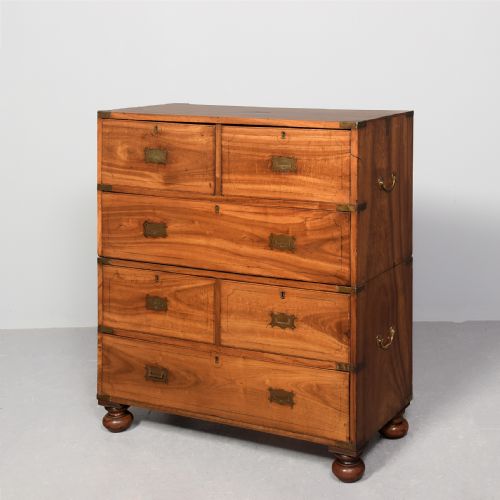
A chinese camphor trunk serves primarily as a storage box or blanket chest, shaped by travel and trade from the eighteenth century through to the early decades of the twentieth century. These pieces emerge in various forms, ranging from simple blanket boxes and storage chests to heavily carved coffers and two-part military chests.
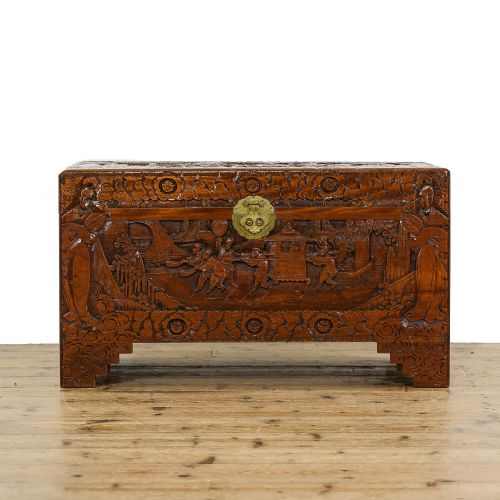
The version most likely to be met on this page is a nineteenth-century camphor wood chest, often detailed with carved surfaces or brass mounts. Examples span from plain campaign trunks designed for travel to richly carved export pieces intended for domestic interiors.
How they were made
The primary material is camphor wood or camphorwood, chosen for its insect-repellent properties and characteristic aroma, joined with brass for corner brackets, hinges, and carrying handles. Many of these chests adopt campaign construction methods to withstand long-distance transit.
Surface treatments vary from natural timber finishes to polychrome painted details, red leather coverings, and deeply carved panels depicting dragons and oriental motifs. Hardwood framing and iron or brass hardware complete the structural assembly.
Chinese Camphor Trunk Retail Price Guide 2026
Typical asking prices for chinese camphor trunk among the pieces listed under this phrase on Sellingantiques today, from the lower quarter to the upper quarter. They describe what is for sale here now, not the wider market.
Listings span from the eighteenth century to the nineteen-thirties, incorporating materials such as brass, leather, and pigment alongside camphor wood.
What varies in quality
Quality separates the standard utility storage box from the exceptional export commission through the depth and crispness of the hand carving and the robustness of the brass mountings. Solid camphor wood construction and well-executed campaign fittings elevate a piece significantly above simpler domestic boxes.
The sophistication of the joinery and the integrity of the timber also define the tier of the piece, with well-preserved finishes and intact hardware representing the higher end of the range.
The Chinese Camphor Trunk Glossary
- Campaign chest
- A piece of furniture designed to dismantle into sections for ease of military transport, typically fitted with recessed brass handles and corner brackets.
- Camphor wood
- A fragrant timber native to Asia, prized for its natural insect-repellent qualities and durability in storage furniture.
- Chinese export
- Goods manufactured in China specifically for Western markets, often blending traditional local craftsmanship with European forms.
- Brass-bound
- Furniture reinforced along edges and corners with brass plates and strips to protect against the knocks of travel.
- Coffer
- A large box or chest used traditionally for holding valuables, clothes, or documents.
Chinese Camphor Trunk: Frequently Asked Questions
Why use camphor wood?
Camphor wood emits a distinct, natural fragrance that repels moths and other insects, making it the ideal timber for storing woollens, blankets, and garments safely over long periods.
This aromatic quality preserved textiles in humid climates, which explains why these chests became essential items for travellers and merchants operating in the East.
Are these chests waterproof?
While tight-fitting lids and robust construction offered protection against dust and moisture during sea voyages, they are not sealed waterproof containers. Their primary function was secure, pest-free containment rather than submersion defence.
The inclusion of heavy brass bounds and corner pieces served to reinforce the structure against the rigours of transit rather than seal the interior entirely.
How do I care for the wood?
Maintain the timber by keeping the trunk out of direct sunlight and away from rapid temperature changes that can dry out the camphor wood. Occasional light dusting and minimal interference with the natural finish preserve the surface integrity.
Avoid heavy commercial polishes that might alter the natural grain and the subtle scent inherent to the timber.