



Chinese Art Set
These Chinese art set pieces bring together traditional materials and export craftsmanship, offering the collector a tangible piece of historical heritage for the home.
Chinese Art Set
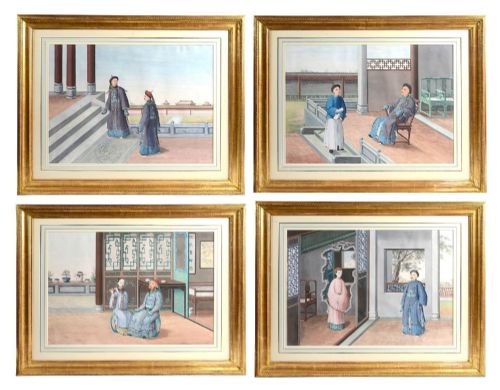
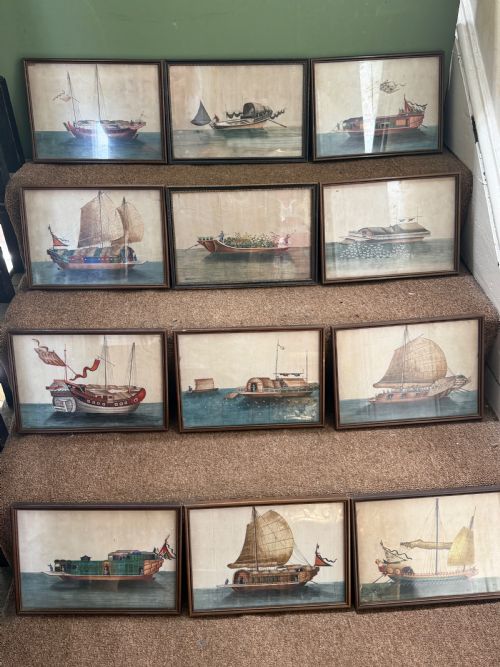
A chinese art set encompasses varied groupings of framed works, scholar's objects, and decorative panels spanning multiple centuries. Buyers searching this phrase commonly encounter multiple groupings of framed paintings, pith paper works, and carved wooden plaques.
The selections range from early Qing Dynasty scholarly items to Victorian and Art Deco export pieces. Pith paper watercolours and gouache ship paintings frequently appear as matched sets of twelve or four.
Scholar's objects and seals also form part of the category, often comprising nested bronzes or soapstone displays. Each grouping presents distinct historical contexts ranging from the sixteenth century through the early twentieth century.
Materials and construction methods
Sculptural elements incorporate jadeite, soapstone, and bronze, demonstrating specialist carving and casting techniques. Lacquer work utilises traditional export methods reminiscent of Coromandel and Bantam styles.
Gold appears selectively in jewellery pieces alongside carved jade, while display sets frequently integrate custom wooden mounts or oak frames.
Chinese Art Set Retail Price Guide 2026
Typical asking prices for chinese art set among the pieces listed under this phrase on Sellingantiques today, from the lower quarter to the upper quarter. They describe what is for sale here now, not the wider market.
Zodiac seal displays bring twelve animals of the Chinese calendar together in neat soapstone and oak companionship.
Judging the quality of the pieces
Quality rests upon the precision of the carving, the preservation of fragile media such as pith paper, and the uniformity of the set. Complete groupings with matching frames and consistent pigment retention command greater appreciation.
The fineness of detail in miniature watercolours and the depth of relief in wooden panels distinguish finer works from standard decorative pieces. Material grade, particularly the clarity of jadeite or the complexity of bronze casting, elevates the status of scholarly sets.
The Chinese Art Set Glossary
- Pith paper
- A delicate material formed from the spongy interior of Tetrapanax papyriferer stems, commonly used for watercolours in the nineteenth century.
- Gouache
- An opaque water-based pigment that provides vibrant colour and dense coverage on historical paintings.
- Scholar's object
- An item created for the contemplation and use of traditional Chinese literati, including seals, display stones, and ink stones.
- Qing Dynasty
- The final imperial dynasty of China, spanning from sixteen forty-four to nineteen twelve, frequently referenced in export art.
- Coromandel work
- A technique of carved lacquer where recessed areas are filled with colour, often seen in export panels.
Chinese Art Set: Frequently Asked Questions
What periods do these pieces span?
The inventory covers several centuries, stretching from sixteenth-century Ming pieces through nineteenth-century Victorian imports and early twentieth-century Art Deco designs.
Most items originate from the nineteenth and early twentieth centuries, reflecting the height of Chinese export trade with the West.
How were pith paper paintings created?
Artists painted delicate watercolours directly onto thin sheets sliced from the pith plant stem, a medium known for absorbing pigments with striking luminosity.
These works were typically assembled into sets for export to Western buyers during the nineteenth century.
What is a scholar's seal set?
Scholar's seal sets comprise carved stones or bronze figures traditionally utilised for stamping personal signatures and calligraphy in ink.
These functional objects doubled as ornamental desk accessories for traditional literati and collectors alike.
How should I display framed Chinese art sets?
Framed works on paper require protection from direct sunlight to preserve the organic watercolours and fragile pith backgrounds.
Grouping panels or paintings together maintains the visual coherence intended by the original set composition.