

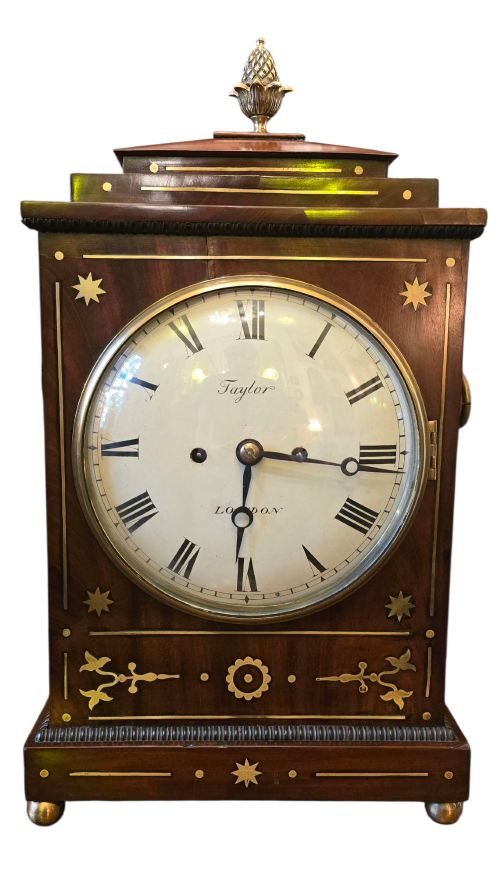
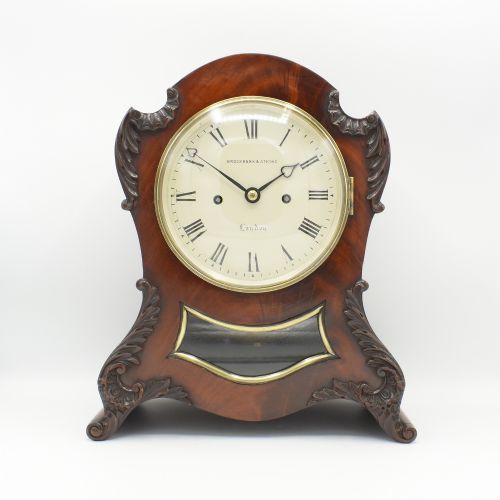
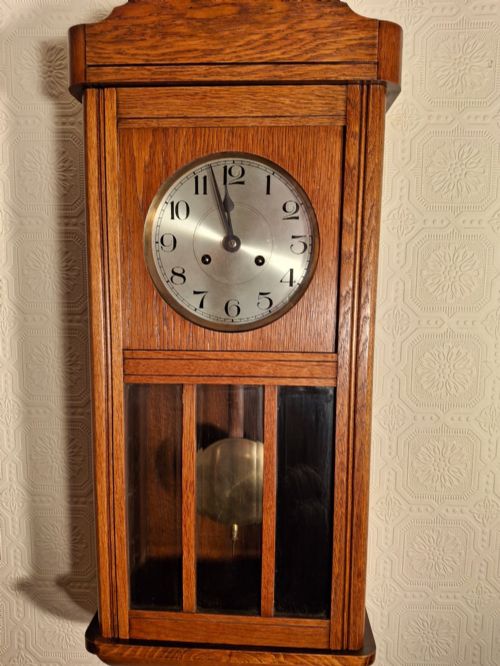

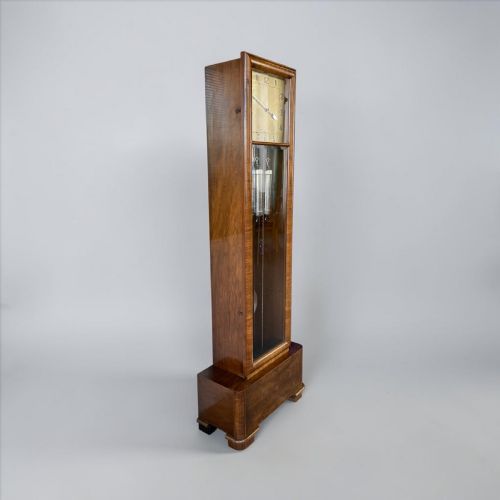


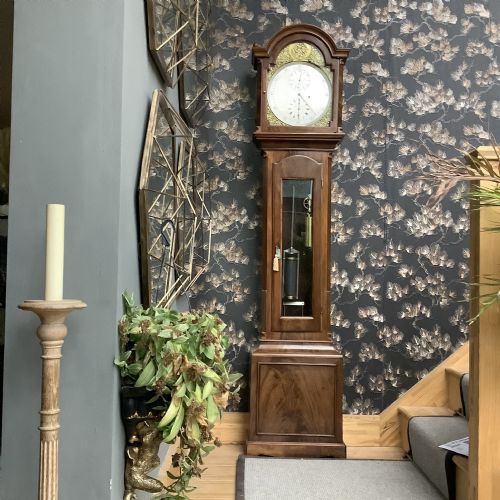
Chiming Pendulum Clock
A chiming pendulum clock brings movement and deep acoustic character to a room through traditional mechanical weights and springs.
Chiming Pendulum Clock
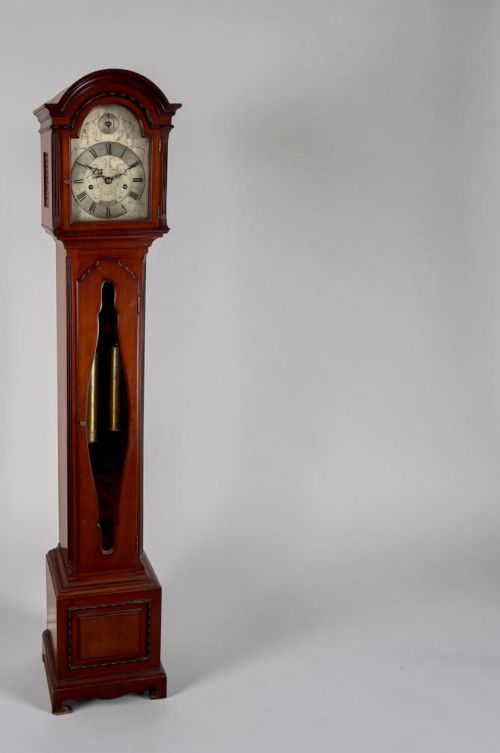
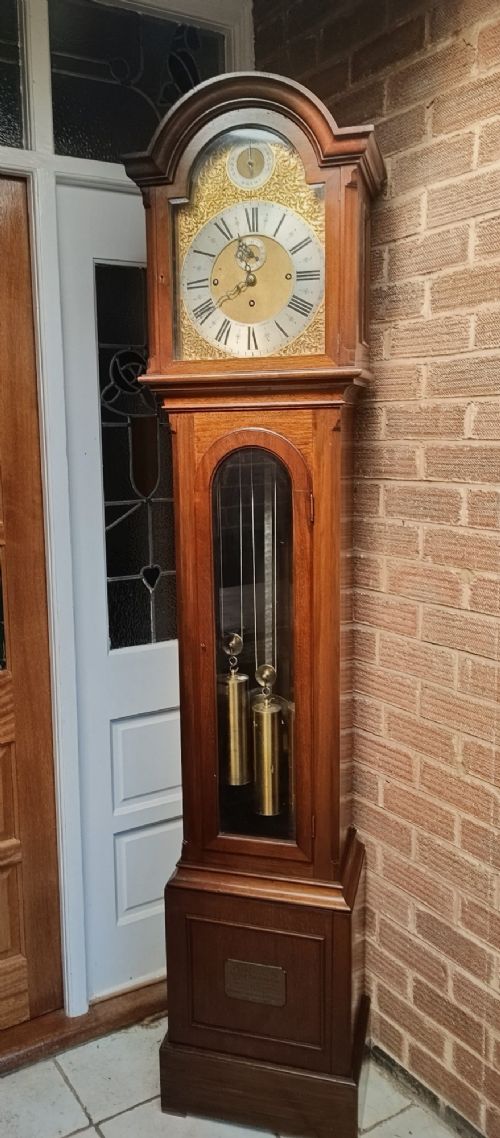
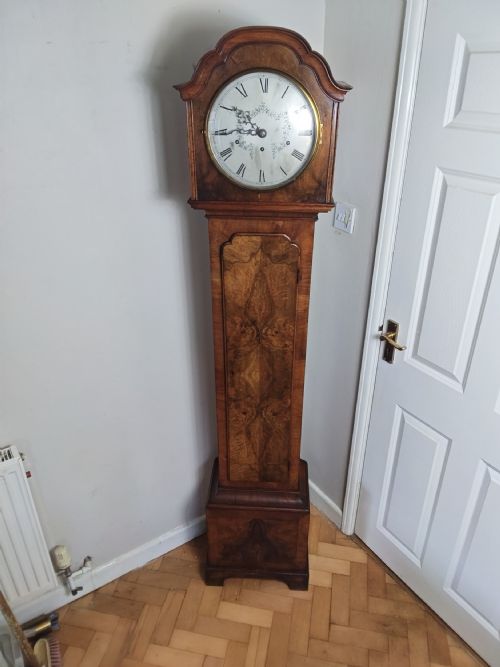
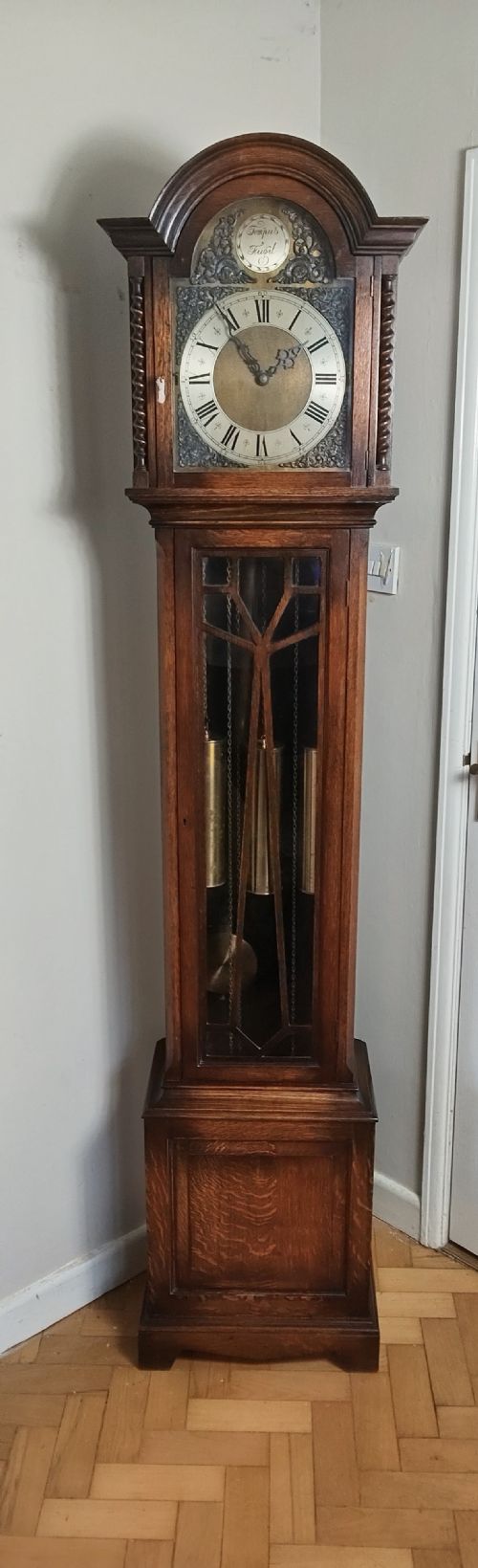
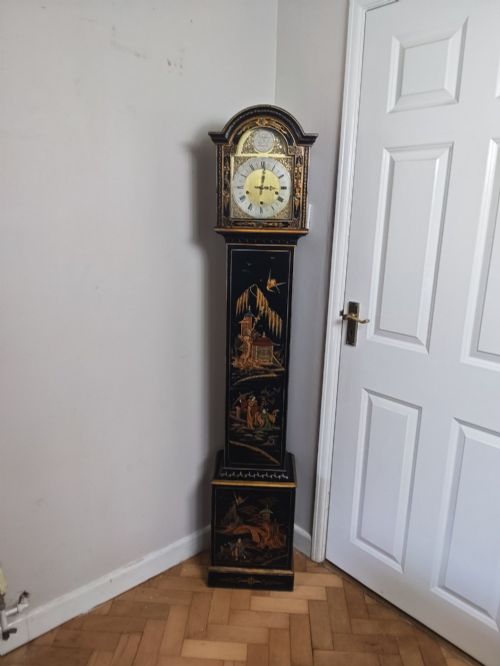
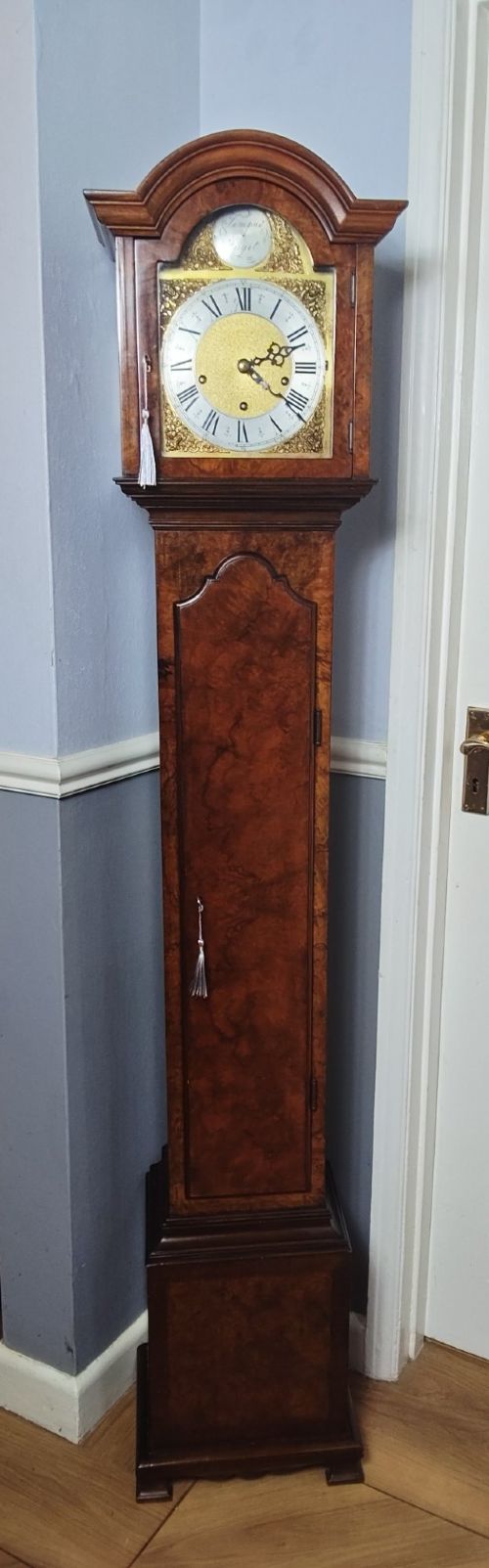
When you search for a chiming pendulum clock, you encounter a varied selection of horological pieces spanning mantel, wall, and floor-standing longcase formats. These range from compact shelf models to tall grandfather and smaller grandmother clocks.
The selections recorded here stretch across multiple eras, including Georgian, Victorian, Edwardian, and Art Deco periods. You are likely to meet wooden-cased models constructed from mahogany, walnut, and oak, alongside brass-mounted or ormolu decorative pieces.
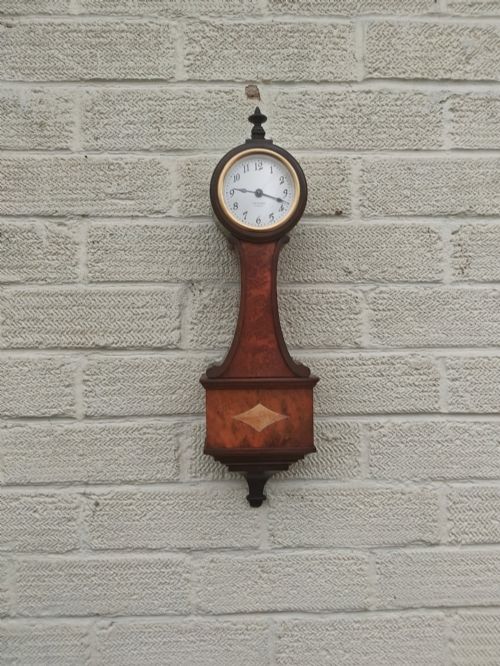
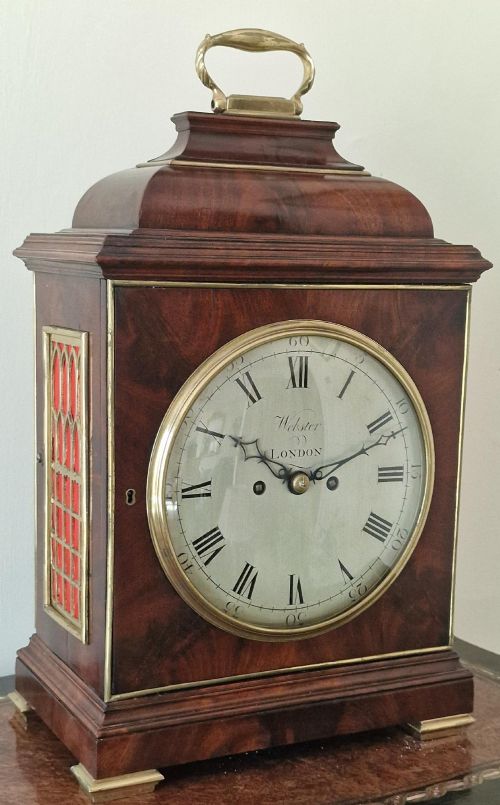
Object types on this page include bracket clocks, banjo wall clocks, and musical longcase variations. Each incorporates a mechanical pendulum system designed to mark the passage of time with both visual rhythm and audible strikes.
Materials and construction
Cabinets rely on timber framing, utilising dense hardwoods such as mahogany, walnut, and oak, occasionally enhanced with burr veneers, marquetry inlay, or Chinoiserie decoration. Metals including brass and ormolu form the dials, bezels, and decorative mounts.
Movements are built from brass gear trains and steel pivots driven by hanging weights or internal springs. Dials feature enamelled chapters, etched metal numerals, or applied Arabic and Roman figures behind protective glass doors.
Chiming Pendulum Clock Retail Price Guide 2026
Typical asking prices for chiming pendulum clock among the pieces listed under this phrase on Sellingantiques today, from the lower quarter to the upper quarter. They describe what is for sale here now, not the wider market.
Variations in quality
Standard differs primarily in the precision of the movement and the acoustic richness of the chime, whether striking on bells, gongs, or multiple tune cylinders. Finely made examples show crisp, unpolished metalwork in the gear train and substantial timber selection in the case construction.
Acoustic performance and visual proportion separate standard production from superior workshop output. The harmony of the chime rods, the legibility of the enamelled dial, and the integrity of the wood grain determine the standing of each piece.
Taylor of London·Gillett & Johnston of Croydon·H.A.C.·Seth Thomas·Brockbanks & Atkins·Webster·Odo·Vedette·Elliott·Mappin & Webb·Girod·Harrods·Lister & Sons
The Chiming Pendulum Clock Glossary
- Bracket clock
- A portable table or shelf clock originally designed to sit upon a wall bracket. These spring-driven pieces often feature carrying handles.
- Grandmother clock
- A slender, reduced-scale longcase clock standing shorter than a traditional grandfather clock. They typically house eight-day movements.
- Fusee
- A conical pulley mechanism that equalises the diminishing power of a mainspring as it unwinds. This maintains steady force to the clock movement.
- Ormolu
- Gilded bronze ornamentation applied to clock cases, particularly common in French mantel designs. It provides decorative contrast to dark woods.
- Chamfer top
- An angled or bevelled edge cut into the upper portion of a wooden clock case. This architectural detail appears frequently on bracket clocks.
Chiming Pendulum Clock: Frequently Asked Questions
What is the difference between a strike and a chime?
A strike mechanism sounds the exact hour or half-hour using a single hammer hitting a bell or coiled gong. It simply counts the time elapsed.
A chime mechanism plays a melodic sequence of notes, such as Westminster or multiple tunes, on quarters, halves, and three-quarters before sounding the hour strike on larger gongs or bells.
Where should I place a longcase clock?
Floor-standing clocks require a stable, dry location against a solid interior wall to prevent floor vibrations from interfering with the pendulum's beat. Avoid placing them near direct heat sources or in damp environments that could warp the wooden case.
The case must be levelled properly using adjustable feet or shims so the escapement ticks evenly from side to side.
How do I identify the period of a clock?
Dating relies on stylistic clues in the wooden case architecture, such as Georgian proportions, Victorian brass mounts, Edwardian inlay, or Art Deco geometric lines. Dial materials and signature plates also offer clues.
Maker signatures and patent marks stamped onto the brass backplate provide direct historical context for pinning down the decade of manufacture.