




Chesterfield Club Chairs
Chesterfield club chairs are substantial seating finished in leather, designed for deep comfort and traditional rooms.
Chesterfield Club Chairs
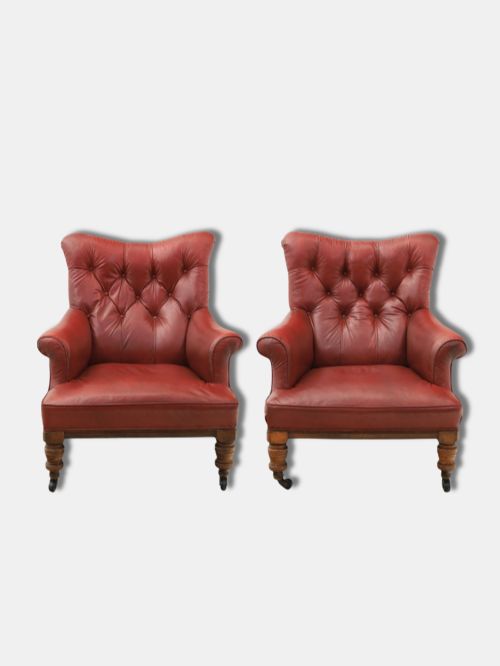
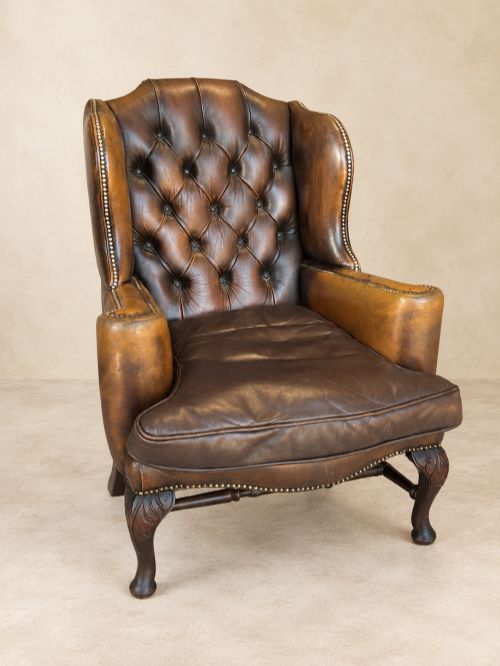
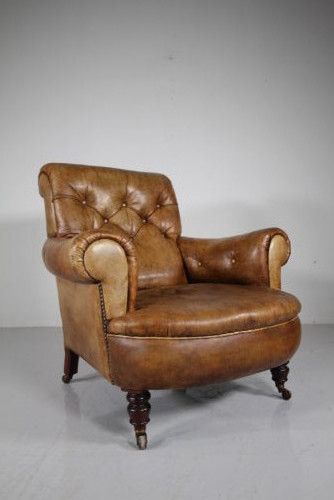
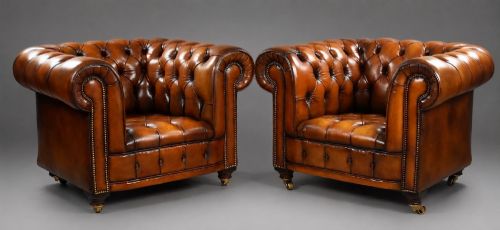
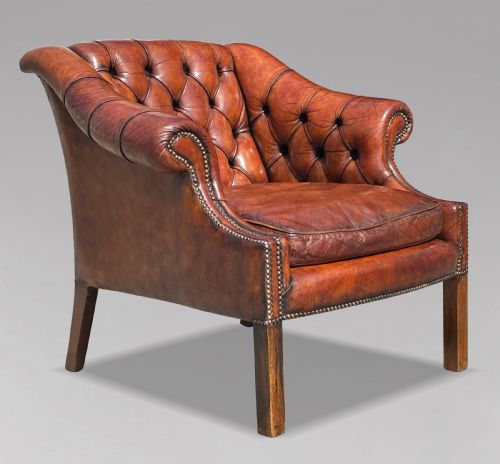
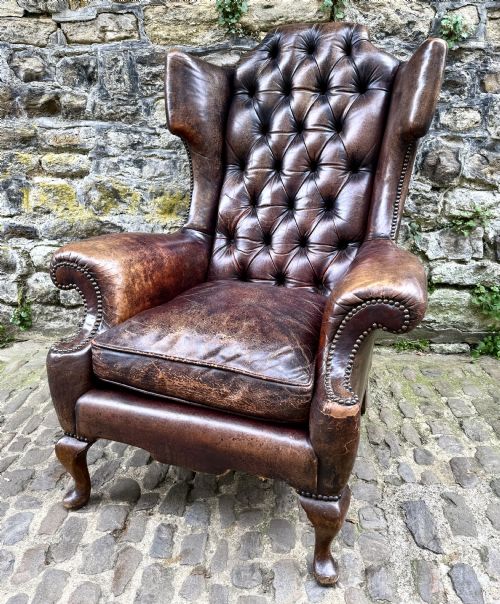
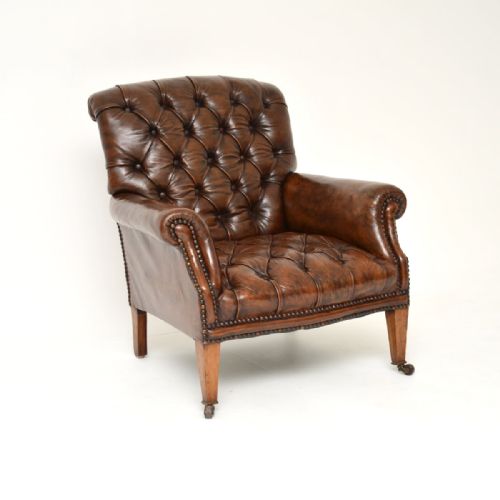
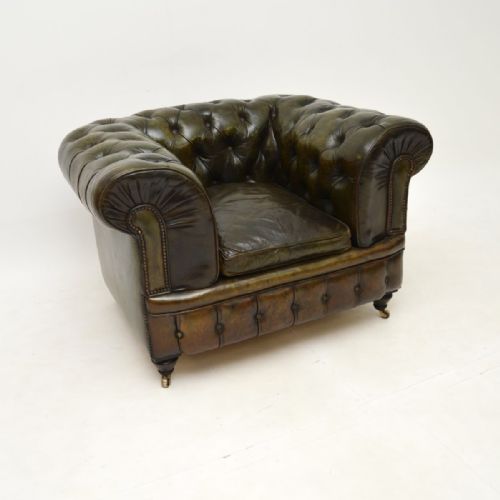
Chesterfield club chairs encompass deep upholstered seating designed for relaxation, frequently appearing as library armchairs or wingback variants. These pieces span periods from the nineteenth century into the early twentieth century, showing styles such as Victorian, Edwardian, and Georgian revivals.
A buyer examining this selection will regularly encounter brown or red oxblood leather upholstery paired with traditional wooden frames. Forms range from standard club armchairs to wing chairs and low tub armchairs, occasionally accompanied by matching sofas.
Origins trace primarily to traditional English workshops, utilising robust timbers like mahogany, oak, and general hardwood for internal structures. The resulting forms deliver the characteristic low-slung profiles and generous proportions associated with domestic studies and gentlemen's clubs.
How they were made
Makers constructed the foundational frames using timber such as mahogany, oak, and hardwood to ensure long-term stability under heavy use. These internal wooden structures supported deep padding and upholstery secured with traditional methods.
Leather served as the primary exterior covering, frequently hand-dyed in shades of brown or red oxblood and secured with individual brass tacks. Artisans applied deep buttoning techniques across the backs and arms to create the characteristic quilted upholstery pattern.
Chesterfield Club Chairs Retail Price Guide 2026
Typical asking prices for chesterfield club chairs among the pieces listed under this phrase on Sellingantiques today, from the lower quarter to the upper quarter. They describe what is for sale here now, not the wider market.
Materials recorded across the inventory include leather, rexine, brass, mahogany, oak, and hardwood timber.
What varies in quality
The standard of materials and framing defines the upper tier of these armchairs, particularly where solid mahogany or sturdy hardwood supports heavy leather upholstery. Finer examples display meticulous attention to hand-carved details, such as lion motifs on wooden frames.
Execution of the traditional buttoning and leather dyeing alters the overall appearance, distinguishing standard production from exceptional library seating. The integrity of the underlying timber structure and the depth of the upholstery work establish the distinction between ordinary and superior pieces.
Howard And Son·Thomas Chippendale
The Chesterfield Club Chairs Glossary
- Rexine
- A brand of artificial leather cloth utilised as an alternative to natural hide on certain twentieth-century seating. This coated fabric appears on specific period models.
- Wingback
- An armchair style featuring protective side panels attached to the armrests, designed to deflect drafts in older rooms. These upholstered wings frame the upper back.
- Tub armchair
- A low-backed seating form where the arms curve continuously into the backrest in a rounded enclosure. This compact shape provides supportive wraparound comfort.
- Oxblood
- A deep reddish-brown leather coloration popular on traditional club furniture. This distinctive hue develops through specific dying processes.
Chesterfield Club Chairs: Frequently Asked Questions
What periods do these chairs come from?
The available selection primarily includes nineteenth-century and early twentieth-century examples, with Victorian and Edwardian pieces appearing frequently.
Additional items reflect Georgian styles and revival periods from the nineteen-twenties and nineteen-thirties.
What materials are used for upholstery?
Natural leather serves as the principal covering, often hand-dyed in brown or red oxblood shades and secured with brass tacks.
Rexine also appears as an alternative covering on specific twentieth-century pieces within the selection.
How do I distinguish wingback models?
Wingback armchairs feature characteristic protective panels attached to the upper sides of the backrest.
Standard club chairs omit these side panels, offering an open seating profile instead.
Where were these chairs originally placed?
These substantial seats typically furnished libraries, studies, and traditional sitting rooms in English homes.
Their generous proportions suited long periods of reading and relaxation in private clubs.