
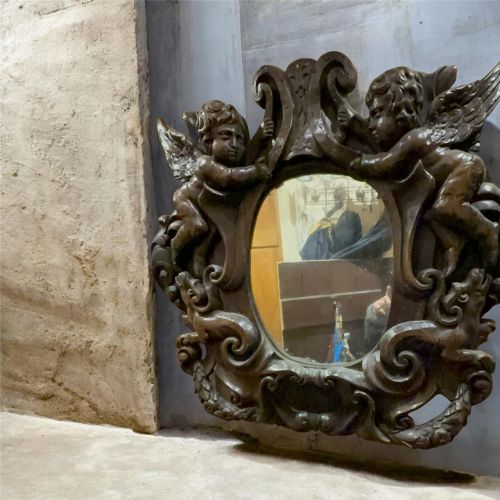


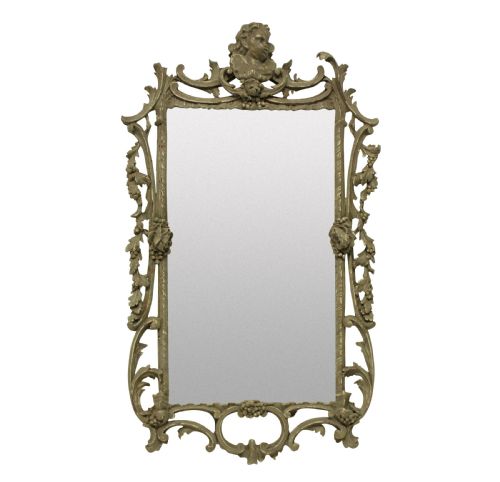
Cherub Frame Wall Mirror
These cherub frame wall mirror examples bring playful relief work and historic gilt elegance to any interior.
Cherub Frame Wall Mirror
A cherub frame wall mirror combines reflective glass with sculpted wooden or cast figures, drawing heavily on Rococo Revival, Baroque, and Louis XVI styles. When searching for a cherub frame wall mirror, buyers encounter pieces originating from the eighteenth, nineteenth, and early twentieth centuries.
The surviving selection spans grand overmantel mirrors, smaller bracket forms, and hanging wall mirrors designed for halls and lounges. French and Italian influences dominate the aesthetic, frequently pairing gilt surfaces with deeply carved motifs.
Most examples rely on carved wood and gesso frameworks, though cast iron and mahogany also appear within the records. The presence of cherubs ranges from subtle corner reliefs to prominent crests holding crowns or garlands.
How they were made
Carvers shaped the foundational wooden frames from oak, fruitwood, walnut, or mahogany before applying layers of gesso to build up intricate relief details. Giltwood pieces received thin applications of gold leaf over prepared grounds, creating a luminous metallic finish.
Makers often combined carved wooden elements with moulded gesso to achieve the swirling scrolls and sculptural cherubs typical of Rococo and Italianate designs. Original mirror plates were hand-silvered and fitted closely into the rebated frames.
What varies in quality
Quality rests primarily in the crispness and depth of the carving, where master hands achieved fluid anatomy in the cherubs and sharp definition in the surrounding foliage. Softer, shallower gesso moulding often indicates mass production or later decorative revival work rather than bespoke craftsmanship.
The preservation of the original gilt surface and the character of the antique mirror plate heavily influence the desirability of a piece. Integrated details like original brackets, cast iron mottoes, or untouched painted finishes separate standard decorative mirrors from exceptional survivals.
Sir Willian Trotter·Coalbrookdale
The Cherub Frame Wall Mirror Glossary
- Gesso
- A plaster-like mixture applied to wooden frames to provide a smooth base for gilding or painting. It allows craftsmen to carve and impress fine decorative details before finishing.
- Giltwood
- Timber that has been coated with gold leaf or metallic powder. This technique protects the underlying wood while imparting a rich reflective sheen.
- Overmantel mirror
- A large mirror specifically designed to hang above a fireplace mantelpiece. These pieces often feature wide horizontal proportions and ornate crestings.
- Rococo Revival
- A nineteenth-century design movement that imitated the ornate, asymmetrical scrolls and naturalistic motifs of the eighteenth-century French style. It frequently incorporates cherubs, shells, and floral garlands.
Cherub Frame Wall Mirror: Frequently Asked Questions
Where should I hang a cherub mirror?
These mirrors work exceptionally well above a mantelpiece, in an entrance hall, or serving as a focal point in a lounge.
Their decorative presence pairs nicely with period interiors or contrasts sharply against minimalist modern walls.
How do I date a gilt mirror?
Dating relies on examining the construction of the wooden frame, the composition of the gesso, and the style of the carving.
Nineteenth-century interpretations often revive earlier Rococo or Louis XVI motifs, making wood analysis and plate characteristics essential clues.
Are original mirror plates common?
Some pieces retain their original glass, showing charming minor foxing and distortion built up over centuries of reflection.
Later replacements are also common when earlier glass suffered accidental breakage or heavy degradation.
What is the difference between gesso and carved wood?
Carved wood involves cutting directly into the timber base to form the structural relief, while gesso is a built-up paste moulded into shape.
Finer antique pieces typically combine both techniques, using carved wooden foundations enhanced by detailed gesso enrichments.