



Cherub Bronze Candle Sconces
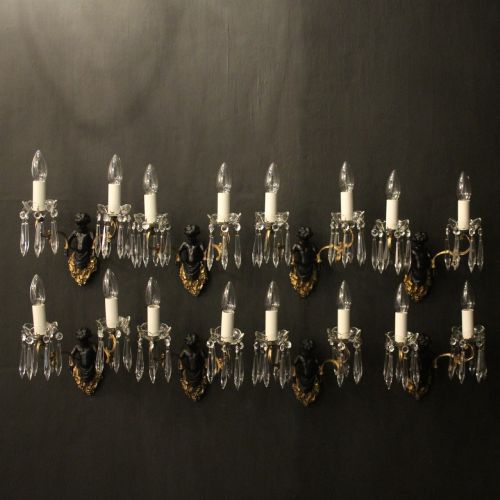
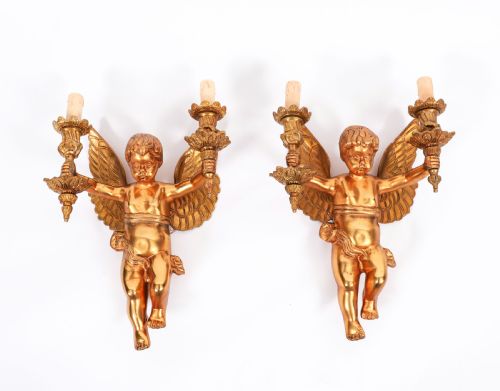
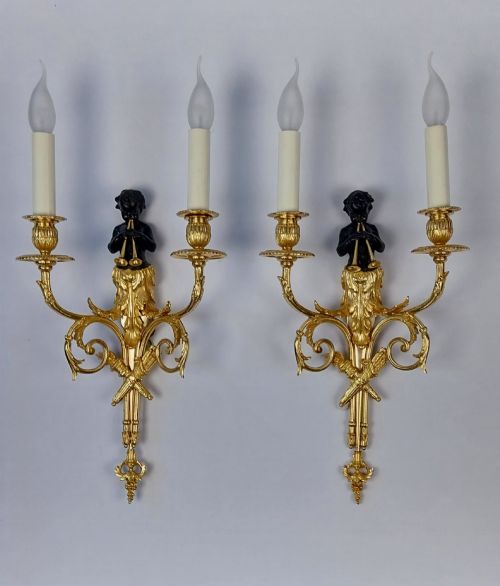
Cherub bronze candle sconces bring sculptural figures and warm metalwork together to illuminate rooms with classical French style.
Cherub Bronze Candle Sconces
Cherub bronze candle sconces are decorative lighting fixtures fixed to walls, featuring cast metal figures holding nozzles for illumination. When you search for cherub bronze candle sconces, you encounter items designed to project candlelight across a room while serving as ornamental wall art.
The pieces on this page originate predominantly from the nineteenth century, spanning periods such as Regency, Napoleon III, and the eighteen-eighties and nineties. French design influences dominate, with Louis XVI, Rococo, and Empire styles shaping the aesthetic of the figures and backplates.
Makers produced these lighting fixtures in pairs and sets of four, taking the form of wall lights, sconces, and candelabra. Figures of puttis and cherubs appear alongside sculptural candle holders mounted on bases of marble, agate, or malachite.
How they were made
Foundries utilised bronze, brass, and gilt bronze, often applying ormolu and patinated finishes to create textural contrast between the cherub figures and the metal branches. Artisans cast the metal in sections before chasing the surfaces by hand to sharpen the feather, hair, and drapery details.
Mounts frequently incorporate stone elements, combining bronze and ormolu with natural mineral bases such as marble, agate, and malachite. These diverse materials required specialised joining techniques to secure heavy metal sconces to stone supports safely.
Cherub Bronze Candle Sconces Retail Price Guide 2026
Typical asking prices for cherub bronze candle sconces among the pieces listed under this phrase on Sellingantiques today, from the lower quarter to the upper quarter. They describe what is for sale here now, not the wider market.
Materials recorded across the available pieces include marble, agate, and malachite alongside gilt bronze and patinated bronze.
What varies in quality
Quality rests in the crispness of the bronze casting and the depth of the hand-chasing across the cherub figures. Finer examples display lively modelling in the putti and precise application of ormolu gilding rather than flat, uniform surfaces.
The choice of secondary materials marks another distinction, as pieces incorporating decorative stone bases like malachite or agate sit at a different level of craftsmanship than standard bronze work. Multi-branch configurations and sets of four also represent more ambitious production standards.
The Cherub Bronze Candle Sconces Glossary
- Ormolu
- Gilt bronze created by applying a finely ground high-carat gold-mercury amalgam to a bronze object, which is then fired to drive off the mercury. This historic French technique produces a distinctive warm, golden finish.
- Putti
- Plural of putto, depicting a chubby male infant, frequently winged, found in classical art. These figures form the central sculptural motif of the sconces.
- Patinated bronze
- Metal treated with chemical solutions to create a deliberate surface colouration such as brown or dark green. This finish highlights the underlying cast details of the figures.
- Louis XVI
- A neoclassical style characterised by straight lines, symmetry, and classical motifs derived from archaeological discoveries. Pieces from this design vocabulary emphasise restraint and classical antiquity.
- French Rococo Revival
- A nineteenth-century revival of eighteenth-century asymmetry, scrollwork, and naturalistic forms. This style appears frequently in the swirling branches and organic backplates of the wall lights.
Cherub Bronze Candle Sconces: Frequently Asked Questions
What are cherub bronze candle sconces?
These are decorative wall-mounted lighting fixtures featuring cast metal figures of winged infants holding candle holders. They were designed to hold candles and reflect light within domestic interiors.
Most surviving examples date from the nineteenth century and reflect French aesthetic movements like the Regency and Napoleon III periods.
Where were they placed originally?
Owners mounted these fixtures on walls in principal rooms such as salons, dining spaces, and hallways. Positioning them near mirrors or panels maximised the illumination from the candles.
They served both as practical light sources and as prominent decorative ornaments.
How do I date these pieces?
Dating relies on stylistic markers, casting techniques, and material combinations seen in the evidence. Nineteenth-century pieces often combine bronze and ormolu with specific revival styles like Rococo or Empire.
Subtle indicators include the method of metal finishing and the integration of stone elements such as marble or agate.
Are they supplied as pairs?
Surviving fixtures frequently appear in pairs or matched sets of four to maintain symmetry on either side of a fireplace, mirror, or architectural feature. Single wall lights also occur among nineteenth-century examples.
Pairs allow for balanced interior arrangements mirroring their original placement in historic rooms.
What materials make up the base?
Foundries used natural stone materials alongside metal elements to construct the supports for these figures. Marble, agate, and malachite appear beneath the bronze and ormolu components.
These mineral bases provided weight and a contrasting colour palette to the gilded metalwork.