

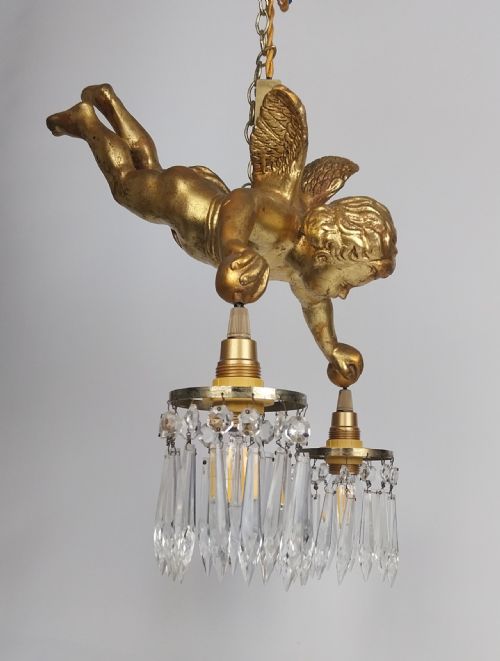


Cherub Brass Pendant
A cherub brass pendant brings figurative charm and period illumination to a ceiling, combining cast metal figures with suspended light.
Cherub Brass Pendant
A cherub brass pendant takes the form of ceiling lights, light fittings, and chandeliers featuring cast winged figures or putti. These decorative pieces emerge from the mid nineteenth century through the early twentieth century, spanning Victorian, Edwardian, and Rococo Revival styles.
Materials and construction methods
Maker workshops utilised brass, bronze, and gilt metal to cast figurative elements and structural frames, often finishing surfaces with gilding or silver plate. Components were joined mechanically, supporting glass shades, frosted glass bowls, and crystal elements.
Moulds captured the fluid anatomy of putti and the asymmetrical scrolls characteristic of French Rococo and neoclassical revivals. Metal arms were integrated with electrical or candle configurations depending on the production period.
Cherub Brass Pendant Retail Price Guide 2026
Typical asking prices for cherub brass pendant among the pieces listed under this phrase on Sellingantiques today, from the lower quarter to the upper quarter. They describe what is for sale here now, not the wider market.
Some flying cherubs double as structural support, proving that even celestial infants occasionally need to carry the weight.
Judging execution and finish
Quality rests upon the crispness of the metal casting, where superior examples display sharply defined facial expressions and feathered wings on the cherubs rather than soft, smoothed contours. The depth and durability of the original gilding or bronze patination also separates finer productions from simpler commercial castings.
Integration of secondary materials like frosted glass, crystal drops, and glass shades indicates the original tier of manufacture. Heavier gauge metal frames and balanced arm assemblies distinguish better constructed ceiling lights from lighter pieces.
The Cherub Brass Pendant Glossary
- Putto
- A plump, naked male child figure often depicted with wings, commonly referenced interchangeably as a cherub in nineteenth and early twentieth century lighting. These figures form the primary decorative motif on these chandeliers.
- Gilt metal
- A base metal alloy coated with a thin layer of gold or gold coloured wash to imitate solid gold or ormolu. This material frequently appears in Edwardian and Rococo Revival light fittings.
- Rococo Revival
- A nineteenth century design style characterised by ornate scrolls, asymmetrical curves, and naturalistic motifs such as shells and flowers. It provides the dominant aesthetic framework for many French and English cherub chandeliers.
- Swag chandelier
- A ceiling light suspended by chains or cords where decorative elements are draped in a curved garland between points. These fittings often incorporate cherub figures along the central frame.
- Bronze
- An alloy consisting primarily of copper, traditionally used for high grade decorative castings due to its ability to hold fine detail. Bronze light fittings carry a deeper, warmer natural patination than plated alternatives.
Cherub Brass Pendant: Frequently Asked Questions
How do I clean a brass and gilt cherub light?
Dust surfaces gently with a soft, dry brush to preserve original gilt and bronze finishes without abrasion. Avoid harsh chemical polishes that strip historical patination from the metal.
For glass shades or crystal drops, remove them carefully and wash in warm soapy water before drying thoroughly. Reattach components securely once every part is completely dry.
Are these antique lights wired for modern ceilings?
Many surviving fixtures have been adapted over time to accept standard electrical fittings while retaining their period frames. Rewiring should be assessed and executed by a qualified professional to ensure safety.
Candle style fittings often accommodate modern candle tube covers and low wattage LED bulbs that mimic historical flame illumination. Check internal wiring capacity before installation in living spaces.
How do I distinguish 19th century from 20th century pieces?
Nineteenth century examples often display heavier cast bronze or brass components with hand chased detailing and silver plating. The modelling of the cherub figures tends to reflect strict classical or Rococo Revival proportions.
Twentieth century pieces from the Edwardian era or the 1920s and 1930s frequently utilise lighter gilt metal and mass produced fastening techniques. Stylistic lines in later pieces sometimes incorporate simplified classical motifs.
Where should I hang a cherub ceiling light?
These decorative fittings suit hallways, dining rooms, and bedrooms where ceilings have adequate height to accommodate hanging drops and multi arm spreads. Ensure the ceiling structure can support the combined weight of cast metal and glass components.
Position the fixture centrally within a room or above key furniture pieces to highlight the figurative metalwork and shadow play from glass shades.