





Cherrywood Commode Chest
A cherrywood commode chest brings warmth and distinct regional character to a room, offering deep storage with the refined lines of French provincial cabinet-making.
Cherrywood Commode Chest
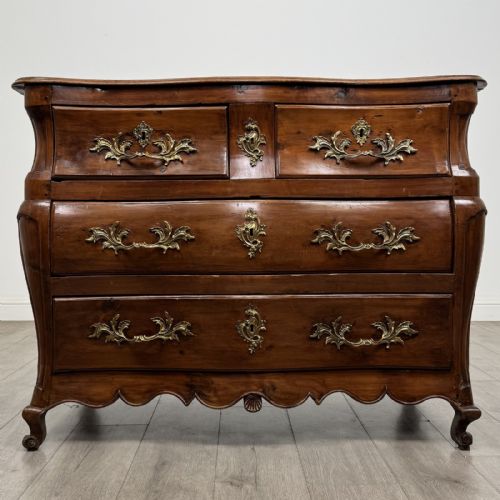
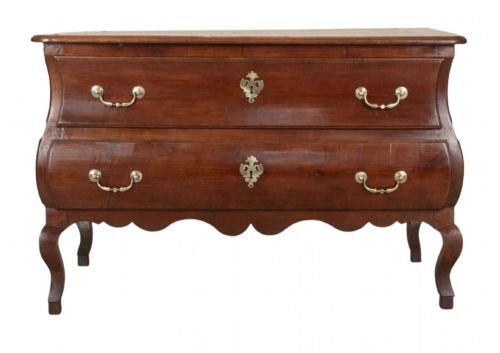
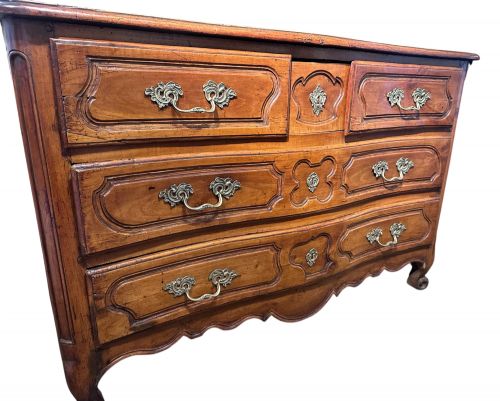
A cherrywood commode chest is primarily a low storage unit with drawers, most frequently encountered in French provincial and transitional designs from the eighteenth century. These pieces combine the robust proportions of regional workshops with the softer, fruitwood tones native to continental cabinet-making.
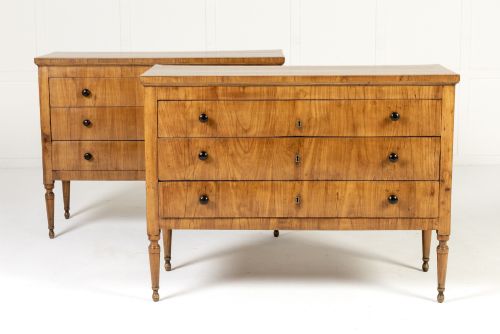
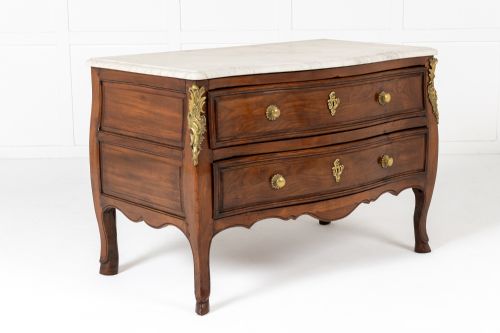
Beyond eighteenth-century examples, the evidence shows nineteenth-century variations, including Biedermeier forms and serpentine fronts, alongside occasional twentieth-century interpretations. The core function remains a low chest of drawers, though certain pieces feature marble tops or specialised regional drawer configurations.
How they were made
Construction relies heavily on solid cherrywood, complemented by contrasting secondary timbers such as walnut where structural strength is required. Cabinet-makers shaped these fruitwoods using traditional joinery, allowing the dense timber to take a smooth, polished finish that highlights the natural grain.
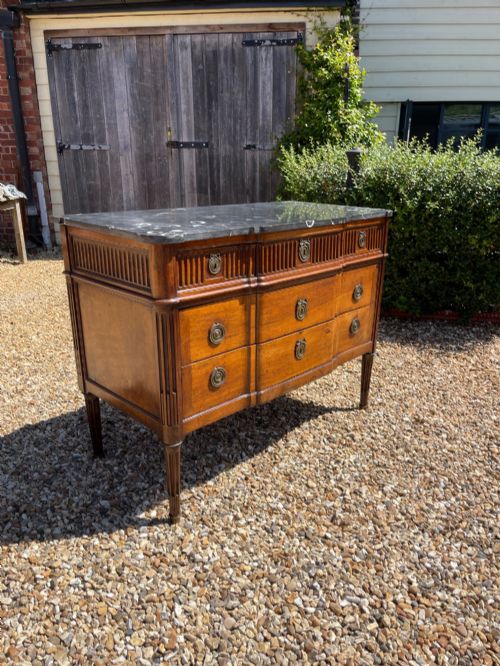
Metalwork plays a defining role in the construction, with cast brass mounts, handles, and escutcheons fitted to drawer fronts. Selected examples incorporate fitted marble slabs onto the upper surface, adding weight and a contrasting tactile surface to the wooden carcass.
Cherrywood Commode Chest Retail Price Guide 2026
Typical asking prices for cherrywood commode chest among the pieces listed under this phrase on Sellingantiques today, from the lower quarter to the upper quarter. They describe what is for sale here now, not the wider market.
Listings feature eighteenth and nineteenth-century pieces, utilising cherrywood, walnut, brass, and marble within French provincial and Biedermeier styles.
What varies in quality
Quality in a cherrywood commode chest rests on the handling of the timber and the subtlety of the regional design, distinguishing standard provincial utility pieces from finer salon furniture. The crispness of carved serpentine fronts and the integration of brass hardware show the level of skill invested by the maker.
The choice of top surface also dictates variation, where thick marble slabs elevate the piece above standard all-wood constructions. Furthermore, the handling of the cherrywood grain and the preservation of original patination govern the visual depth of the chest.
The Cherrywood Commode Chest Glossary
- Commode
- A low chest of drawers or cabinet designed for domestic storage. In eighteenth-century French rooms, it served both a decorative and practical function.
- Serpentine
- A front profile shaped with a central convex curve flanked by concave sweeps. This undulating form requires advanced woodworking skill.
- Provincial
- Denoting items made in the regions outside Paris. These pieces often adapt metropolitan styles with local materials and simpler construction methods.
- Biedermeier
- A central European style emphasising utilitarian comfort and clean lines without excessive ornamentation. Pieces from this period focus on the natural beauty of the wood veneer.
- Transitional
- A design phase bridging the Louis XV and Louis XVI styles. It combines curved rococo outlines with the straighter, neoclassical geometry that followed.
Cherrywood Commode Chest: Frequently Asked Questions
What is a cherrywood commode chest?
A cherrywood commode chest is a low drawer unit originating primarily from French regional traditions. It utilises fruitwood timbers to achieve a warm domestic aesthetic.
These pieces typically function as bedroom or reception room storage, balancing decorative curved fronts with practical drawer capacity.
How do I date an antique commode?
Dating relies on observing structural transitions, such as the shift from sweeping rococo curves to straighter neoclassical lines. Cabinet-making techniques and hardware styles also offer clear indicators of period origin.
Evidence from eighteenth-century provincial models contrasts with nineteenth-century Biedermeier forms through distinct shifts in silhouette and joinery.
Did these chests have marble tops?
Certain examples feature fitted marble tops integrated into the upper wooden frame. This addition provides a durable, cool surface above the primary drawer section.
While many provincial chests remain entirely of wood, marble-topped variants appear across both eighteenth and nineteenth-century production.
How do I style a commode in a modern room?
A low chest of drawers fits naturally into living spaces or hallways where surface display space is desired. The warm tone of the fruitwood pairs effectively with both neutral walls and textured fabrics.
Items of this scale work well beneath large mirrors or paintings, anchoring the room with traditional craftsmanship.