
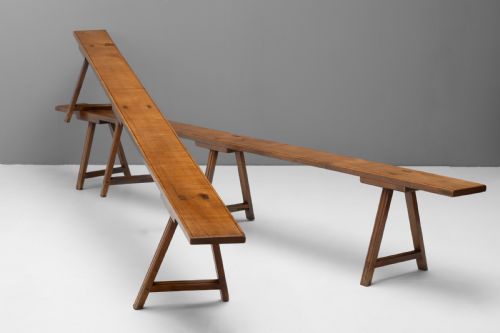


Cherry Wood Furniture
Cherry wood furniture brings a warm, reddish grain into a room, offering sturdy utility in forms that range from provincial commodes to rustic benches.
Cherry Wood Furniture
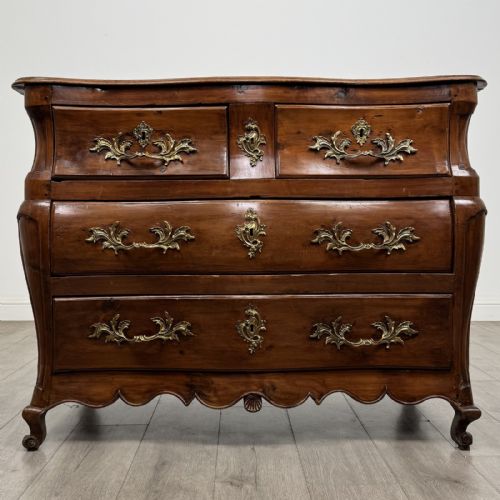
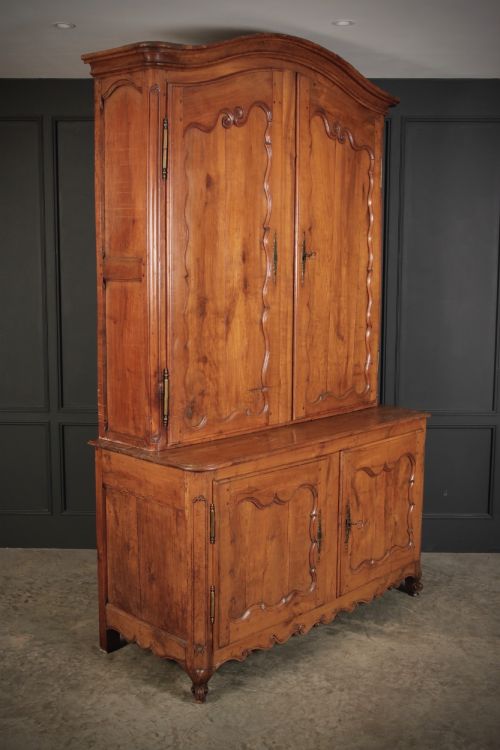
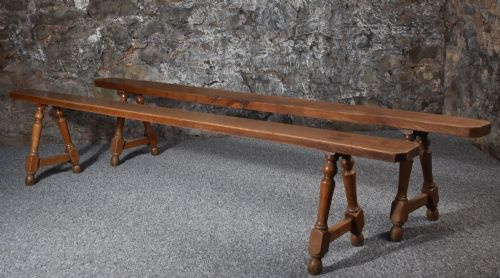
Cherry wood furniture spans utilitarian items and formal storage pieces shaped from domestic fruitwood, often featuring rich tones that deepen with age. When you search for cherry wood furniture, you encounter substantial forms like 18th Century commodes, large cupboards, and lowboys alongside seating such as benches and stools.
The pieces on this page lean heavily towards French provincial and rustic country origins, alongside English George II and American examples. You are most likely to meet 18th Century and 19th Century items, including commodes, sideboards, and bedside tables.
Domestic practical pieces form a core part of the selection, encompassing housekeepers cupboards, dressing tables, and drop leaf tables. Occasional items and smaller accessories also appear, reflecting the versatile nature of the timber across different centuries.
How they were made
Makers utilised solid cherry wood alongside contrasting timbers like walnut, rosewood, and ebonised wood for decorative banding or structural elements. Brass hardware such as handles, escutcheons, and hinges frequently accents the drawer fronts and doors of chests and cupboards.
Construction methods rely on traditional joinery suited to hardwood, allowing large surfaces like buffet tops and cupboard panels to remain stable over generations. Turning and carving shape the legs of lowboys, benches, and occasional tables, while French polishing or wax finishes protect the grain.
The listings show cherry wood combined with brass, walnut, rosewood, and ebonised wood across 18th Century and 19th Century forms.
What varies in quality
The standard of a piece rests on the selection of the timber and the depth of the natural patina developed across the centuries. Superior examples display a rich, uniform grain with minimal disturbance, whereas lesser items might show heavy surface repair or unsympathetic stripping.
Joinery execution distinguishes provincial vernacular work from finer cabinet making, visible in the snug fit of drawers and the stability of frames. Original brass mounts and untouched backboards elevate a piece far above one altered by replacement parts or modern fasteners.
The Cherry Wood Furniture Glossary
- Commode
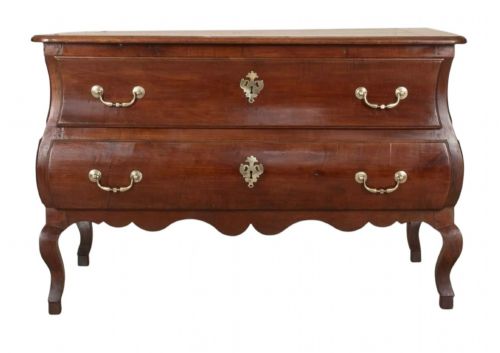
- A low chest of drawers, often French in origin, designed for storage in bedrooms or reception rooms. These pieces frequently feature serpentine fronts and elaborate brass hardware.
- Lowboy
- A small side table with one or more drawers, standing on four legs, typically dating from the 18th Century. They were used as dressing tables or writing desks.
- Bombe
- A swelling, convex shape found on the fronts and sides of case furniture such as chests of drawers. This curved profile requires skilled joinery to execute properly in solid hardwood.
- Sauteuse
- A French term for a small commode with two drawers, standing on relatively long legs. It sits between a table and a chest in both scale and function.
- Housekeepers cupboard
- A tall storage piece traditionally used in large domestic kitchens for linen and dry goods. These large cupboards feature panelled doors and substantial shelving inside.
- Patina
- The surface sheen and colour acquired by wood through age, light exposure, and handling. A deep patina indicates decades of careful polishing and use.
Cherry Wood Furniture: Frequently Asked Questions
How do I clean cherry wood?
Dust regularly with a soft, dry cloth to prevent grit accumulation on the surface. Avoid chemical sprays or silicone polishes that can damage the traditional wax finish.
Feed the wood periodically with a quality beeswax to maintain the moisture and depth of the grain. Keep pieces away from direct heat sources and strong sunlight to prevent fading and splitting.
Is cherry wood durable?
Cherry is a strong domestic hardwood that withstands daily use well while remaining workable for intricate carving and shaping. It develops a rich reddish brown tone as it ages.
While robust, the timber can dent under heavy impacts and will fade if exposed continuously to bright sunlight. Proper placement in a stable indoor environment ensures longevity.
Where does cherry furniture fit?
The warm reddish tones of cherry complement both traditional period interiors and modern neutral spaces. Smaller items like bedside tables or lowboys adapt easily to bedrooms and hallways.
Larger case pieces such as buffets and cupboards require sufficient wall space and ceiling height to display their proportions. They serve as practical storage focal points in dining rooms and kitchens.
How to date cherry furniture?
Examine the construction methods, tool marks on hidden surfaces, and the style of the brass hardware. Hand cut dovetails and pegged joints usually point to 18th Century or early 19th Century manufacture.
Compare the timber colour and patina against known examples from similar periods. Secondary woods inside drawers often provide clues to the regional origin of the piece.