



Chateau Style Sofa
These chateau style sofa pieces bring French period seating forms into rooms through carved wood frames and upholstered seats.
Chateau Style Sofa
When you search for a chateau style sofa, you are looking at nineteenth-century and early twentieth-century seating forms that draw on French monarchical designs. The pieces on this page span the Regency, Edwardian, and later nineteenth-century periods, capturing the visual language of French chateau interiors.
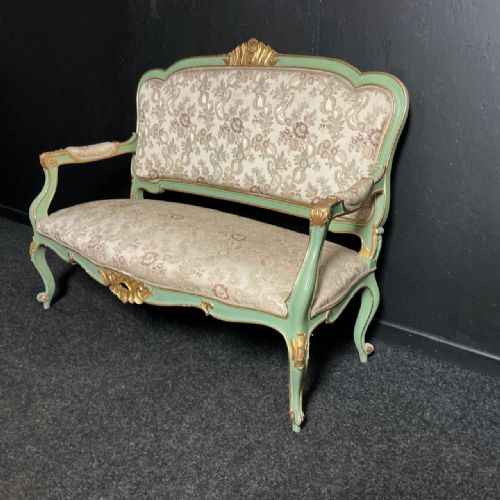
The most common forms you will meet here are settees and two-seat sofas with painted or giltwood frames. Makers and workshops of the nineteenth century and 1910 looked back to Louis XV and Louis XVI styles, applying neoclassical motifs and French provincial details to domestic seating.
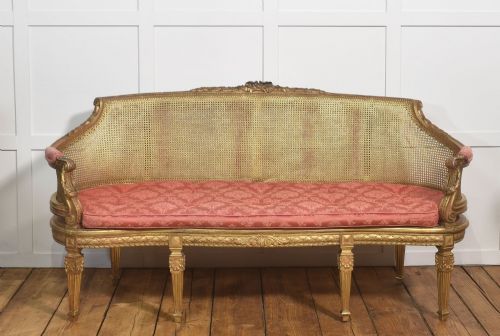
Beyond the standard two-seat sofa, listings under this phrase include related French seating types like upholstered hall seats and cane settees. These items combine carved wood structures with fabric or cane surfaces, reflecting the decorative traditions of French country houses and Parisian salons.
How they were made
Makers constructed these frames using carved wood, often shaping timber before applying giltwood finishes or paint. The structural woodwork supports upholstered sections or woven cane panels.
Upholstery relied on traditional textiles such as damask fabric stretched over internal padding. Giltwood surfaces required the application of thin metal leaf over a prepared base, while painted finishes used layered pigments on wood.
Chateau Style Sofa Retail Price Guide 2026
Typical asking prices for chateau style sofa among the pieces listed under this phrase on Sellingantiques today, from the lower quarter to the upper quarter. They describe what is for sale here now, not the wider market.
Listings under this search combine seating forms from the nineteenth century with materials like giltwood, cane, and damask fabric.
What varies in quality
The refinement of the carved wood elements dictates the visual strength of the piece, separating standard production from more ambitious workshop output. Crisp detailing in the carving shows the hand of a skilled artisan rather than a mechanical router.
The choice of surface treatment and upholstery material changes the character of the seating. Original or high-grade damask fabric paired with carefully preserved giltwood or painted finishes elevates the presence of the frame.
The Chateau Style Sofa Glossary
- Giltwood
- Wood covered with a thin layer of gold leaf. This finish creates a reflective, metallic surface popular in formal French interior decoration.
- Damask
- A reversible figured fabric with patterns woven into the cloth. It appears frequently as upholstery on period French seating.
- Cane
- Woven material made from peeled rattan or similar plant stems. It provides a lightweight, textured panel for seat backs and frames.
- Louis XVI Style
- A neoclassical design aesthetic characterised by straight lines, symmetry, and classical motifs. It emerged in eighteenth-century France and inspired later nineteenth-century revivals.
Chateau Style Sofa: Frequently Asked Questions
What periods do these sofas come from?
The listings on this page span the nineteenth century, including Regency examples from around eighteen-twenty, Edwardian pieces, and items from nineteen-ten and nineteen-sixty.
These dates show that makers continued to draw on French revival styles long after the original eighteenth-century reigns of Louis XV and Louis XVI.
How do I identify Louis XV style?
Louis XV style pieces typically feature asymmetric curves, organic motifs, and cabriole legs inspired by rococo design.
This aesthetic contrasts with the straighter, more restrained lines of the later Louis XVI neoclassical period.
Are these sofas painted or gilded?
The frames appear in several finishes, including plain painted wood, giltwood, and combinations of paint with gold leaf accents.
These surface treatments reflect the diverse aesthetic choices of nineteenth-century French provincial and chateau-inspired furniture production.
Where were these pieces used?
These settees and sofas were designed for formal reception rooms, salons, and halls in grand houses.
Today, they serve as decorative seating in living spaces, drawing rooms, and hallways.