







Charcoal Nude Study
These charcoal nude study pieces capture the human form through direct draughtsmanship, offering buyers immediate intimacy with historical academic practice and modernist line work.
Charcoal Nude Study
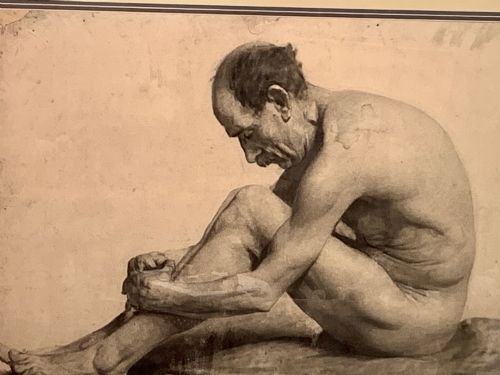
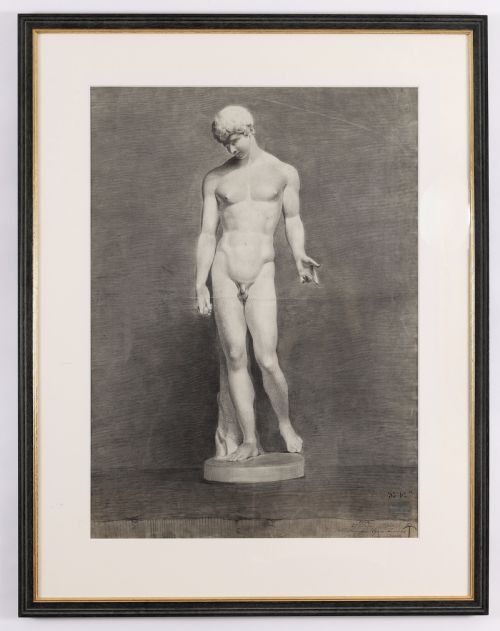
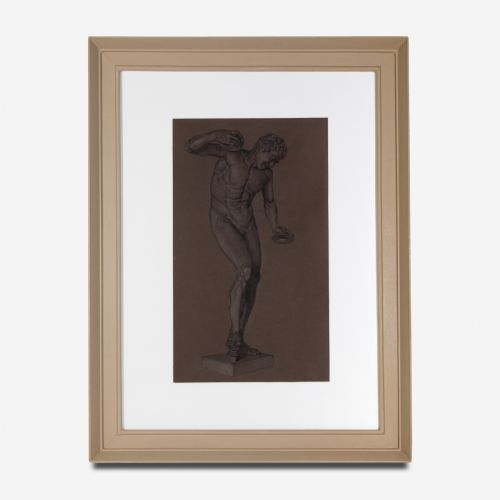
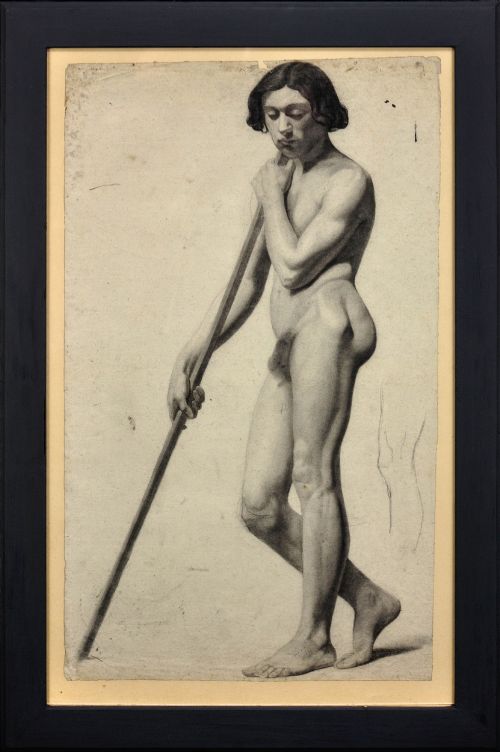
A charcoal nude study is an original drawing capturing the human figure through expressive monochrome mark-making, frequently produced as an academic exercise or finished fine art. The examples gathered under this phrase span from early nineteenth century French neoclassical works to mid-century modern interpretations.
Buyers encounter both male and female life studies executed on paper, often framed behind glass within period wood surrounds. These works range from rigorous academic drawings of standing and crouching figures to avant-garde interpretations by named artists.
Materials and techniques
These works rely on charcoal, chalk, graphite and pastel applied to paper or toned paper to build volume and shadow. Artists frequently worked from live models in studio settings or art schools, utilising monochrome media to explore tone, musculature and gesture.
Framing typically involves wood and glass to protect the delicate paper substrate. Many surviving examples retain their antique gilt or timber frames, which complement the tonal range of the drawings within.
Charcoal Nude Study Retail Price Guide 2026
Typical asking prices for charcoal nude study among the pieces listed under this phrase on Sellingantiques today, from the lower quarter to the upper quarter. They describe what is for sale here now, not the wider market.
Materials recorded across the selection include charcoal, chalk, graphite, pastel and toned paper housed within wood and glass frames.
Separating quality across the range
The strength of the draughtsmanship separates finer pieces from standard student exercises, particularly in the rendering of anatomy and light. Confident handling of charcoal and chalk reveals the hand of a skilled practitioner or established school.
Provenance and attribution elevate certain works, as pieces associated with named makers or documented schools command greater attention. The condition of the paper and the preservation of the original framing also influence the overall character of a study.
Samuel Rabin·Henry Arthur Roberts·Demetrios Galanis·Winifred Eugene Ballard·Frank Dobson
The Charcoal Nude Study Glossary
- Academic Realism
- A style of painting and drawing produced under the influence of European academies of art, emphasising precise anatomy and classical proportions. This approach underpins many nineteenth-century life studies.
- Toned Paper
- Paper that possesses a natural colour or tint rather than pure white, providing a neutral mid-tone for artists. This allows highlights in chalk and shadows in charcoal to emerge with greater contrast.
- Life Study
- A drawing or painting executed directly from a live nude model to hone artistic skill. These works capture the fleeting posture of the sitter in the studio.
- Deux Crayon
- A drawing technique utilising two distinct colours of chalk or crayon, typically black and white or red and black, on tinted paper. This method creates subtle tonal depth.
Charcoal Nude Study: Frequently Asked Questions
What is a charcoal nude study?
A charcoal nude study is an original drawing focused on the human figure, created using carbon-based media on paper. These pieces range from rigorous nineteenth-century academic exercises to modernist interpretations.
Artists use charcoal for its ability to convey deep shadows and rapid shifts in tone, making it the primary medium for capturing the contours of the body.
How were these drawings used?
These works served primarily as training exercises in art academies or studios, where students and masters honed their understanding of human anatomy and proportion. Drawing from live models was the cornerstone of traditional artistic education.
Over time, many of these instructional studies came to be valued as finished works of art in their own right, preserved for their directness and skill.
How do I care for a paper drawing?
Paper drawings require protection from direct sunlight and moisture to prevent the paper from yellowing and the charcoal from degrading. Displaying them behind glass in a stable environment helps safeguard the delicate medium.
Avoid hanging these pieces in areas with high humidity or fluctuating temperatures to ensure the paper and frame remain stable over the years.
How can I tell the period of a study?
Dating relies on stylistic clues, such as the rigid proportions of neoclassical academic works versus the abstracted forms of mid-century modernism. Paper types, framing styles, and inscriptions also offer hints regarding the era of execution.
Historical context, such as the specific academic traditions of French or English schools, helps anchor the piece to a particular decade or century.