





Charcoal Nude Sketch
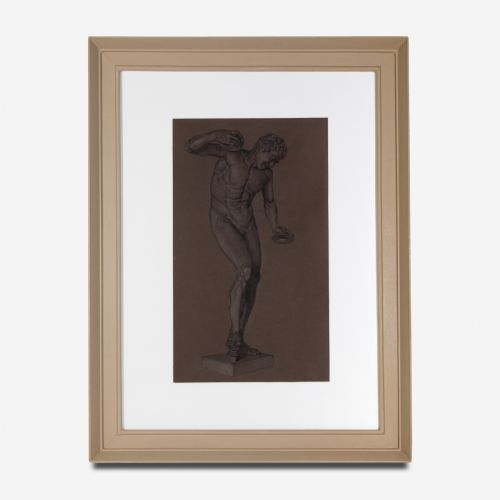
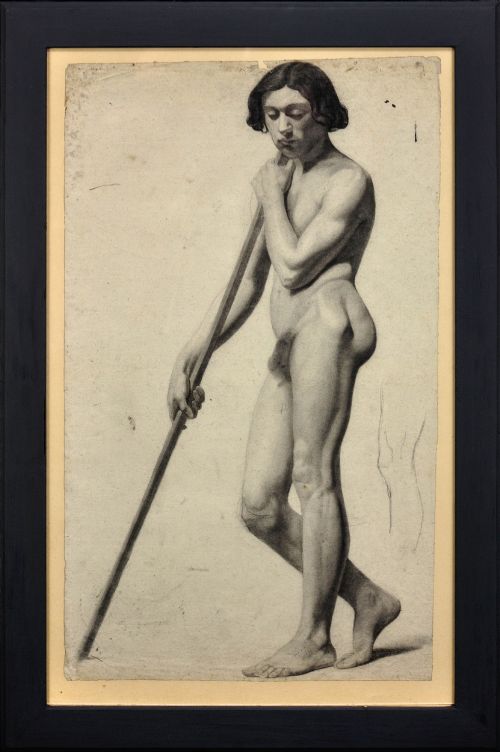
A charcoal nude sketch captures the human form with immediate, expressive line work.
Charcoal Nude Sketch
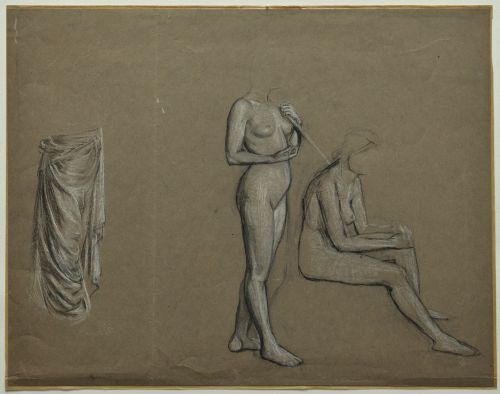
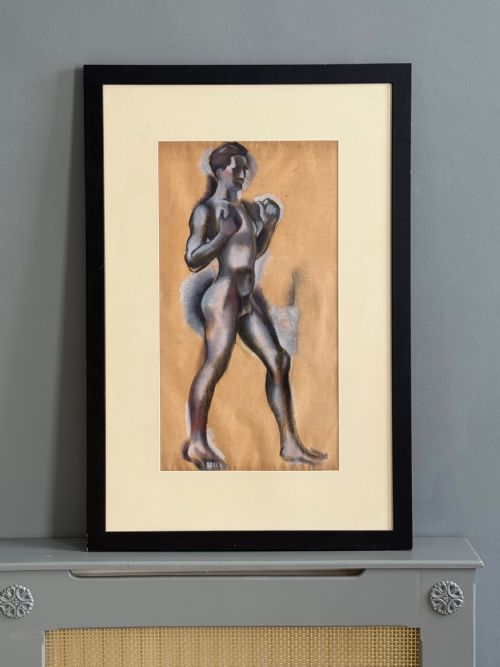
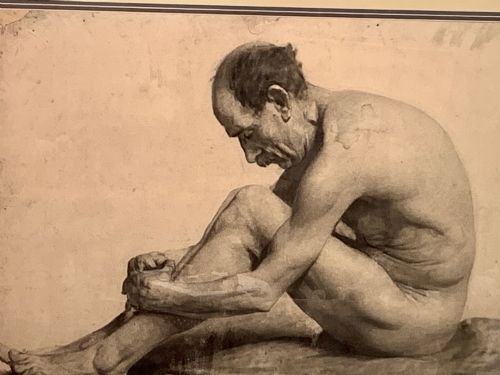
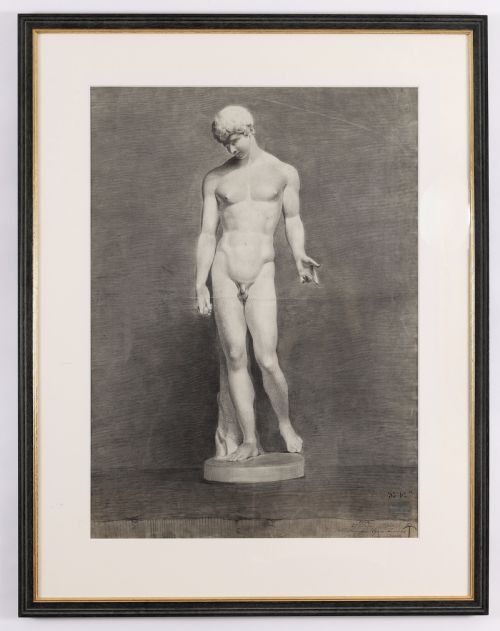
A charcoal nude sketch is a direct study of the human body, rendered in charcoal on paper and frequently framed for display. These pieces range from rigorous academic drawings of male and female figures to modernist interpretations spanning the nineteenth and twentieth centuries.
The most common examples encountered here are academic life studies and framed drawings from the nineteenth century, often executed on toned paper or with chalk highlights. Such works reflect rigorous training traditions across English, French, and Italian schools.
How they were made
These works rely on charcoal applied to paper, sometimes augmented with chalk, pastel, or wash to build volume and shadow. Artists utilised toned paper to capture mid-tones, allowing highlights to be drawn in white chalk.
Framing in wood and glass protects the delicate medium from smudging and environmental damage over time. The handling of the material shifts from tight academic realism to looser modernist or cubist mark-making.
Charcoal Nude Sketch Retail Price Guide 2026
Typical asking prices for charcoal nude sketch among the pieces listed under this phrase on Sellingantiques today, from the lower quarter to the upper quarter. They describe what is for sale here now, not the wider market.
Listings feature works spanning the nineteenth and twentieth centuries, incorporating academic realism, modern British, and cubist styles.
What varies in quality
Quality rests upon the sureness of the draughtsmanship and the artist's command of anatomical proportion and light. A master study demonstrates structural understanding of bone and muscle rather than mere surface copying.
The sophistication of the composition and the preservation of the paper and charcoal media distinguish finer examples. Works bearing clear provenance or attribution to established academic artists carry distinct historical weight.
Samuel Rabin·Henry Arthur Roberts·Demetrios Galanis·Winifred Eugene Ballard·Frank Dobson
The Charcoal Nude Sketch Glossary
- Academic Realism
- A style of painting and drawing produced under the influence of European academies of art, emphasising precise anatomical accuracy and classical form.
- Toned Paper
- Paper that possesses a light colour such as grey or buff, used by draughtsmen to establish mid-tones quickly and apply highlights.
- Life Study
- A drawing or painting executed directly from a live nude model, traditionally utilised in art schools for training.
- Deux Crayon
- A drawing technique employing two pencils or chalks of contrasting colours, usually black and red or white, on tinted paper.
Charcoal Nude Sketch: Frequently Asked Questions
What is a charcoal nude sketch?
A charcoal nude sketch is an original artwork depicting the human figure using charcoal, often created as an academic exercise or finished life study.
These pieces capture the form through tonal shading and expressive line work on paper.
How should I frame these drawings?
These works require framing behind glass with proper mount boards to prevent the charcoal from touching the glass. This protects the delicate medium from humidity and accidental smudging.
Conservation-grade materials ensure the paper remains stable over decades.
How do I identify nineteenth-century academic drawings?
Nineteenth-century academic drawings typically feature meticulous attention to anatomical proportion, musculature, and classical staging. They often originate from formal art school training sessions in England, France, or Italy.
Signatures, inscriptions, or framing materials can provide further clues to their origin.
Where do these sketches originate?
The pieces originate from various European traditions, including English, French, and Italian schools spanning the nineteenth and twentieth centuries.
Many represent formal life studies produced within structured academy environments or by avant-garde artists.