

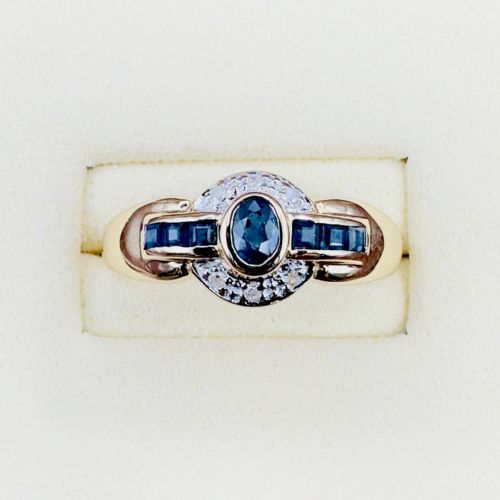
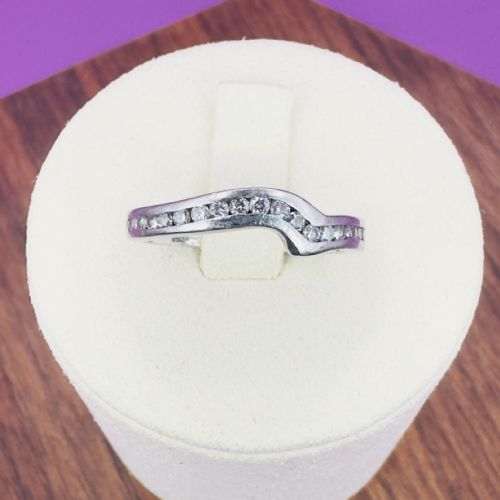


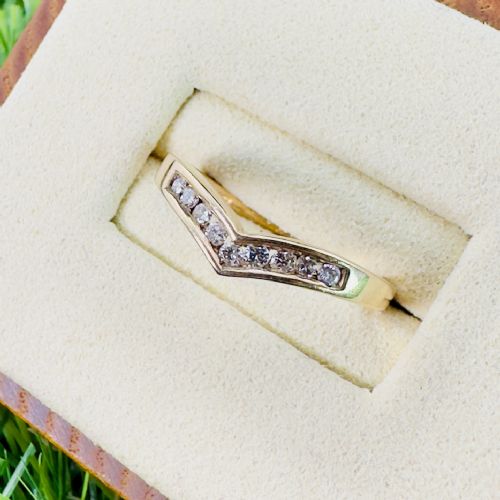


Channel Set Ring
A channel set ring secures stones closely within metal tracks, offering a smooth profile built from periods ranging from the Art Deco era to the mid twentieth century.
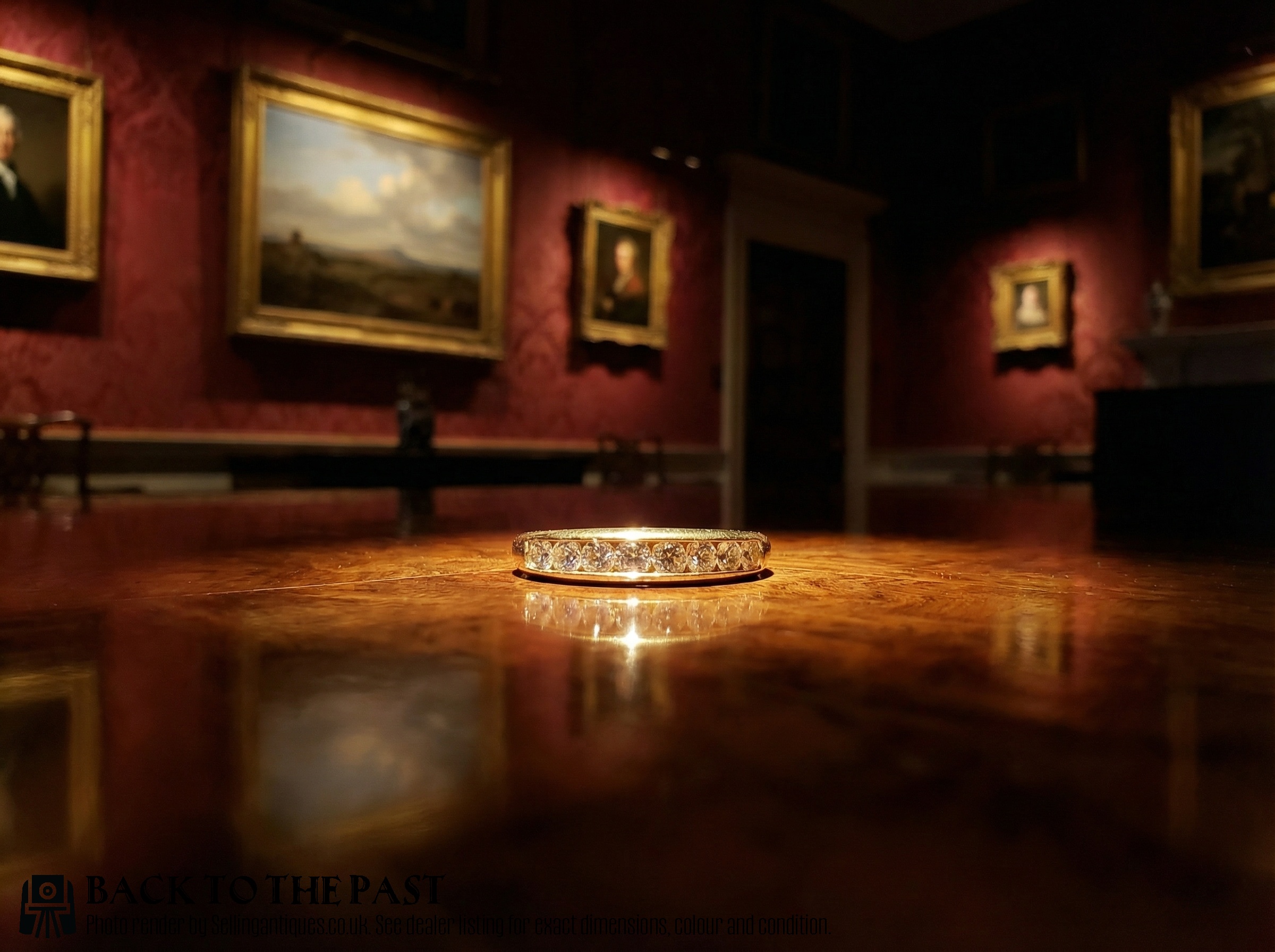
Channel Set Ring
When you search for a channel set ring, you encounter designs shaped across multiple decades, including the 1920s, 1930s, 1940s, 1950s, and 1960s. These pieces take forms such as half eternity bands, full eternity bands, cluster rings, wishbone shapes, tank rings, and crossover styles.
The selection includes antique and vintage pieces reflecting Art Deco, Art Deco Revival, mid-century French, and contemporary aesthetics. You find configurations featuring diamonds alongside sapphires, rubies, and emeralds.
Pieces from this selection range from delicate single-row bands to substantial multi-stone clusters and full eternity rings. The variety spans everyday styles to cocktail and evening wear.
How they were made
Maker construction relies on precious metals such as platinum, 18ct white gold, 18ct yellow and white gold, 14ct gold, 9ct gold, 9ct white gold, and sterling silver. These metals provide the structural tracks needed to hold stones securely without individual prongs.
Jewellers set diamonds, rubies, emeralds, sapphires, and paste stones directly into the metal channels or arranged them in cluster, princess cut, oval cut, and square cut formations. Stones are selected to fit flush within the metal walls of the band or cluster mount.
Some Art Deco eternity bands feature a swivel mechanism, allowing you to flip the ring between two distinct faces.
What varies in quality
Quality depends on the precision of the metal tracks and the uniformity of the set gemstones, whether diamonds, sapphires, rubies, or emeralds. Superior examples demonstrate exact alignment within the metal walls.
The choice of foundational metal, from platinum and 18ct gold down to 9ct gold and sterling silver, influences the durability and weight of the piece. The calibre of the cutting on stones like princess, oval, and square cuts defines the visual rhythm of the band.
The Channel Set Ring Glossary
- Eternity ring
- A band set continuously or halfway with gemstones symbolising endless connection. These are found in full and half eternity configurations across platinum and gold.
- Cluster ring
- A design featuring a central stone surrounded by a group of smaller gems. Common variations pair diamonds with emeralds, rubies, or sapphires.
- Wishbone ring
- A curved band shaped like a V or an arc. This form often sits flush against other rings.
- Tank ring
- A bold, architectural jewellery style originating in the mid twentieth century. These pieces utilise substantial gold settings often associated with the Art Deco and 1940s periods.
- Paste
- Hand-cut glass used as a gemstone substitute in historical jewellery. It provides brilliance in pieces like vintage swivel eternity bands.
Channel Set Ring: Frequently Asked Questions
How do I wear an eternity ring?
Eternity rings are traditionally worn alongside a wedding band and engagement ring on the left ring finger. Their continuous or half-set profile allows them to sit comfortably adjacent to other bands.
Because stones occupy the outer surface, consider whether a full or half eternity band suits your daily routine. Half eternity versions offer a plain metal underside that can feel more flexible for everyday wear.
What is an Art Deco ring?
Art Deco rings originate from the 1920s and 1930s, defined by geometric lines, stylised motifs, and contrasting materials. These designs frequently incorporate platinum and white gold alongside calibrated rubies, emeralds, and diamonds.
Pieces from this era often utilise channel settings to create clean, uninterrupted lines of stones. The aesthetic prioritises architectural precision and bold symmetry.
How do I identify a mid century ring?
Mid century rings, dating through the 1940s, 1950s, and 1960s, reflect post-war design shifts towards heavier gold weights and organic or cocktail styles. French makers during this period produced distinctive sapphire and ruby cocktail rings.
These pieces often feature yellow gold alongside white gold accents, cluster arrangements, and wishbone silhouettes. The construction leans towards substantial settings and varied stone cuts like princess and oval.
What is a cluster ring?
A cluster ring groups multiple gemstones together to create a prominent focal point on the finger. Typical examples combine a central diamond with surrounding emeralds, sapphires, or additional diamonds.
This setting style maximises visual impact by using a collection of smaller stones rather than a single large gem. They appear across various periods, including 1960s gold mounts and earlier Art Deco designs.