


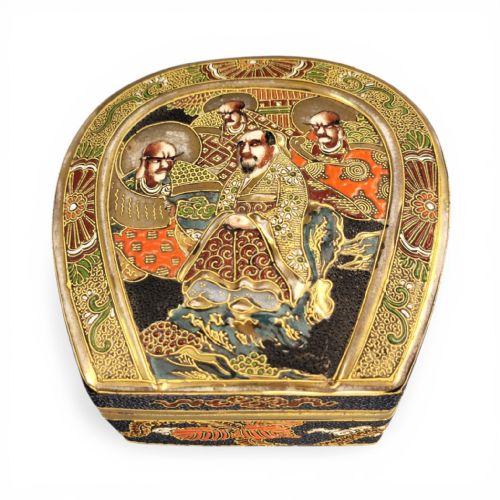


Ceramic Lidded Box
These ceramic lidded boxes offer a practical way to store small treasures while bringing historic glaze and form into a room.
Ceramic Lidded Box
A ceramic lidded box serves various domestic purposes, appearing on this page as trinket boxes, sugar bowls, powder boxes, and biscuit barrels. These pieces span from the sixteenth century through the Victorian era into Art Deco designs of the 1930s.
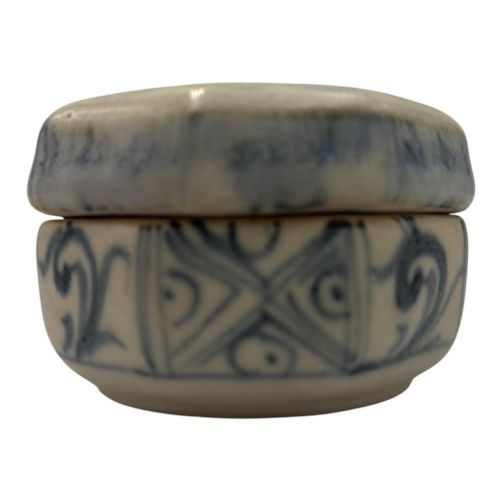
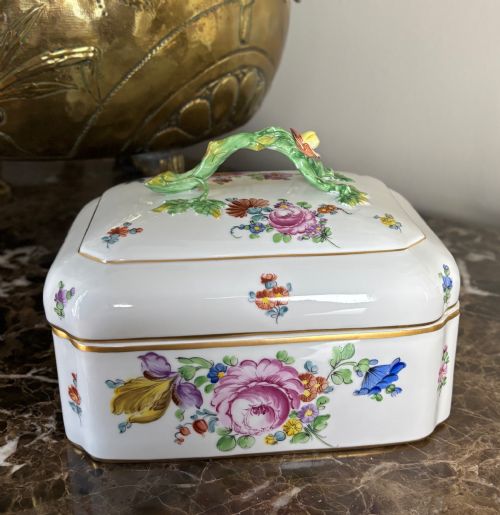
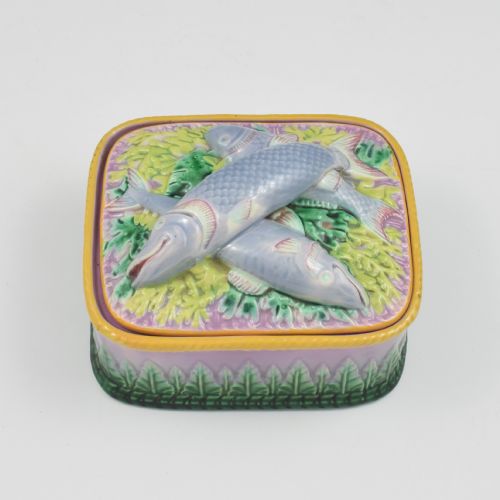
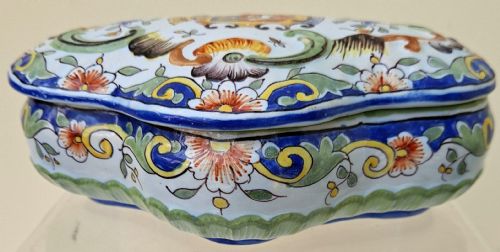
The selection includes European porcelain from factories like Meissen and Limoges, alongside earthenware pieces such as Majolica sardine boxes and French faience. Asian works feature Japanese Satsuma earthenware and early Vietnamese blue and white pieces.
Materials and construction techniques
Potters shape these vessels using porcelain, earthenware, stoneware, and ironstone, often finishing surfaces with intricate glazes and hand-painted motifs. Some pieces incorporate gold leaf or gilt detailing to highlight raised reliefs and borders.
Specific forms combine ceramics with contrasting elements, such as silver plate mounts on English biscuit barrels or enamel work on lidded pots.
Ceramic Lidded Box Retail Price Guide 2026
Typical asking prices for ceramic lidded box among the pieces listed under this phrase on Sellingantiques today, from the lower quarter to the upper quarter. They describe what is for sale here now, not the wider market.
Evaluating craftsmanship and detail
Quality rests in the precision of the hand-painted decoration, from delicate dragon motifs to figurative Art Deco bathing figures and floral patterns. The clarity of the glaze and the crispness of moulded details distinguish finer studio and factory pieces from standard wares.
The integration of the lid with the base demonstrates the maker's skill, ensuring a balanced proportion and a clean fit across octagonal, round, boat-shaped, and rectangular silhouettes.
George Jones·Toshozan·Thomas Forester and Sons·Richard Ginori·Limoges·Meissen·Coalport
The Ceramic Lidded Box Glossary
- Majolica
- A type of earthenware decorated with colourful opaque glazes, known for rich relief moulded designs such as animal or fish motifs.
- Faience
- Tin-glazed earthenware produced in continental Europe, frequently featuring hand-painted blue and multi-coloured patterns.
- Sucriere
- A covered pot or bowl made to hold sugar, commonly found in European porcelain table services.
- Famille Rose
- A palette of Chinese ceramic glazes dominated by opaque pink or rose enamel, prominent on eighteenth and nineteenth-century pieces.
Ceramic Lidded Box: Frequently Asked Questions
What were ceramic lidded boxes used for?
These vessels held small personal items, loose sugar, biscuits, or cosmetic powder on dressing tables and dining sideboards.
Their enclosed design protected delicate contents from dust while adding decorative colour to nineteenth and twentieth-century interiors.
How do I date an antique ceramic box?
Dating relies on identifying factory marks, glaze types, and stylistic indicators such as Victorian ornamentation or 1930s Art Deco silhouettes.
Examining the base material and manufacturing technique helps place the piece within periods ranging from early Asian dynasties to twentieth-century European studios.
How should I display a ceramic box at home?
These boxes suit placement on mantelpieces, bookshelves, or dressing tables where their colours and forms can be viewed closely.
Keeping lids resting securely on their bases maintains the intended silhouette of the piece in a room.
What is the difference between porcelain and earthenware boxes?
Porcelain is fired at higher temperatures to create a vitrified, non-porous body that often rings when struck and allows for fine, smooth painted details.
Earthenware is softer, fired at lower temperatures, and relies on opaque or coloured glazes like majolica to seal the porous clay body.