

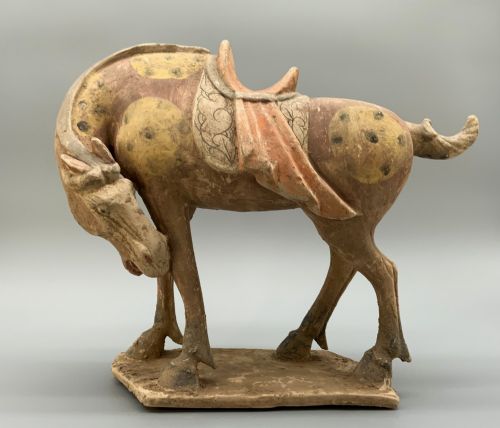



Ceramic Equestrian Figures
Ceramic equestrian figures capture riders and mounts across centuries, offering collectors a rich study in pottery traditions from Victorian Staffordshire to ancient Chinese kilns.
Ceramic Equestrian Figures
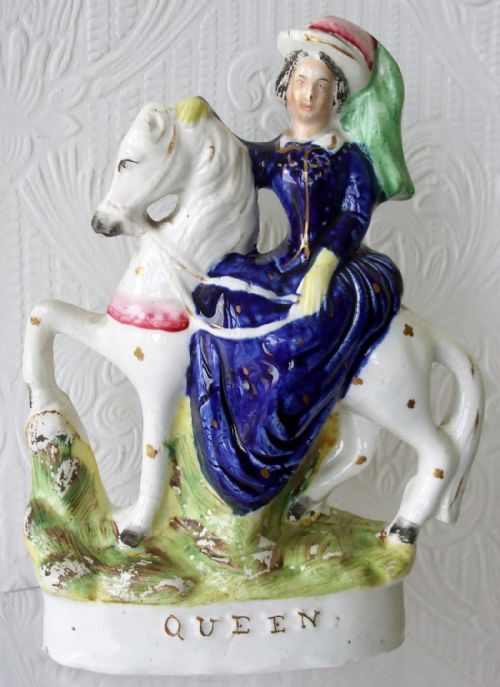
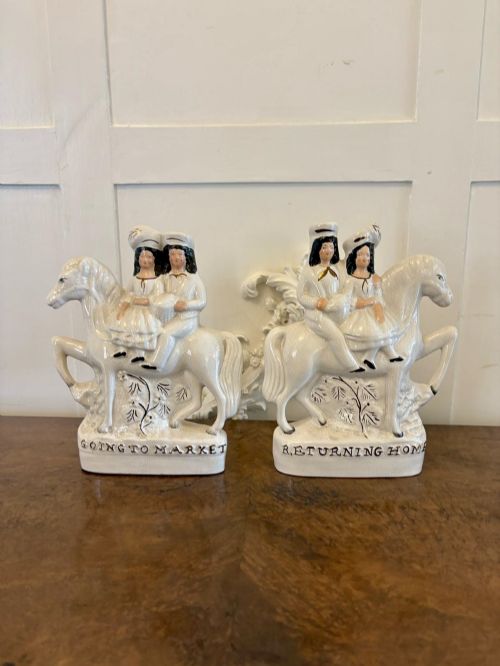
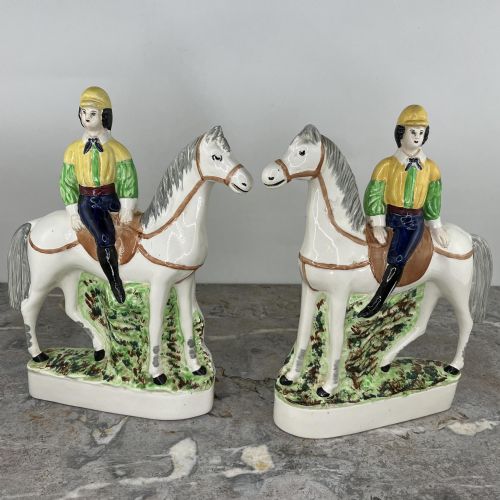
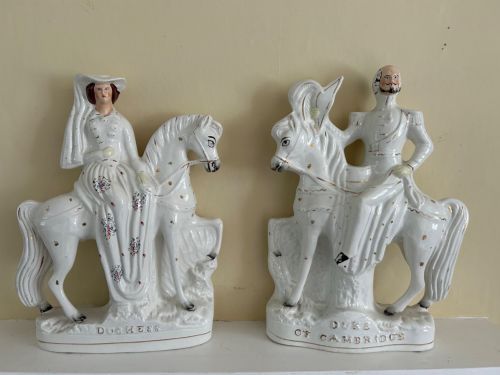
These ceramic equestrian figures encompass a diverse range of sculptural pottery depicting individuals on horseback, from historical royals and literary figures to ancient burial horses. When exploring ceramic equestrian figures on this page, the most frequent encounters are nineteenth-century Victorian Staffordshire flatback pieces made in English potteries. These domestic examples often portray named personalities, Scottish highlanders, soldiers, or children alongside their mounts.
Alongside the Staffordshire tradition, the selection reaches further back into history with Chinese Tang Dynasty pieces and later Tang Dynasty style interpretations. You will also discover primitive Scottish Portobello pottery and continental European works such as Royal Dux figures. Each piece captures a specific cultural approach to rendering the horse and rider in fired clay, bridging decorative ornament and historical narrative.
Assessing quality and execution
Quality in these figures rests primarily upon the crispness of the moulding and the expressive detail in the faces and clothing of the riders. Superior Staffordshire examples display carefully applied enamel painting that remains neat within the contours of the clay, whereas lesser pieces show rushed or bleeding colours. The balance and stability of the horse and rider form also separate standard decorative ware from more ambitious sculptural attempts.
In antique earthenware, the handling of the glaze and the preservation of the original clay body dictate the overall desirability of the object. Pieces that retain their strong pigments and show minimal surface disruption demonstrate careful firing and subsequent preservation. The distinction lies in how successfully the potter translated weight and movement into a rigid ceramic medium.
Ceramic Equestrian Figures Retail Price Guide 2026
Typical asking prices for ceramic equestrian figures among the pieces listed under this phrase on Sellingantiques today, from the lower quarter to the upper quarter. They describe what is for sale here now, not the wider market.
Historical subjects range from political leaders and literary heroes to masked highwaymen and leopard hunters.
The Ceramic Equestrian Figures Glossary
- Flatback
- A ceramic figure designed with a finished front and a flat, unadorned reverse meant to stand against a wall on a mantelpiece. This style is especially common in nineteenth-century Staffordshire pottery.
- Earthenware
- Porous pottery fired at relatively low temperatures, forming the primary body for the majority of Victorian figures shown here. It requires a glaze to become completely watertight.
- Sancai
- A traditional type of Chinese three-colour glaze used prominently on Tang Dynasty pottery horses, typically combining amber, green, and cream or off-white tones. These mineral glazes interact dynamically during the firing process.
- Terracotta
- Unglazed or fired brown-red clay used directly for sculptural forms, valued for its warm earthy tones and matte texture. It highlights the raw modelled details applied by the sculptor.
Ceramic Equestrian Figures: Frequently Asked Questions
What are ceramic equestrian figures?
These pieces are sculptural ceramic works depicting a person riding a horse, spanning various global pottery traditions and historical eras.
They function primarily as decorative ornaments or historical commemorations, reflecting the social and cultural priorities of their respective periods.
How were Staffordshire figures displayed?
Staffordshire flatback figures were designed specifically to sit upon mantelpieces, shelves, or sideboards within nineteenth-century homes.
Because the backs were left flat and unpainted, they sat flush against interior walls where viewers could admire the front-facing narrative.
How do I care for antique pottery?
Keep these fragile earthenware and ceramic figures out of direct sunlight and away from areas subject to sudden temperature fluctuations.
Dust them gently with a dry, soft brush rather than using water or cleaning solutions that might harm aged glazes.
How do I identify a flatback?
Examine the reverse of the piece to see if the pottery has been flattened and left largely unglazed or undecorated.
This specific construction method allowed Victorian potters to save materials and ensure the figure rested securely against vertical surfaces.