

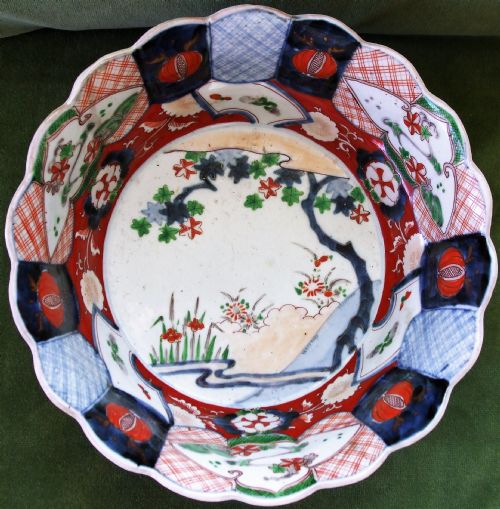


Ceramic Display Basin
These ceramic display basin pieces span centuries of international pottery, offering striking decorative presence for any room.
Ceramic Display Basin
When you search for a ceramic display basin, you encounter a diverse gathering of large bowls, chargers, and utility vessels adapted over time for display. The pieces range from early Persian lustred earthenware to robust Victorian commercial dairy pails and delicate Japanese export porcelain.
How they were made
The manufacture of these vessels relies heavily on skilled throwing and moulding of porcelain, earthenware, and creamware bodies. Artisans applied complex underglaze and overglaze techniques, incorporating cobalt glaze, enamel, and gold leaf to build intricate surface patterns.
Kiln firing methods varied by region and era, producing the distinctive vitrified surfaces seen on Arita and Chinese export porcelains. Specialised decorators then added hand-painted details, ranging from intricate battle scenes to botanical motifs, often finished with gilt highlights.
Ceramic Display Basin Retail Price Guide 2026
Typical asking prices for ceramic display basin among the pieces listed under this phrase on Sellingantiques today, from the lower quarter to the upper quarter. They describe what is for sale here now, not the wider market.
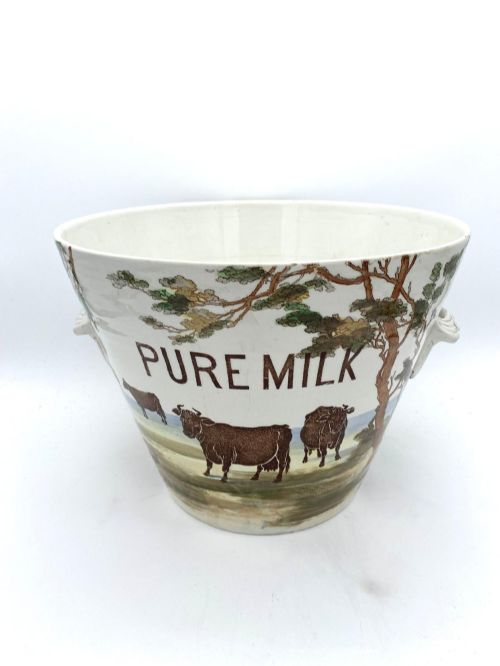
Some nineteenth century dairy pails came decorated with hand-painted cows, proving that even agricultural storage needed a touch of pastoral charm.
What varies in quality
Quality in these vessels depends on the precision of the initial ceramic body formation and the fineness of the potting. Thinner, more uniform walls and stable firing results separate standard utility wares from exceptional decorative showpieces.
The execution of the painted decoration dictates the upper tier of the range. Hand-painted precision in cobalt, famille rose enamels, and gold leaf reveals the hand of master artisans, whereas mass-produced commercial items display simpler, repetitive stencil or transfer work.
Kinkozan Kyoto Satsuma
The Ceramic Display Basin Glossary
- Imari
- A type of Japanese export porcelain decorated in underglaze blue, iron red, and gold. It originated in the Hizen province and gained immense popularity across Europe.
- Creamware
- A refined earthenware developed in the eighteenth century featuring a pale yellowish-white glaze. It became a staple of British ceramic production.
- Famille Rose
- A palette of Chinese porcelain enamels dominated by opaque pink. The style emerged during the Qing dynasty and allows for subtle tonal shading.
- Arita
- The Japanese town and production centre renowned for pioneering porcelain manufacture. Wares from this region often feature robust forms and cobalt decoration.
- Lustre Glaze
- A ceramic finish containing metallic elements that produce an iridescent sheen when fired in a reduced oxygen atmosphere. It is typical of early Islamic pottery.
- Satsuma
- A type of Japanese earthenware featuring a crackled ivory glaze decorated with polychrome enamels and gilt. It was heavily produced for export during the Meiji period.
Ceramic Display Basin: Frequently Asked Questions
What is a ceramic display basin?
A ceramic display basin is a broad term encompassing large decorative bowls, chargers, and deep vessels designed to be shown rather than hidden away.
These pieces include Chinese export punch bowls, Japanese Imari chargers, and European creamware bowls intended to showcase artistic glaze and painting techniques.
How were Chinese porcelain punch bowls used?
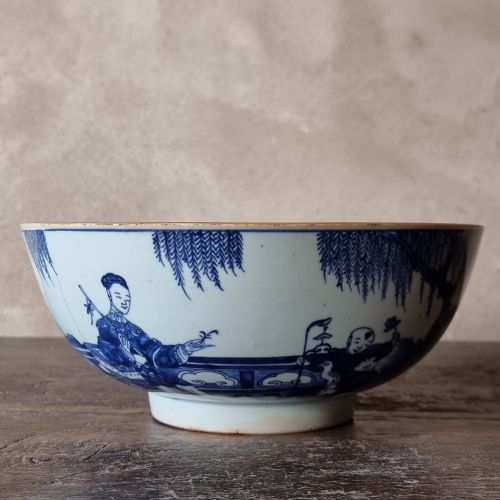
Chinese porcelain punch bowls were large vessels utilised at social gatherings to mix and serve communal alcoholic drinks.
Their substantial size and decorative famille rose or blue and white surfaces made them central display items on dining tables and sideboards.
How do I identify Japanese Imari porcelain?
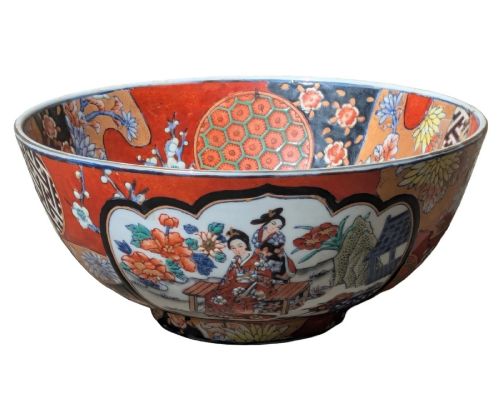
Japanese Imari porcelain is typically identified by its distinctive palette of cobalt blue underglaze combined with iron red and gold overglaze enamels.
Common motifs include floral arrangements and brocade patterns applied to robust porcelain bodies produced in the Arita region.
Where should I place a large display bowl?
Large display bowls suit central placement on dining tables, heavy timber sideboards, or dedicated display stands where their form remains visible.
Because many of these historic pieces feature delicate enamel or gold leaf decoration, placing them out of high-traffic zones helps protect the surface.