

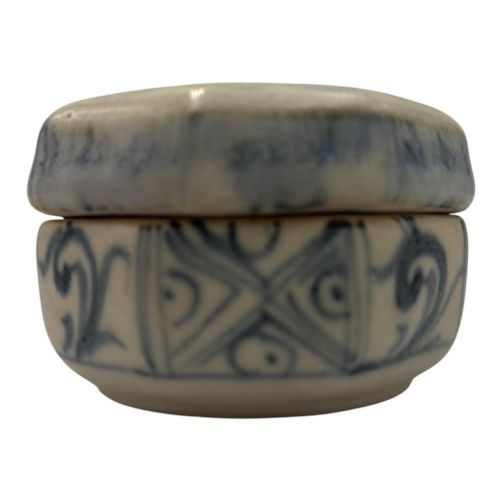
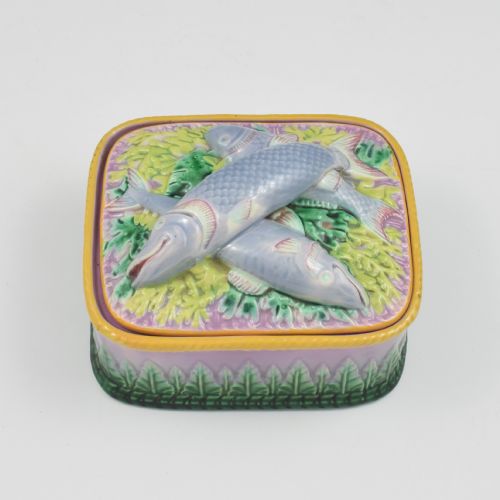
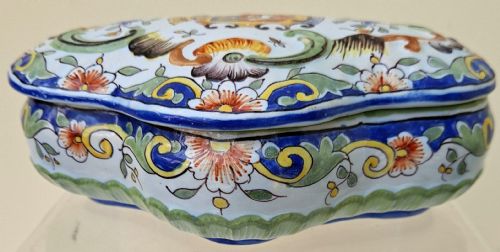


Ceramic Covered Box
These ceramic covered box pieces are vessels for dressing tables and larders, collected for their painted glazes and varied regional forms.
Ceramic Covered Box
A ceramic covered box serves various domestic and decorative purposes, ranging from small dressing table containers to larger lidded dishes for the pantry. When exploring a ceramic covered box, a buyer encounters forms such as sardine boxes, trinket boxes, patch boxes, and egg crocks.
The pieces span multiple periods, including the Victorian era, the nineteenth century, and the sixteenth century under the Lê Dynasty. Origins vary widely, taking in English potteries, French faience centres, German porcelain houses, and Japanese kilns.
How they were made
Makers utilised earthenware, porcelain, stoneware, and ironstone as the primary bodies for these lidded vessels. Tin glaze and coloured lead glazes provide the smooth surfaces seen on majolica and faience examples.
Decoration relies on underglaze blue painting, enamel highlights, and occasional applications of gold leaf. Moulding shapes the figural forms, such as chickens and boat-shaped dishes, before kiln firing.
Ceramic Covered Box Retail Price Guide 2026
Typical asking prices for ceramic covered box among the pieces listed under this phrase on Sellingantiques today, from the lower quarter to the upper quarter. They describe what is for sale here now, not the wider market.
Listings feature earthenware, porcelain, stoneware, and tin glaze across periods from the sixteenth century to the Art Deco era.
What varies in quality
Quality rests on the crispness of the moulding and the control shown in the hand-painted glaze work. Early Asian blue and white pieces derive distinction from the balance of the cobalt pigment against the white ground.
European factories achieve refinement through fine-pored porcelain bodies and detailed enamel painting, whereas regional earthenwares depend on the rustic charm of their tin-glazed decoration.
George Jones·Thomas Forester & Sons·Wedgwood·Meissen·Mason’s·Coalport
The Ceramic Covered Box Glossary
- Majolica
- A type of earthenware covered with coloured lead glazes, popular during the Victorian period for utilitarian containers like sardine boxes.
- Faience
- Tin-glazed earthenware produced in France and other European regions, often featuring hand-painted floral or geometric patterns.
- Jasper Dip
- A fine-grained stoneware developed by Wedgwood, where a white ceramic vessel is dipped into a coloured liquid clay to create contrast.
- Bonbonniere
- A small ornamental box or container originally designed for holding sweets or bonbons.
- Imari
- A style of Japanese porcelain decorated in underglaze blue, iron red, and gold, which heavily influenced European ceramics.
Ceramic Covered Box: Frequently Asked Questions
What were ceramic covered boxes used for?
These lidded vessels served practical roles in the Victorian household, from storing sardines and soap to holding trinkets on a dressing table. Smaller patch boxes kept cosmetic patches secure.
Larger items like egg crocks and sucrieres managed food storage on the dining table or in the kitchen, combining utility with decorative design.
How do I date a ceramic box?
Dating relies on identifying the factory marks stamped or painted on the underside, alongside stylistic clues from periods like the Regency or Victorian eras. Material choices, such as ironstone versus early earthenware, also point to specific manufacturing decades.
Asian pieces look to dynastic reigns, such as the Lê Dynasty, for chronological placement, while European factories often recorded specific production years through registry marks.
What is the difference between majolica and faience?
Majolica uses coloured lead glazes applied over a white or buff earthenware body, creating vibrant and glossy surfaces often seen in nineteenth-century animal figures. Faience employs an opaque tin glaze that provides a smooth white background for painted decoration.
Faience traditions are closely tied to French and European regional pottery centres, whereas Victorian majolica was mass-produced by major English potteries.