

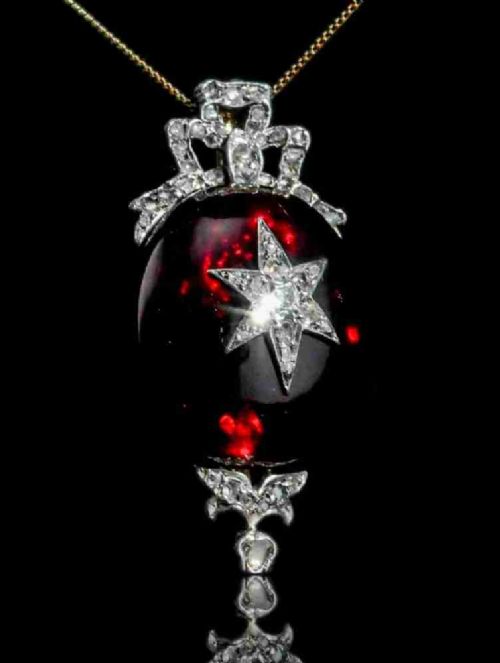


Celestial Star Jewellery
Celestial star jewellery captures the night sky in precious metals and gemstones, offering pieces that range from Victorian brooches to Edwardian pendants.
Celestial Star Jewellery
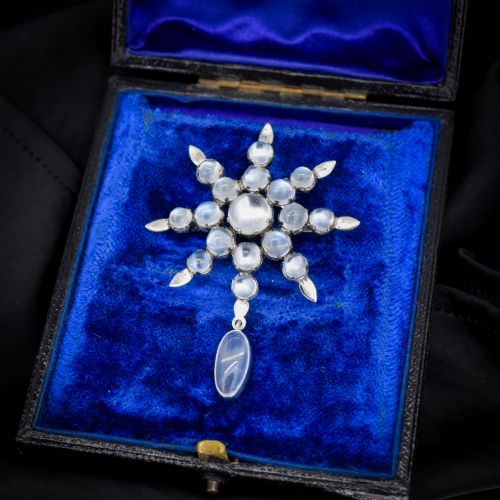
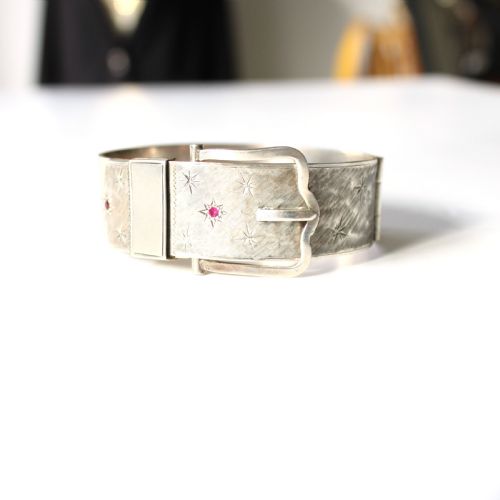
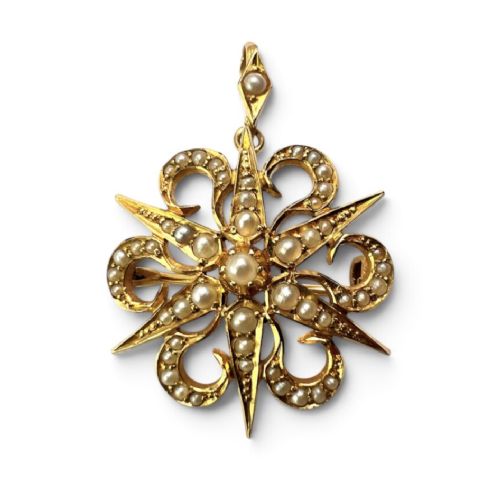
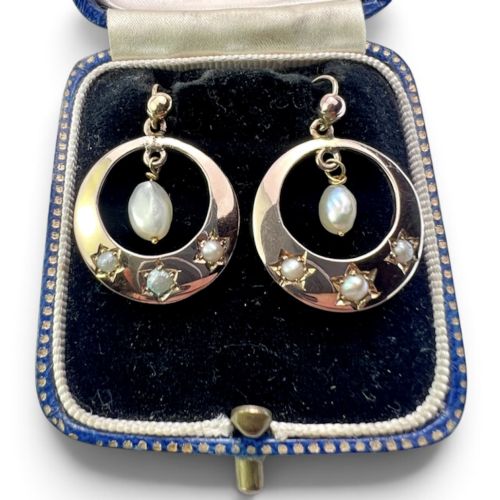
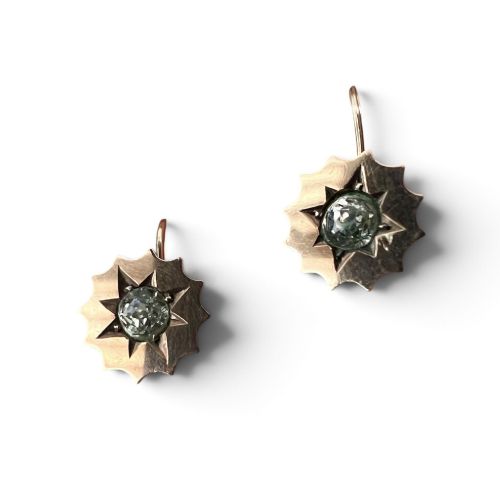
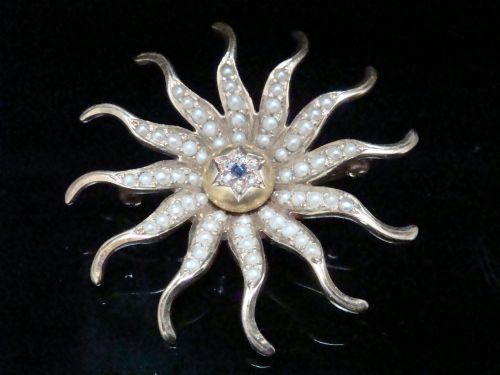
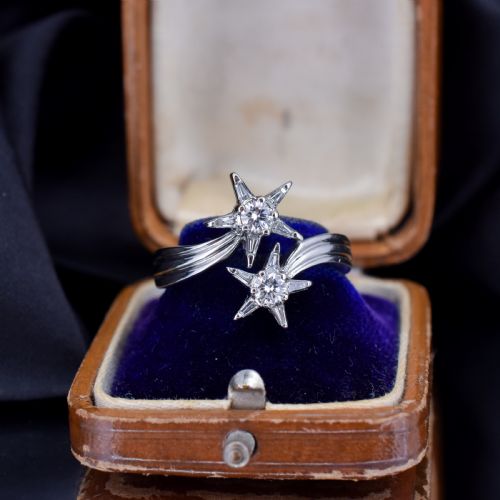
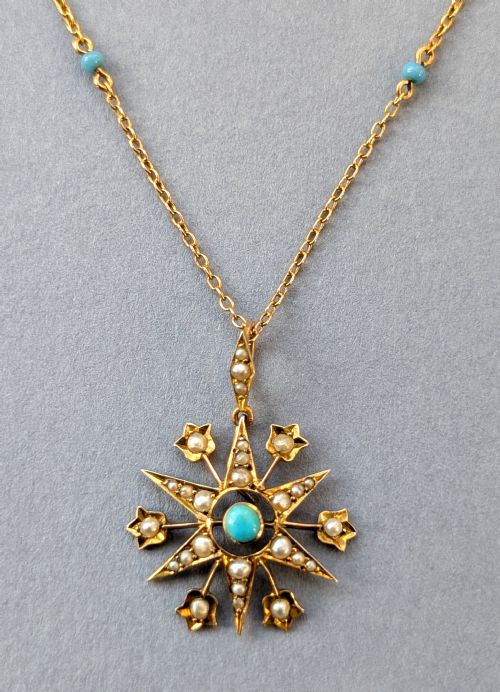
Celestial star jewellery comprises rings, brooches, pendants, and earrings that depict stars, sunbursts, and crescents. These items draw on historical motifs representing the cosmos, often grouping starburst patterns into central designs.
The pieces on this page span Georgian, Victorian, Edwardian, and 1960s periods. Victorian and Edwardian examples dominate the selection, frequently appearing as diamond-set brooches or convertible pendant brooches.
Forms include gypsy-set bands, tiaras, and buckle rings alongside traditional necklaces and earrings. Buyers encounter both silver-topped gold settings from the nineteenth century and later white or yellow gold interpretations.
How celestial star jewellery was made
Goldsmiths utilised yellow and white gold alongside silver settings to mount diamonds, pearls, and sapphires. Victorian and Edwardian pieces frequently combine silver-topped gold to enhance the brilliance of old-cut and rose-cut diamonds against darker metal.
Gemstones such as seed pearls, turquoise, garnets, and rubies are star-set or flush-set into bands and brooches. Jewelers employed delicate prongs and closed-back foils in earlier Georgian works to reflect candlelight through blue glass and diamonds.
Celestial Star Jewellery Retail Price Guide 2026
Typical asking prices for celestial star jewellery among the pieces listed under this phrase on Sellingantiques today, from the lower quarter to the upper quarter. They describe what is for sale here now, not the wider market.
Listings feature periods from Georgian through Edwardian and 1960s Modernist, utilising diamond, gold, silver, pearl, and sapphire.
What varies in quality
The caliber of celestial star jewellery depends largely on the selection and cutting of the stones, particularly old European and rose-cut diamonds. Finer items exhibit precise symmetry in multi-rayed starbursts and secure grain-setting of smaller melee stones.
Durability and weight mark the difference between standard production and substantial pieces like heavy gold buckle rings or large convertible tiara components. Metal purity, ranging from nine-carat to eighteen-carat gold, and the crispness of chased details on silver-set mounts also dictate overall execution.
Hirsch and Oppenheimer
The Celestial Star Jewellery Glossary
- Star-set
- A gemstone set flush into the metal with small triangular incisions radiating outwards to mimic a star. This technique protects the girdle of the stone while adding decorative facets to the surrounding gold.
- Rose-cut
- A vintage diamond cut with a flat base and a domed crown composed of triangular facets. It produces a soft, translucent gleam rather than modern brilliance.
- Convertible pendant brooch
- An item designed with a detachable pin and a hidden loop to function as either a brooch or a pendant. This versatility was highly favored in the nineteenth century.
- Gypsy set
- A style of ring where stones are embedded directly into the thick band so that the surface remains flush. It provides a smooth profile suited for everyday wear.
Celestial Star Jewellery: Frequently Asked Questions
What is celestial star jewellery?
Celestial star jewellery encompasses ornaments shaped like stars, sunbursts, and crescents. These designs draw inspiration from astronomical themes popular across the Georgian, Victorian, and Edwardian eras.
Items range from delicate seed pearl earrings to substantial diamond and silver-topped gold pendant brooches. The aesthetic focuses on capturing the brilliance of the night sky through precious stones and metals.
How do I date a star brooch?
Dating relies on material combinations and construction techniques. Nineteenth-century pieces frequently feature silver settings over gold to brighten old-cut diamonds.
Later Edwardian and 1960s examples introduce different gold purities and alternative stones like sapphires, turquoise, or rubies. Examining the pin mechanisms and the cut of the diamonds also helps determine the period.
Can I wear a pendant brooch as a necklace?
Many Victorian and Edwardian star pieces were constructed as convertible items. They feature both a hinged pin for fastening to garments and a hidden loop for suspension.
Owners can slide a chain through the loop to wear the piece as a pendant. This dual function reflects the practical versatility demanded by historical jewelers.
What are gypsy set star rings?
Gypsy set rings feature diamonds or gemstones embedded flush into a wide metal band. The surrounding gold is often engraved with starburst patterns radiating from the stone.
This technique creates a smooth, snag-free profile. It was commonly utilised for nineteenth-century and Edwardian bands designed for durability.