





Caucasian Lattice Rug
A caucasian lattice rug brings geometric discipline and vibrant wool work into an interior through traditional tribal weaving.
Caucasian Lattice Rug
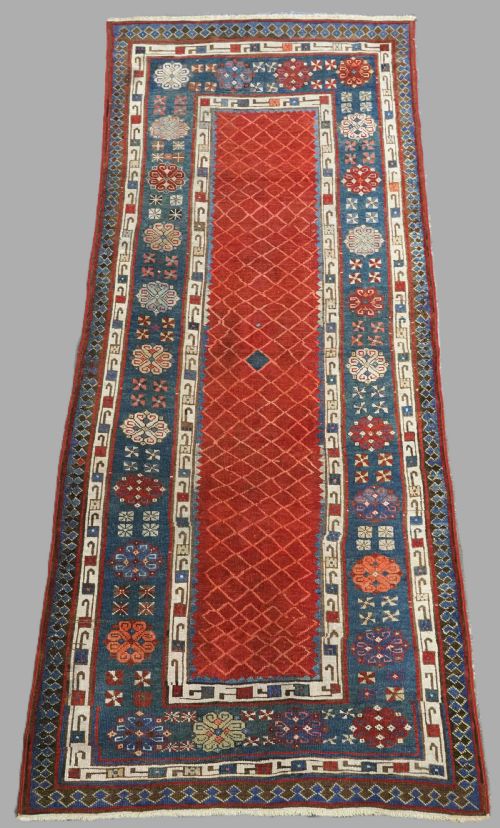
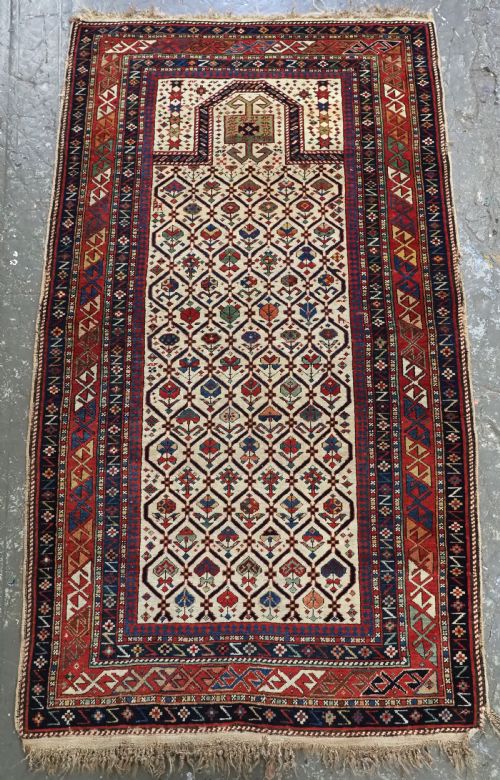
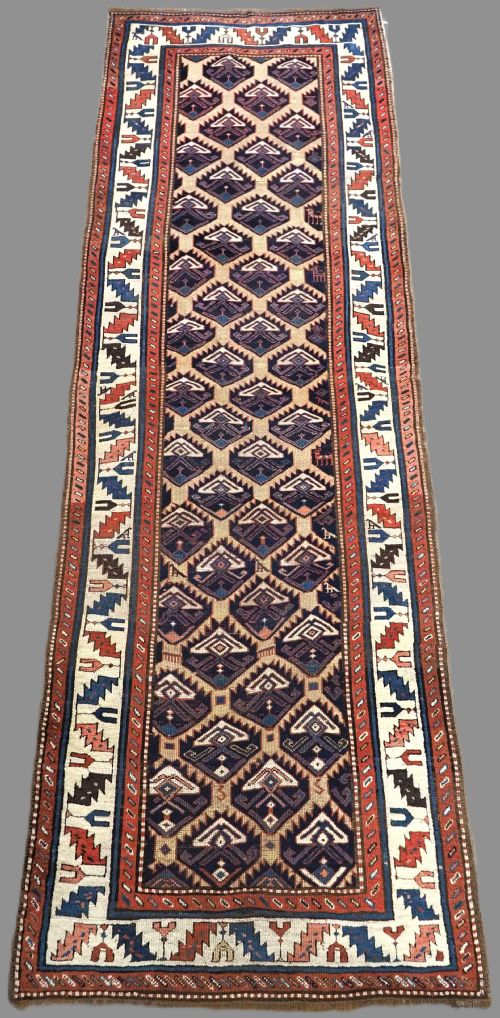
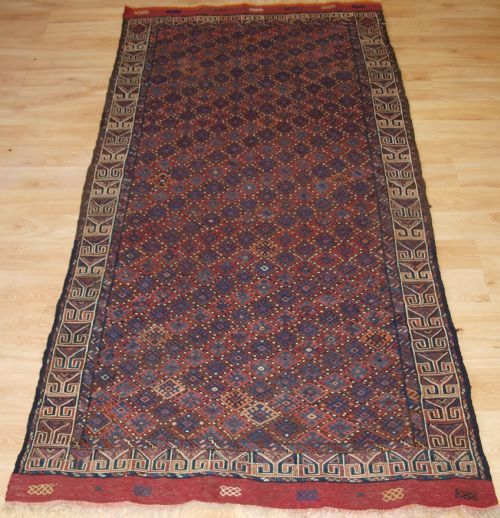
A caucasian lattice rug is a hand-knotted textile defined by an intersecting grid pattern that organises floral motifs, stars, or tulips across the field. When you search for this phrase, you encounter village and tribal floor coverings originating from nineteenth-century weaving traditions.
The version you are most likely to meet on this page is a nineteenth-century runner, long rug, or prayer rug originating from regions such as Daghestan, Shirvan, or Gendje. These formats utilise specific regional palettes and disciplined geometric frameworks.
Makers laid out these geometric divisions to segment the field into orderly compartments, frequently filling each lattice opening with distinct botanical or stylized elements. The result is a dense, structured surface that balances symmetry with tribal character.
How they were made
Weavers constructed these pieces using wool for the foundation warps, wefts, and dense pile knots, creating a durable textile designed for practical service. Natural dyeing methods yielded the distinctive ivory, yellow, and green grounds recorded across the evidence.
Individual knots formed the intricate lattice geometry block by block, requiring precise tension to maintain the integrity of the straight diagonal grid lines. Flatweave techniques also appeared in related soumak and kilim pieces, varying the texture of the surface.
Caucasian Lattice Rug Retail Price Guide 2026
Typical asking prices for caucasian lattice rug among the pieces listed under this phrase on Sellingantiques today, from the lower quarter to the upper quarter. They describe what is for sale here now, not the wider market.
Occasionally, a weaver tucked tiny human figures directly inside the diamond lattice alongside the tulips.
What varies in quality
The distinction between ordinary and exceptional weaving lies in the crispness of the lattice lines and the saturation of the wool dyes. Tighter knot density allows for sharper definition within the geometric grid and botanical fillers.
Colour placement dictates visual depth, where contrasting grounds like scarce yellow or ivory elevate the complexity of the design. The handling of secondary motifs, such as tulips or human figures contained within the grid, demonstrates the weaver's individual skill.
The Caucasian Lattice Rug Glossary
- Lattice design
- A repeating network of intersecting diagonal lines forming diamond or rectangular compartments across the rug field. This geometric framework often contains floral motifs, tulips, or stars.
- Prayer rug
- A format featuring a mihrab or arch design at one end, intended to indicate the direction of prayer. These pieces frequently incorporate detailed lattice fields beneath the arch.
- Runner
- A long, narrow format designed for hallways and corridors. Surviving examples from the Caucasus often combine runner proportions with repeating tribal lattice patterns.
- Soumak
- A flatweave technique utilising a wrap-around method that leaves coloured threads floating on the reverse side. This construction provides a sturdy, pileless alternative to traditional knotted rugs.
- Ground
- The main background colour of the field upon which the primary pattern rests. Surviving examples display ivory, yellow, and green ground variations.
Caucasian Lattice Rug: Frequently Asked Questions
How do I identify a Daghestan lattice rug?
Daghestan pieces typically present crisp geometric precision, often pairing an ivory ground with structured floral lattice arrangements.
Look for fine knotting and characteristic regional borders that distinguish them from broader tribal weaving styles.
Where were these rugs originally used?
Weavers produced these textiles in Caucasian villages and nomadic workshops for domestic floor coverings and daily utility.
Their durable wool construction allowed them to withstand heavy foot traffic in domestic hallways and living spaces.
How should I care for a wool pile rug?
Protect the textile by placing it in low-moisture areas away from direct, prolonged sunlight to preserve the natural wool dyes.
Gentle, regular suction vacuuming without a rotating brush roll helps maintain the clean integrity of the pile.
What indicates a nineteenth-century origin?
Nineteenth-century attribution relies on the analysis of hand-spun wool characteristics, natural dye palettes, and traditional regional weaving structures.
Exact dating often aligns with specific structural quirks and historical hallmarks recorded in the manufacture.